



Why Fuel Consumption Increases in Summer Driving
Fuel consumption is something drivers talk about more than you might think, and it is a question that comes up in one form or another all the time.
With fuel prices rising again, it is also something people are paying a lot more attention to. Even small changes in how your car uses fuel can start to make a noticeable difference over the course of a week or a month.
Most drivers expect their car to be more efficient in summer. The weather is better, the engine warms up quicker, and the roads are usually in better condition. On paper, everything should be working in your favour.
But in reality, a lot of drivers notice the opposite. Fuel consumption can actually go up in warmer weather, and there are a few simple reasons why.
Air Conditioning Uses More Fuel Than You Think
One of the biggest factors is air conditioning.
When you switch the aircon on, the engine has to work harder to power the system. That extra load means more fuel is being used, especially in traffic or on shorter journeys.
You might not notice it straight away, but if the air conditioning is running constantly on hot days, it can have a noticeable impact on fuel consumption over time.
Short Journeys Still Affect Fuel Consumption
Even in summer, short trips can still push fuel consumption up.
If you are doing lots of stop-start driving:
- the engine is not running at its most efficient
- the air conditioning is constantly kicking in
- you are using more fuel without covering much distance
So even though the weather is warmer, the way the car is being used still plays a big part. You can explore more frequently asked car-related questions here.
Tyre Pressure Changes in Warm Weather
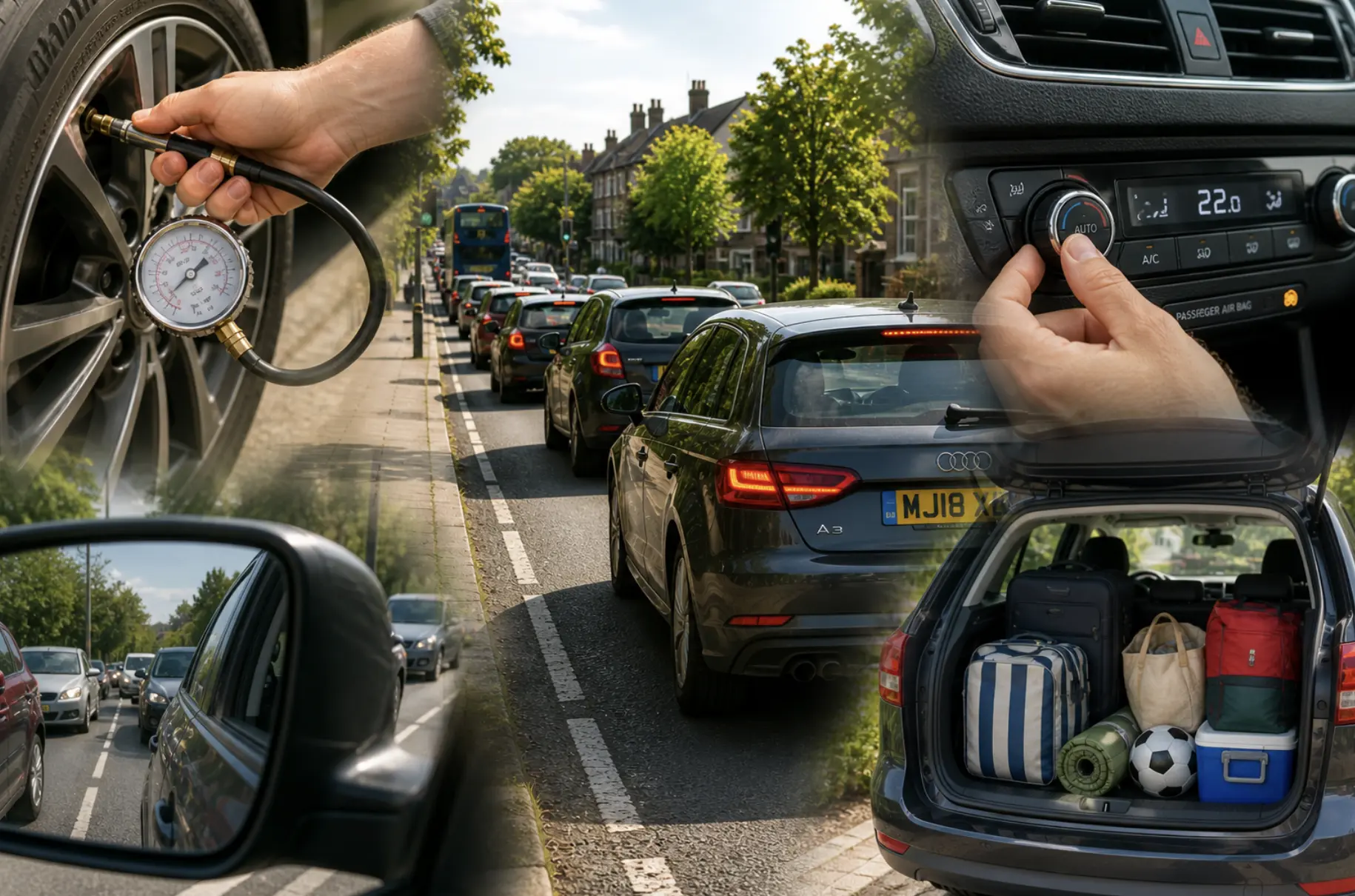
Temperature has a direct effect on tyre pressure.
As the air gets warmer, the pressure inside your tyres increases. That might sound helpful, but if the pressure becomes uneven or is not adjusted properly, it can affect how the car rolls on the road.
That can lead to:
- increased resistance
- uneven wear
- higher fuel consumption
Keeping tyres at the correct pressure is not just about safety, it also affects how efficiently your car uses fuel. TyreSafe explains that incorrect tyre pressure can worsen handling and grip, and may lead to irregular or unpredictable vehicle behaviour.
More Traffic Means More Fuel Use
Summer often means more cars on the road.
Whether it is weekend trips, school holidays or general congestion, more traffic usually leads to more idling and slower journeys.
Sitting in traffic with the engine running, especially with the air conditioning on, will increase fuel consumption quickly, even if you are not travelling far.
Extra Weight in the Car Adds Up
It is easy to forget how much extra weight affects fuel consumption.
In summer, you might be carrying:
- luggage
- passengers
- outdoor gear
All of that adds strain to the engine. The harder the engine has to work, the more fuel it uses.
Simple Ways to Improve Fuel Consumption in Summer
You do not need to change everything about how you drive. A few small adjustments can make a noticeable difference.
Try to:
- use air conditioning sensibly rather than constantly
- check tyre pressure at least once a month
- remove unnecessary weight from the car
- plan journeys to avoid heavy traffic where possible
- keep your vehicle regularly serviced
None of these are complicated, but together they can help bring fuel consumption back under control. If you want to go a bit further, there are also some simple driving habits that can help reduce fuel use and avoid unnecessary wear over time.
Small Changes Make a Real Difference
Fuel consumption is rarely down to one single issue. It is usually a combination of small things that build up over time.
When fuel prices are higher, those small differences become much more noticeable. Running the air conditioning more than you need to, driving on slightly underinflated tyres or carrying extra weight can all quietly increase your running costs without you realising it.
The good news is that these are all things you can control. A few simple checks and small adjustments can make a real difference, especially over longer periods of driving.
If your car is using more fuel than usual, it is often not a major fault. It is usually a sign that a few small things need attention. Getting on top of those early through regular car servicing can help keep your costs down and your car running as it should.
FAQS:
Click the + to read any answer or visit our most FAQ page to review the most frequently asked questions across all our Elite Locations.
Category:
Fuel Consumption
Yes, it can do.
Hot weather on its own does not always increase fuel consumption, but the way we drive in summer does. Air conditioning, heavier traffic and carrying extra weight all make the engine work harder, which means more fuel is used.
So while the temperature plays a part, it is usually those combined factors that make the biggest difference.
Category:
Fuel Consumption
It depends on how you are driving.
At lower speeds, opening the windows is usually more efficient than running the air conditioning. However, at higher speeds, open windows can create drag, which can actually reduce fuel efficiency.
In most cases, a balanced approach works best. Use air conditioning when needed, but avoid running it constantly if you are trying to keep fuel consumption down.
Category:
Fuel Consumption
Yes, more than most drivers realise.
Incorrect tyre pressure or uneven wear can increase rolling resistance, which means the engine has to use more fuel to keep the car moving. Even a small drop in pressure can have a noticeable effect over time.
Keeping your tyres properly inflated and in good condition is one of the easiest ways to improve fuel efficiency. Learn more about tyre pressure and other FAQs in this handy guide.


