



Electric Car Servicing: A Practical Guide for UK Drivers
Electric car servicing is different from traditional petrol or diesel maintenance, but it is not optional. Electric vehicles (EVs) do not require oil changes, spark plugs or exhaust repairs, yet they still rely on braking systems, suspension components, tyres, cooling systems and high-voltage safety equipment that must be inspected at regular intervals.
In simple terms, electric car servicing focuses less on engine mechanics and more on safety systems, battery management and wear-and-tear components. Independent garages can carry out much of this work, provided they have the correct EV qualifications, insulated tooling and follow manufacturer service schedules. Understanding how structured electric car servicing works helps remove uncertainty and build confidence in EV maintenance.
What Does Electric Car Servicing Actually Include?
Electric car servicing centres on inspection, safety and system health rather than combustion-engine maintenance. Key areas typically include:
- Brake inspection and cleaning – Regenerative braking reduces pad wear, but discs can corrode if rarely used.
- Suspension and steering checks – EVs are heavier due to battery packs, placing additional load on components.
- Tyre inspection – Instant torque and vehicle weight can accelerate wear.
- Battery cooling systems – Coolant circuits regulate battery temperature and must be checked.
- High-voltage system inspection – Visual checks, isolation procedures and safety verification.
- Cabin air filters – Often replaced at similar intervals to petrol cars.
- Software diagnostics – System scans to identify stored faults or updates.
EVs have fewer moving parts than internal combustion vehicles, but still require scheduled checks to ensure safety and reliability.
For example, the RAC provides breakdown cover tailored to EVs, including roadside assistance, recovery and mobile charging support through its “EV Boost” vans, which can deliver enough charge to reach a nearby charging point. Coverage applies to electric, hybrid and plug-in hybrid vehicles.
Do Electric Cars Need Servicing as Often as Petrol or Diesel Cars?
Generally, no. Most manufacturers recommend longer service intervals for EVs because there is no engine oil degradation or combustion-related wear.
However, reduced frequency does not mean zero maintenance. Brake corrosion, suspension wear and tyre degradation are still common concerns. Battery cooling systems also require monitoring to maintain long-term battery health.
Manufacturer service schedules exist for a reason. Following the recommended intervals helps maintain reliability, ensures safety systems are inspected correctly and protects warranty coverage where applicable. As electric vehicles increasingly rely on driver assistance technology, servicing also extends beyond mechanical inspection.
A more detailed explanation of how this integrates with modern safety systems can be found in this guide to EV servicing and ADAS calibration. It outlines how structured maintenance supports both vehicle safety and system accuracy.
Electric car servicing may be less intensive, but it remains structured and necessary.
Why Do Some EV Owners Rarely Visit a Garage?
Certain brands, particularly Tesla, operate a different servicing model from traditional manufacturers.
Tesla uses:
- Over-the-air software updates
- Remote diagnostics
- Mobile technicians for minor repairs
As a result, some owners report fewer visits to physical workshops. However, manufacturer-specific servicing models vary. For example, owners considering scheduled Tesla service or newer electric brands such as BYD service should always review the brand’s recommended maintenance schedule.
Remember, electric car servicing models differ but mechanical wear does not disappear.
Can Independent Garages Carry Out Electric Car Servicing?
Yes, but only if they have appropriate training and equipment.
In the UK, technicians working on high-voltage vehicles typically hold IMI Level 3 or Level 4 qualifications in EV maintenance. Institute of the Motor Industry provides recognised training standards for safely working on electric vehicles.
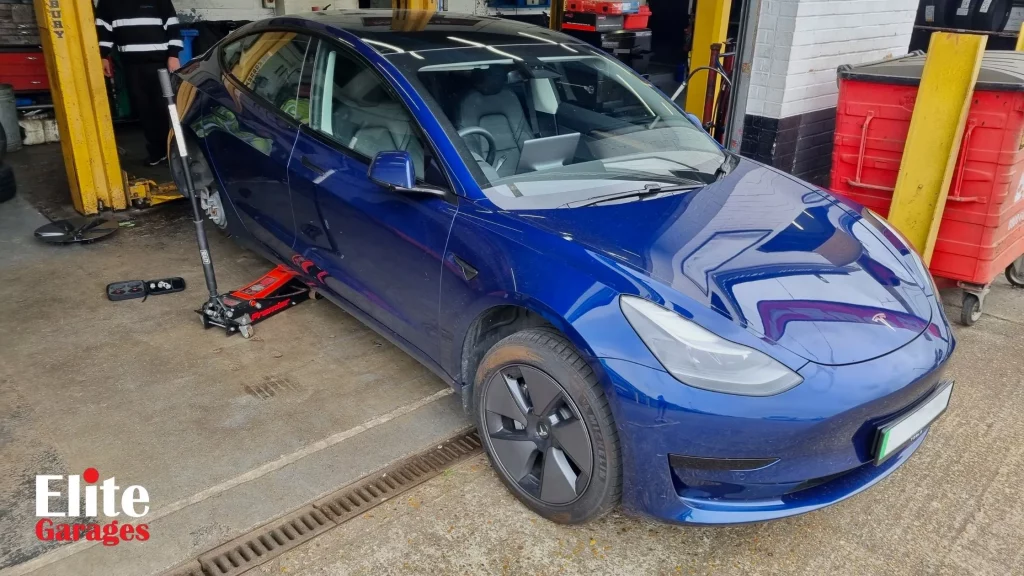
Independent garages offering electric car servicing should have:
- High-voltage safety training
- Insulated tools
- Battery isolation procedures
- Manufacturer-compliant servicing protocols
- Diagnostic capability suitable for EV systems
Routine items such as brakes, tyres, suspension and cabin filters can often be serviced independently without issue. High-voltage battery repairs, however, may remain manufacturer-restricted depending on the brand.
Independent workshops across the UK now routinely service electric, hybrid, petrol and diesel vehicles under one roof. At Elite Garages, technicians work across most makes and models, applying manufacturer service schedules and recognised EV safety standards to ensure consistency regardless of powertrain type.
Will Independent EV Servicing Affect Warranty?
Under UK consumer law and Block Exemption Regulations, vehicle owners are not required to use a main dealer for servicing, provided:
- The work follows the manufacturer’s service schedule
- Approved or equivalent quality parts are used
- Correct procedures are followed
The UK government confirms that warranty cannot automatically be voided simply because servicing was carried out outside the dealer network. UK Government provides general guidance on consumer rights and vehicle servicing.
Electric car servicing must meet manufacturer standards, but it does not legally have to be completed by the brand’s dealership, unless specified for certain high-voltage repairs.
Is Electric Car Servicing Different from Traditional Car Maintenance?
Yes, but mainly in scope.
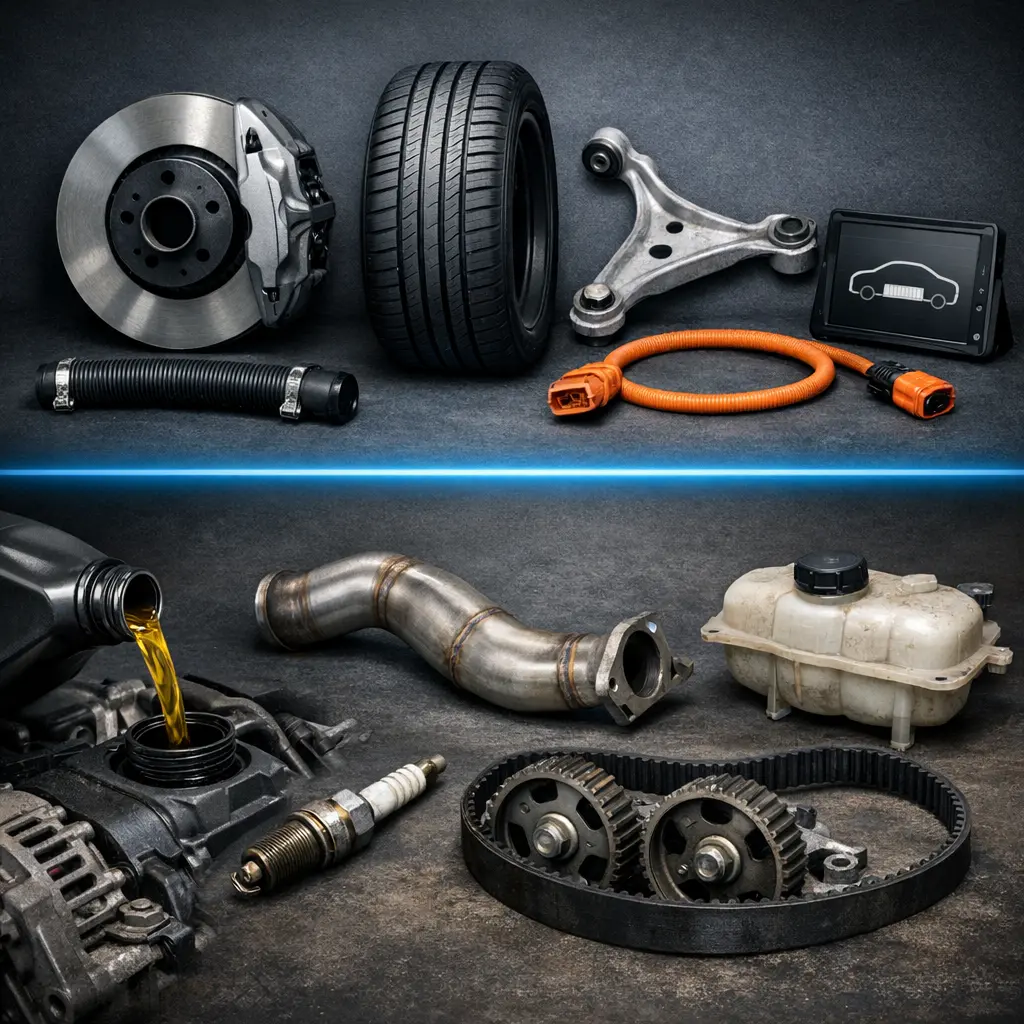
Electric vehicles remove:
- Engine oil systems
- Clutches
- Gearboxes (in most cases)
- Exhaust systems
- Timing belts
What remains are structural, braking, suspension and electronic systems; all of which require periodic inspection. Electric car servicing is therefore lighter in mechanical complexity but heavier in electronic oversight and safety protocols.
So, What Gets Checked During Electric Car Servicing?
Typical inclusions in electric car servicing include:
- Brake inspection and cleaning
- Tyre condition checks
- Suspension and steering assessment
- Battery cooling system checks
- High-voltage safety inspection
- Software diagnostics
Not Required in an EV service:
- Oil changes
- Spark plug replacement
- Exhaust repairs
- Timing belt changes
This simplified comparison helps clarify expectations.
What Happens If Electric Car Servicing Is Ignored?
Although EVs have fewer mechanical components, neglecting maintenance can still create problems:
- Corroded brake discs due to limited friction use
- Uneven tyre wear caused by torque delivery
- Suspension wear from increased vehicle weight
- Cooling system issues affecting battery performance
Battery packs are typically the most valuable component of an electric vehicle. Ensuring cooling systems and electrical integrity remain within manufacturer tolerances helps protect long-term battery health.
Simpler does not mean immune.
Final Thoughts on Electric Car Servicing
Electric car servicing works differently from traditional maintenance, but it remains an essential part of vehicle ownership. The absence of engine oil and combustion components reduces routine work, yet safety-critical systems still require professional inspection.
Independent garages can carry out much of this servicing where they hold recognised EV qualifications and follow manufacturer guidelines. The key consideration is competence and compliance, not whether the workshop carries a manufacturer logo.
As electric vehicle adoption continues to grow across the UK, understanding how servicing works helps remove uncertainty and supports informed decision-making.
FAQS:
Click the + to read any answer or visit our most FAQ page to review the most frequently asked questions across all our Elite Locations.
If you click on a ‘Category’ or ‘Tag’ link, the page will ‘refresh’ and reload the page showing the top of the page first, you’ll then just need to scroll down to the FAQ section to see the results for the Category or Tag you selected.
Category:
EV service tips
Most electric cars require an MOT once they reach the normal qualifying age, just like petrol or diesel cars. There is no tailpipe-emissions test, but safety-related items such as tyres, brakes, steering, suspension and lights are still examined. Limited exemptions apply to certain vehicle categories, so owners should check the current GOV.UK MOT guidance.
Category:
EV service tips
Not all garages are equipped for electric car servicing. Technicians should hold appropriate high-voltage qualifications and use correct safety procedures. Routine items such as tyres and suspension are widely serviceable, but high-voltage battery repairs may be manufacturer-restricted.
Category:
EV service tips
Yes. Although regenerative braking reduces pad wear, discs can corrode due to limited friction use. Regular inspection and cleaning are important.
Category:
EV service tips
Most manufacturers recommend annual servicing or mileage-based intervals, often longer than petrol vehicles. Owners should always follow the specific service schedule provided by the vehicle manufacturer.


