




Car Repairs Explained: What Affects Cost & How to Avoid Overpaying
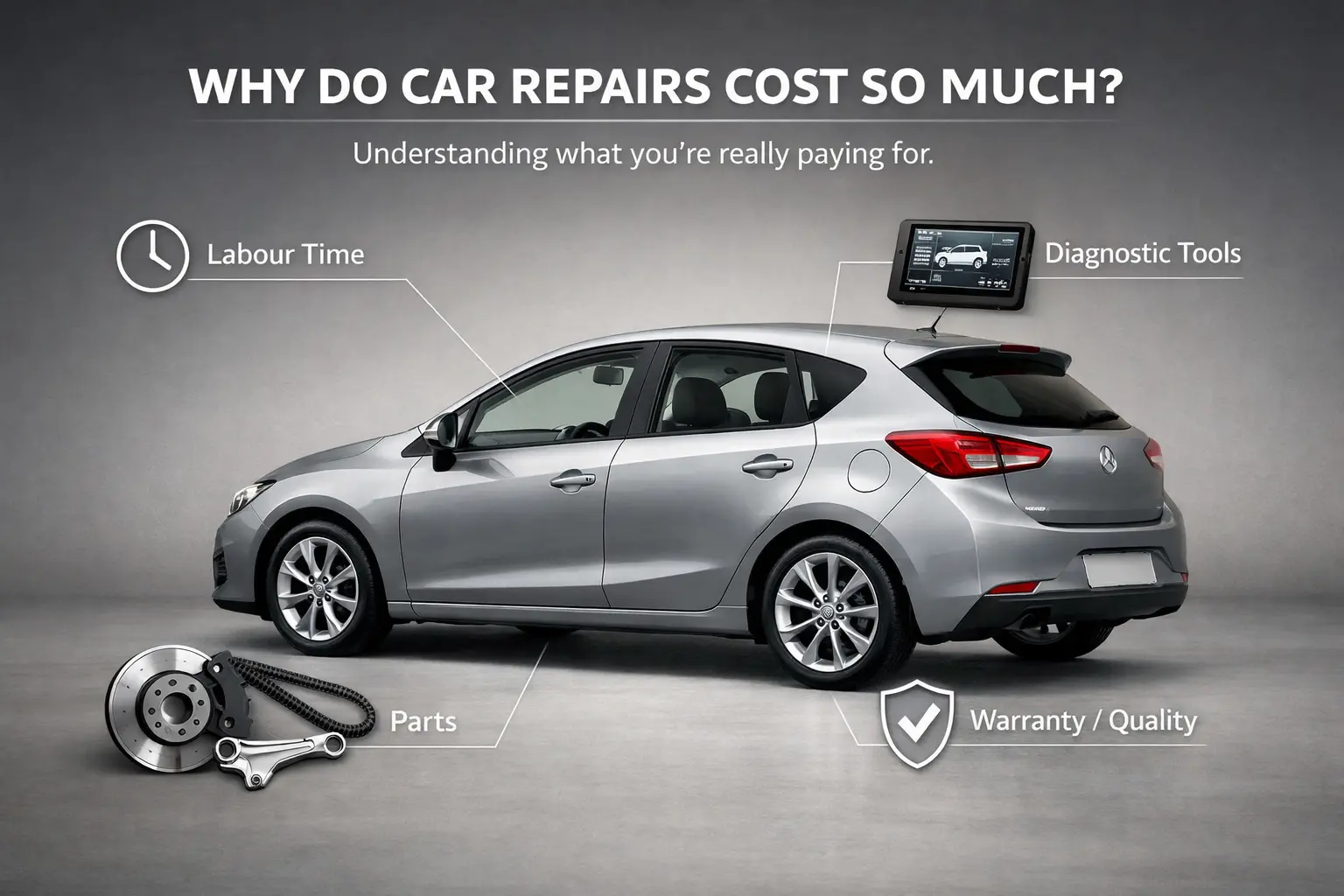
Car repairs often feel expensive because modern vehicles are more complex, labour rates reflect skilled technical work, and parts prices have increased significantly in recent years. The cost of car repairs is not just about replacing a component. It includes diagnostic time, specialist equipment, trained technicians, warranty-backed parts, and compliance with safety standards. In many cases, what drivers are paying for is accuracy, safety and long-term reliability rather than just the physical repair itself.
Understanding what influences car repair costs helps you make informed decisions and avoid overpaying. When you know what goes into the price, repairs become less mysterious and far easier to assess.
Why Modern Car Repairs Are More Expensive Than They Used to Be
Vehicles today are far more advanced than cars built even ten years ago.
Electronic control units, sensors, advanced braking systems, hybrid components and driver assistance technology all increase complexity. Diagnosing faults often requires specialist software and manufacturer-level tools. That investment is reflected in labour rates.
Even routine car repairs can involve removing multiple components simply to access the affected part. What looks simple from the outside is often time-intensive behind the scenes.
Add to that the rising cost of genuine parts, supply chain pressure and increased energy costs for workshops, and the overall price of car repairs naturally rises.
What Affects the Cost of Car Repairs?
Several factors determine the final bill:
- Type of vehicle: Premium brands, hybrids and electric vehicles often require specialist parts or procedures.
- Age of the vehicle: Older vehicles may need additional work due to corrosion or seized components.
- Parts quality: Genuine manufacturer parts typically cost more than aftermarket alternatives, but they may offer better longevity.
- Labour time: Some repairs require several hours simply to access the damaged component.
- Diagnostic work: Before repairs begin, technicians must accurately identify the fault. That expertise forms part of the price.
The price of car repairs varies not because garages are inconsistent, but because no two vehicles or faults are identical.
Understanding Car Repair Costs Before Approving Work
If you want clarity, ask for:
- A written estimate
- A breakdown of labour and parts
- Confirmation of whether parts are genuine or aftermarket
- An explanation of urgency
A reputable garage should explain what needs to be done and why. Transparency reduces uncertainty and builds trust.
Unexpected car repair costs are often the result of secondary issues discovered once work begins. For example, replacing brake discs may reveal worn callipers or corroded fittings that also require attention.
That does not mean you are being overcharged. It means the full condition of the vehicle is now visible.
If you want a rough benchmark before approving work, ClickMechanic’s UK price estimates tool can give you an indicative range based on the job and your vehicle. It’s not a fixed price, but it’s a useful sense-check when you’re comparing quotes.
Should You Always Choose the Cheapest Car Repair Quote?
Not necessarily. Lower pricing can sometimes mean:
- Lower-quality parts
- Minimal warranty
- Less thorough diagnostics
- Rushed labour time
Cheap repairs may solve the immediate problem but create further issues later. In some cases, drivers end up paying twice for the same repair.
When comparing quotes, consider value rather than just price.
Searching for “Car Repairs Near Me” and What Really Matters?
When drivers search online for “car repairs near me”, they are often prioritising convenience. Location is important, especially if your vehicle is not safe to drive far.
However, proximity alone should not determine your choice. Look for:
- Clear pricing policies
- Qualified technicians
- Positive, recent reviews
- Willingness to explain work
- Transparent communication
A trusted local garage should feel open and professional, not defensive or vague.
The Most Common and Most Expensive Car Repairs
Some car repairs are routine. Others can become extremely costly if ignored.
Common car repairs in UK workshops include:
- Brake pads and discs
- Suspension components such as springs and control arms
- Exhaust sections
- Wheel bearings
- Clutch replacements
These are normal wear-and-tear items. They form part of ongoing vehicle ownership and, when addressed early, are usually manageable in cost. However, some repairs become expensive not because the original component is costly, but because neglect allows damage to spread.
Cambelt Failure: A Preventable but Costly Example
A snapped cambelt is one of the most expensive avoidable car repairs.
The cambelt synchronises the engine’s internal components. If it fails while driving, pistons and valves can collide, often causing severe engine damage. In many cases, repair costs can exceed the value of the vehicle.
Yet cambelts rarely fail without warning. Manufacturers specify replacement intervals based on mileage or age. Replacing a cambelt at the recommended time is significantly less expensive than repairing engine damage after it breaks. If your vehicle is due, you can book directly here.
Regular servicing plays a key role in preventing this type of failure. As demonstrated by automotive YouTuber Joe Achilles in his long-term test project with Elite Garages, consistent maintenance is critical for vehicle longevity.
Other Expensive Car Repairs That Often Start Small
Clutch replacements can become costly, particularly on vehicles where the gearbox must be removed to access the assembly. What may begin as slight slipping or difficulty selecting gears can eventually lead to complete loss of drive.
Steering rack issues are another example. If the steering rack begins to leak or develop internal wear, the repair can involve significant labour. Ignoring early symptoms such as knocking, vague steering feel or fluid loss can make the problem worse over time.
On diesel vehicles, poor compression caused by worn piston rings, damaged valves or injector problems can also result in expensive repairs. Compression-related issues are sometimes identified during diagnostic testing and, if left unresolved, can lead to reduced performance, excessive smoke or long-term engine damage.
In many of these cases, the original issue was minor. It became expensive because it was delayed.
Why Preventative Checks Reduce Car Repair Costs
Many expensive repairs begin as small issues.
Worn tyres, neglected suspension components, or ignored warning lights often lead to secondary damage. A simple monthly inspection can prevent more serious problems from developing. Understanding early warning signs also helps drivers act sooner.
Preventative servicing and early intervention remain the most reliable way to control the long-term cost of car repairs. Routine servicing allows technicians to monitor wear and advise on preventative replacements before failure occurs. If your vehicle has not been serviced recently, make sure to book yours online now.
How to Reduce the Cost of Car Repairs Over Time
The most effective way to manage car repair costs is prevention. Regular servicing helps identify wear before it becomes failure. Minor issues addressed early are usually far cheaper than major repairs after something breaks completely.
Ignoring warning lights, unusual noises or changes in handling often increases the final bill. Acting early protects both safety and budget. If you are unsure what certain noises or dashboard symbols mean, this guide explains some of the most common concerns and questions UK drivers have.
Final Thoughts on Car Repairs
Car repairs feel expensive when they are unexpected. But when you understand what influences the cost, from labour expertise to parts quality, diagnostics and vehicle complexity, the pricing becomes clearer.
The goal should not be the cheapest repair. It should be the right repair, carried out properly, with transparency and care.
When you know what you are paying for, you are far less likely to feel like you are overpaying.
Choosing a garage that invests in its people, equipment and long-term presence also matters. Continued growth and development often reflect stability and commitment to standards rather than short-term pricing tactics. Elite Garages’ recent acquisition of 14 ATS Euromaster branches is part of that long-term investment in capability and service.
FAQS:
Click the + to read any answer or visit our most FAQ page to review the most frequently asked questions across all our Elite Locations.
If you click on a ‘Category’ or ‘Tag’ link, the page will ‘refresh’ and reload the page showing the top of the page first, you’ll then just need to scroll down to the FAQ section to see the results for the Category or Tag you selected.
Category:
car service tips
No, a Gold service does not include an MOT but some garages may offer special discounts when booking both at the same time.
Category:
car service tips
A silver car service (full service) typically includes an oil and filter change, a thorough inspection and check of all the main components such as brakes, suspension, tyres and exhaust, as well as a visual inspection of the interior and exterior. Depending on your car’s make, model and mileage, other services may also be recommended to ensure the safety of you and your passengers.
Category:
car service tips
We recommend getting your car serviced at least once a year or every 12,000 miles – whichever comes first. However, the intervals may vary depending on the driving conditions, how often and how far you travel. Don’t ignore your car service as it will cost you a lot more in the long term.
Category:
car service tips
No, it is not illegal to not service your car. However, regular servicing and maintenance are essential for ensuring the safety and reliability of your vehicle. Neglecting to service your car could lead to major problems down the line that will be far more expensive than if you had serviced it regularly.


