

What Are The New MOT Rules for 2026?
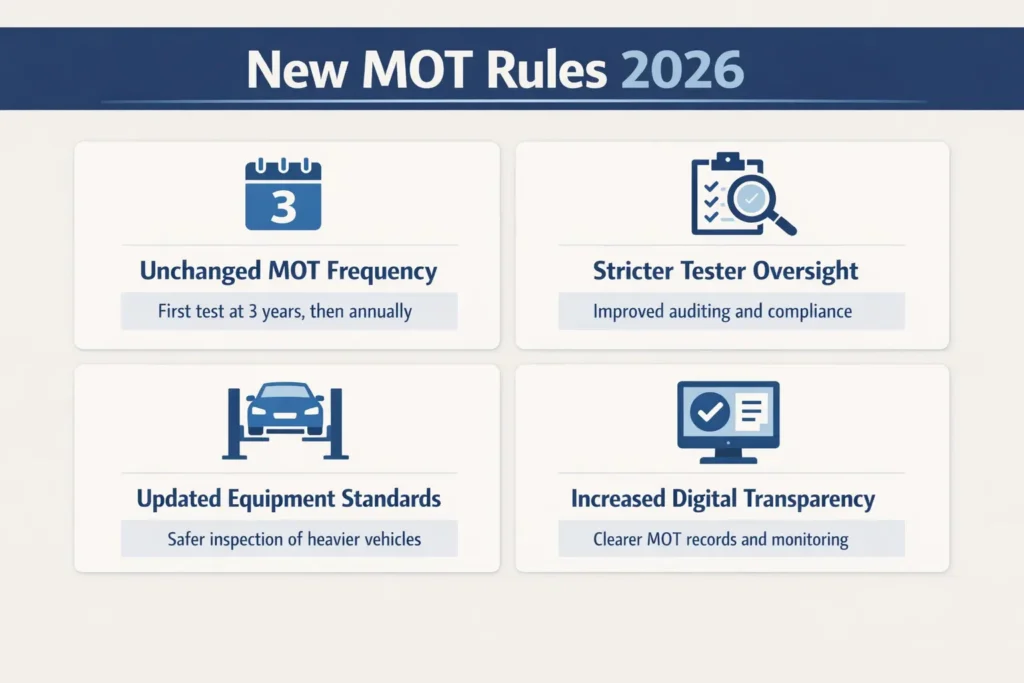
The new MOT rules 2026 are not introducing a brand-new test, changing how often you need an MOT, or adding surprise checks for drivers. Instead, the updates focus on strengthening oversight, improving equipment standards, and increasing transparency in how MOT testing is carried out across the UK.
For most motorists, the experience of booking and taking an MOT will feel largely the same. What is changing is how the system is managed behind the scenes, especially as vehicles become heavier, more technologically advanced, and more reliant on electronic safety systems.
If you’ve recently read about rising modern car MOT failures, these regulatory updates are part of the broader picture: vehicles are evolving, and MOT testing is evolving alongside them.
Are the New MOT Rules 2026 Making Tests Harder?
No. The new MOT rules 2026 are not designed to make MOT tests harder to pass.
There are no new mandatory test intervals, no new “hidden” checks, no confirmed change to the three-year first MOT rule and also no additional failure categories for drivers to prepare for.
The core structure of the MOT remains unchanged. What is tightening is enforcement, consistency and professional standards among MOT providers.
MOT Frequency Under the New MOT Rules 2026
There has been speculation in recent years about whether the first MOT might move from three years to four. As things stand, there is no confirmed change.
Under the new MOT rules 2026:
- Your first MOT is still required three years after registration
- MOTs remain annual thereafter
- There is no approved extension to testing intervals
Drivers in Fareham, Bournemouth, Maidstone, Dorchester and across the UK can continue booking their MOTs as usual.
Stricter Oversight Under the New MOT Rules 2026
One of the most significant aspects of the new MOT rules 2026 concerns who is allowed to carry out MOT testing.
The Driver and Vehicle Standards Agency (DVSA) is introducing tighter disciplinary rules for MOT testers and Authorised Examiner Principals. Individuals who receive serious suspensions will be prevented from holding MOT-related roles for the full duration of their ban. This closes loopholes that previously allowed some suspended individuals to remain indirectly involved in MOT operations.
For drivers, this means:
- Greater confidence in MOT results
- Reduced risk of fraudulent or “ghost” MOT certificates
- More consistent standards across MOT centres
- The focus is accountability, not additional failure pressure.
For official guidance, the DVSA maintains the MOT Inspection Manual here.
Equipment Updates for Heavier Vehicles and EVs
Another part of the new MOT rules for 2026 relates to equipment standards at MOT centres.
Modern vehicles, particularly electric and hybrid models, are significantly heavier than cars built 15 or 20 years ago. Updated requirements ensure that lifts and jacking equipment meet appropriate safe working loads when:
- A new MOT site opens
- Ownership changes
- A new test lane is added
- Testing restarts after a break
These updates are about safety during inspection, not new failure criteria.
As electric vehicle ownership continues to grow, it’s also important that garages are equipped and trained correctly. Drivers booking specialist care can arrange an EV service at Elite Garages here.
Digital Records and Fraud Prevention
The new MOT rules 2026 also support greater transparency. Drivers may notice the following:
- More detailed digital MOT records
- Increased use of monitoring and evidence
- Stronger enforcement against suspicious testing practices
These changes are designed to ensure that MOT certificates accurately reflect a vehicle’s condition. They are not new tests — they are improvements to system integrity.
Do Diesel or Electric Cars Face Different Rules Under the New MOT Rules in 2026?
There is no separate MOT being introduced for diesel or electric vehicles in 2026.
However:
- Diesel emissions enforcement remains strict
- Visible smoke or tampering (such as DPF removal) will result in failure
- Warning lights related to emissions or safety systems will still fail
Electric vehicles are not exempt from MOT testing once they reach three years old. While they do not have exhaust systems, they are still subject to checks on brakes, suspension, tyres, lights, steering and safety systems.
If you want a deeper understanding of how modern vehicle complexity affects outcomes, our guide on modern car MOT failures explains this in more detail.
What the New MOT Rules 2026 Mean for UK Drivers
For drivers booking an MOT, the practical impact of the new MOT rules is reassurance rather than disruption. Across locations including our Bournemouth MOT, Maidstone MOT and Dorchester MOT centres, the changes reinforce:
- Professional accountability
- Proper equipment standards
- Accurate, consistent inspection procedures
Reputable garages are already aligned with DVSA guidance and inspection manual updates. The new framework simply strengthens those expectations nationally. Drivers can book an MOT online.
How to Prepare for Your MOT in 2026
Preparation remains straightforward.
Before your MOT:
- Check tyres for legal tread depth and damage
- Ensure all lights are working
- Address dashboard warning lights
- Check windscreen wipers and washers
- Keep your vehicle regularly serviced
If you’re unsure which service level suits your car, you can book a service on the Elite Garages website.
The new MOT rules 2026 do not demand extra preparation. They simply reinforce the importance of maintaining your vehicle properly.
Elite’s Thoughts on the New MOT Rules 2026
The new 2026 MOT rules are not a dramatic overhaul of the MOT test. They do not introduce new pass thresholds, extend testing intervals, or single out specific vehicle types for harsher treatment.
Instead, they:
- Strengthen oversight of MOT testers
- Improve equipment standards for heavier vehicles
- Enhance digital transparency
- Maintain alignment with modern vehicle technology
For drivers, the most important message is this: the MOT remains what it has always been and that is a legal safety and environmental check designed to keep vehicles roadworthy.
The framework is tightening behind the scenes, not at the expense of responsible motorists. Have questions about the new MOT rules for 2026? Contact your nearest Elite Garages branch for more information.
FAQS: New MOT Rules for 2026
Click the + to read any answer or visit our most FAQ page to review the most frequently asked questions across all our Elite Locations.
If you click on a ‘Category’ or ‘Tag’ link, the page will ‘refresh’ and reload the page showing the top of the page first, you’ll then just need to scroll down to the FAQ section to see the results for the Category or Tag you selected.
Category:
MOT Rules 2026
Yes, but not in the way many headlines have suggested. The new MOT rules for 2026 focus on stricter oversight, equipment standards and transparency. The structure and frequency of the MOT test remain unchanged.
Category:
MOT Rules 2026
No. Contrary to some reports, vehicles still require their first MOT after three years, followed by annual testing.
Category:
MOT Rules 2026
No separate MOT is being introduced for EVs. Electric vehicles must still pass safety-related checks once they are three years old.
Category:
MOT Rules 2026
Diesel vehicles are not facing new categories of testing, but emissions enforcement remains firm. Vehicles with excessive smoke or tampered emissions systems will fail.
Category:
MOT Rules 2026
Yes. Under the new MOT rules 2026, there is tighter monitoring and disciplinary enforcement to improve consistency and reduce fraud.


