

MOT Testing in 2026: What’s Changed and What Drivers Need to Know
You book your annual MOT, then hear that the rules have changed. Maybe someone says LED replacement bulbs are now accepted, or that a heavier electric van can use a Class 7 test centre. The useful question is which changes apply to your vehicle.
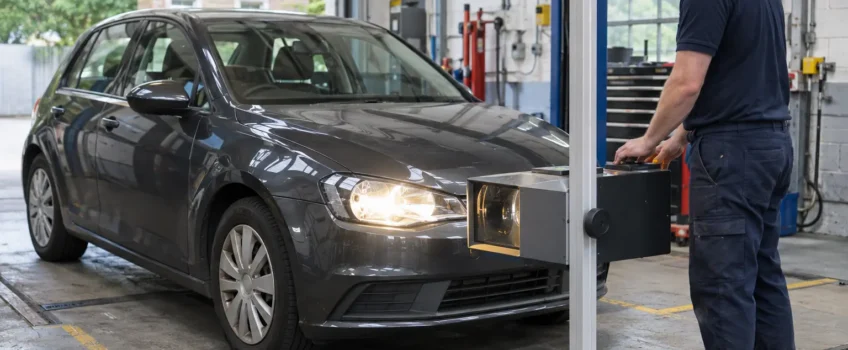
The core purpose of the MOT has not changed: it checks specified roadworthiness, safety and environmental standards at the time of inspection. However, the MOT rules in 2026 introduced changes affecting certain zero-emission vans, replacement headlight bulbs and how evidence of a test is recorded.
At Elite Garages, we provide Class 4 MOT testing at our MOT testing centres, while selected garages also offer Class 7 tests for qualifying goods vehicles. The changes discussed here apply to England, Scotland and Wales.
What Does an MOT Actually Check?
An MOT examines specified items such as brakes, steering, suspension, tyres, lights, visibility and vehicle structure, alongside applicable emissions requirements. The standards depend on the vehicle and its specification.
The result also distinguishes between different types of defect:
- Dangerous defects cause failure and indicate a direct and immediate risk.
- Major defects cause failure and require repair.
- Minor defects do not cause failure by themselves but need attention.
- Advisories highlight matters that should be monitored or addressed.
An MOT test at Elite Garages assesses the vehicle against the relevant inspection standards. It does not replace servicing or establish how long every component will last.
That distinction remains useful when considering the changes introduced this year.
Class 4 or Class 7: Which MOT Does Your Vehicle Need?
For ordinary passenger cars, Class 4 is generally the familiar annual test. For goods vehicles, the official design gross weight helps determine the class.
Design gross weight, or DGW, is the maximum designed laden weight of the vehicle. It is not simply what the van weighs when it arrives at the garage.
- Ordinary passenger cars: Generally require a Class 4 MOT.
- Conventional goods vehicles up to and including 3,000kg DGW: Generally require a Class 4 MOT.
- Conventional goods vehicles over 3,000kg and up to 3,500kg DGW: Generally require a Class 7 MOT.
- Qualifying zero-emission goods vehicles over 3,500kg and up to 4,250kg DGW: Require a Class 7 MOT under the 2026 change.
Two vans parked beside one another may look almost identical but have different official weight ratings. Removing tools or stock from the heavier van does not change its MOT class.
Our guide to whether your van needs a Class 7 or Class 4 MOT explains the classification and where to find the relevant weight information.
Where Does Elite Offer Class 7 MOT Testing?
Class 7 MOT testing is currently available at these seven Elite Garages branches:
- Dorchester
- Exeter
- Cirencester
- Helston
- Launceston
- Leatherhead
- Weston-super-Mare
Each also offers Class 4 testing. Confirm the required test and appointment with the chosen branch before travelling, especially if you operate a heavier zero-emission van or a vehicle with an unusual body configuration.
Provide the registration, official weight rating and any relevant vehicle details when enquiring. That gives the team an opportunity to check the booking rather than discover a mismatch when the vehicle arrives.
MOT availability is not identical across the network: Elite’s main MOT information currently excludes Strood.
What Changed for Heavier Zero-Emission Vans in June 2026?
From 1 June 2026, qualifying zero-emission goods vehicles with a design gross weight between 3,501kg and 4,250kg became Class 7 vehicles for MOT purposes. Their first Class 7 test is normally required three years after registration.
The change recognises that some electric commercial vehicles have additional battery weight while being similar in size to vans already tested within Class 7.
It does not mean that every van weighing up to 4,250kg now qualifies. The zero-emission definition matters and the change does not extend to hybrids, including range-extender vehicles using petrol, diesel or LPG engines.
For example, a business replacing a diesel delivery van with a heavier battery-electric model should confirm the new vehicle’s classification rather than carry over assumptions from the old booking.
The vehicle’s presented weight must also be within the equipment’s safe capability. Discuss a heavily loaded van with the test centre beforehand; its official class does not remove practical testing limits.
Why Might a Tester Photograph Your Vehicle During Its MOT?
DVSA began the phased national rollout of Photos at Test on 3 August 2026, with around 2,500 garages receiving access during that phase.
The feature allows testers to upload a photograph through the MOT testing service. Its purpose is to provide additional evidence that the vehicle was physically present, support identity checks and help deter fraudulent certificates being issued without a vehicle attending.
The photograph supports the inspection process. It does not replace checks of the brakes, tyres, lights or other testable items.
There is an important qualification: DVSA’s published rollout notice describes taking and uploading photographs as optional at that stage. It should therefore not be assumed that every MOT, or every Elite MOT, currently includes a photograph.
For a driver, seeing the tester use a phone or tablet to photograph the vehicle can be part of an official recording process.
What Are the New MOT Rules for LED Replacement Bulbs?
From 14 October 2026, MOT testers must accept ECE-approved LED replacement bulbs in compatible halogen headlamp units on Class 3, 4, 5 and 7 vehicles, subject to the relevant requirements.
The critical words are approved and compatible. This is not permission to fit any LED bulb into any halogen headlamp.
The replacement light source must be approved for use in that lamp and supported by a corresponding manufacturer-issued approval sticker. The sticker must be permanently attached to the vehicle and readily visible during inspection.
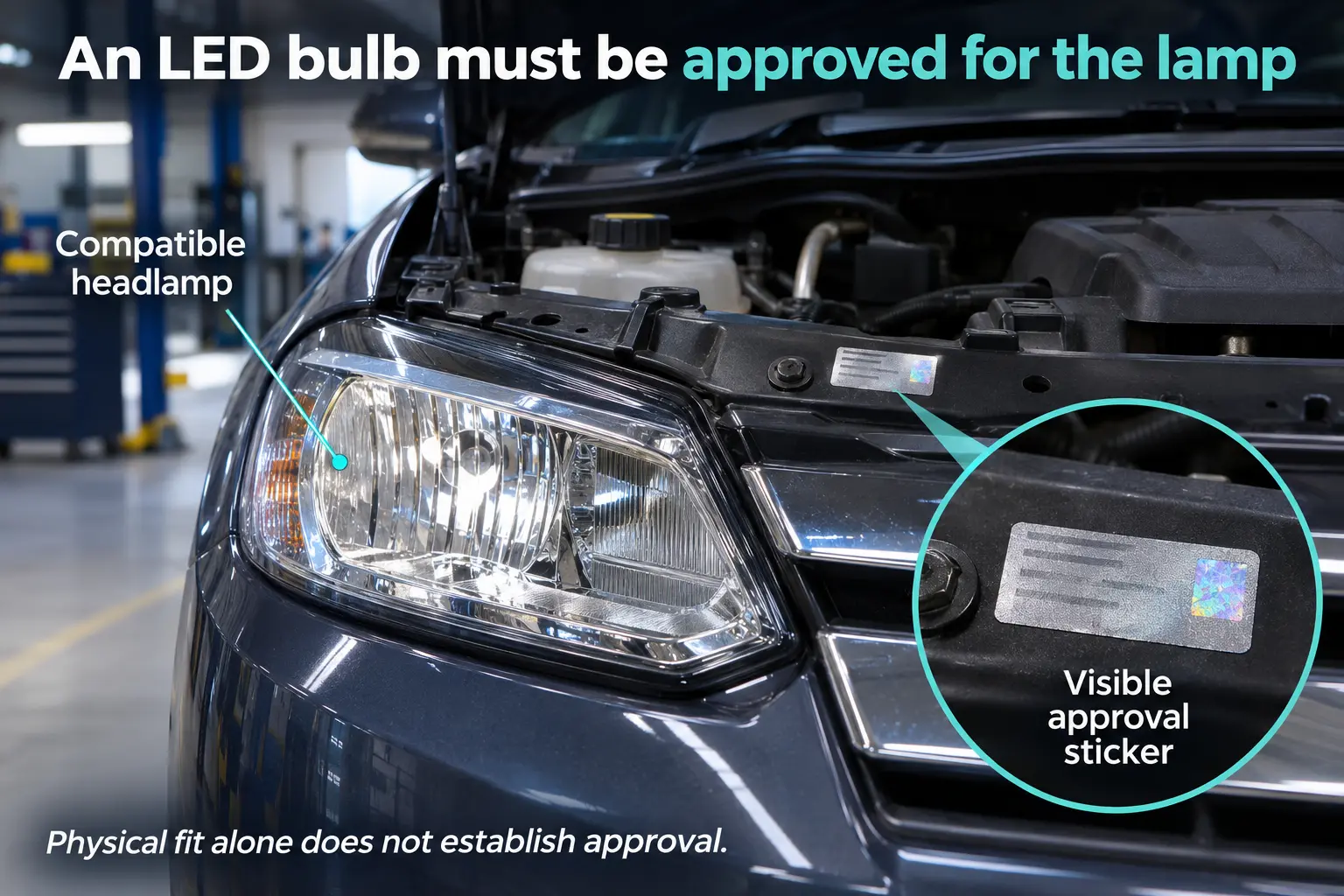
It includes identifying information such as the replacement category, voltage, approval number and manufacturer, together with a security feature.
A headlamp must be rejected where the required sticker is missing, illegible, damaged, appears tampered with or does not correspond with the fitted replacement. The relevant incompatibility defect is a major defect.
This specific change does not cover HID conversions, complete replacement headlamp units or Class 1 and 2 motorcycles. Those should not be treated as though they fall under the same approval route.
Can Retrofit LED Headlights Still Fail an MOT?
Yes. Approval does not remove the other applicable lighting requirements. Beam aim, beam pattern and lamp condition still matter.
An online listing saying a bulb “fits” your car may describe its physical fitment. It does not, by itself, establish approval for the particular headlamp.
Before buying an upgrade, check the manufacturer’s application information and approval arrangements. Avoid relying solely on brightness claims or a seller’s general statement that a product is road legal.
DVSA’s MOT manuals, checklists and special notices provide the official reference for these inspection changes.
Does an MOT Pass Mean the Car Needs No Further Work?
A pass means the vehicle met the applicable MOT requirements at the time of inspection. It does not mean every component is new, that servicing can be postponed or that no fault will develop before the next test.
A tyre may pass while approaching the point at which replacement needs planning. A separate service may identify maintenance that the MOT does not cover.
Our article Can a Car Pass Its MOT and Still Need Repairs? explains how to assess those recommendations.
Ask what was found, whether it was recorded during the MOT or a separate inspection, and what action is recommended.
Can You Book Your MOT Early Without Losing the Renewal Date?
You can usually have your MOT carried out up to one month, minus a day, before its expiry and retain the existing renewal date. For example, if the certificate expires on 15 May, a test from 16 April can preserve that anniversary. Testing earlier changes the next expiry date.
This gives you flexibility to arrange the appointment around work, school runs or planned travel. Check the expiry date before choosing a slot, especially if you normally rely on a reminder. Booking within this window also leaves more time to arrange any repairs and a retest before the existing certificate expires.
How Do You Book the Right MOT?
For most car owners, booking remains straightforward. Commercial vehicles and modified lighting deserve a little more preparation.
Before arranging the appointment:
- Check the vehicle type and official design gross weight where relevant.
- Read the manufacturer’s plate rather than guessing from the model badge.
- Mention a heavier zero-emission specification or replacement headlight bulbs.
- Confirm that the branch offers the required MOT class.
- Ask for clarification if the vehicle’s classification is uncertain.
For a working van, this can prevent a wasted journey and disruption to deliveries or customer appointments.
Elite Garages serves drivers across the South and South West of England. Use our Locations page to find the appropriate branch, confirm the vehicle details and book your MOT.
FAQS
Click the + to read any answer or visit our most FAQ page to review the most frequently asked questions across all our Elite Locations.
If you click on a ‘Category’ or ‘Tag’ link, the page will ‘refresh’ and reload the page showing the top of the page first, you’ll then just need to scroll down to the FAQ section to see the results for the Category or Tag you selected.
Category:
MOT Advice
Dorchester, Exeter, Cirencester, Helston, Launceston, Leatherhead and Weston-super-Mare currently offer Class 7 testing. Confirm your vehicle’s requirements and appointment with the branch before travelling.
Category:
MOT Advice
Ordinary cars generally use Class 4. Conventional goods vehicles over 3,000kg and up to 3,500kg DGW generally require Class 7, which now also includes qualifying zero-emission goods vehicles over 3,500kg and up to 4,250kg.
Category:
MOT Advice
Certain ECE-approved replacements can be accepted in compatible halogen headlamps, with the required approval sticker and compliance with other applicable lighting standards. The change does not approve every aftermarket LED conversion.
Category:
MOT Advice
Changes included Class 7 testing for certain heavier zero-emission goods vehicles, a phased rollout of vehicle photographs during testing and acceptance of specified approved LED replacements in compatible halogen headlamps. Their relevance depends on the vehicle.


