




Can ChatGPT Really Tell You What’s Wrong With Your Car?
Your car has developed a clicking noise when turning. Before calling a garage, you describe it to ChatGPT and receive an explanation suggesting a worn joint. It sounds plausible but has it identified the fault?
If you are asking, “Can AI diagnose my car?”, the useful answer is that AI can explain symptoms and suggest possible causes but a chatbot conversation cannot confirm a fault on the actual vehicle. That requires evidence, which may include measurements, diagnostic data and physical inspection.
At Elite Garages, we provide vehicle diagnostics, servicing and repairs, investigating problems where several faults can produce a similar warning light, noise or change in how the car drives.
Why Are Drivers Asking AI About Their Cars?
AI offers something drivers appreciate: an immediate explanation without needing to understand technical language first. You can describe a noise in your own words, ask what a component does or work through unfamiliar terms on a quotation.
It is already part of how some motorists manage their cars. FixMyCar’s Making Tracks: The Auto Repair Report found that 60% of drivers surveyed had used an AI tool for a car-related task in the previous year, including investigating faults, understanding quotations and finding DIY guidance.
Those are different activities, though. Explaining a quotation and establishing why an engine is running badly require different evidence.
What Can AI Help You Understand About Your Car?
AI can be useful when you want to understand what a garage has told you. It can explain the purpose of a suspension bush, describe what a diagnostic trouble code generally means or help you prepare questions about recommended work.
It can also help organise your observations.
“The car shakes sometimes” gives a technician little to work with. A clearer description might explain that the vibration starts at a particular speed, appears only under braking or happens while the engine is idling.
AI can prompt you to think about those distinctions. Note what you have already observed, without deliberately reproducing a potentially unsafe symptom. A useful symptom history helps the investigation; it does not establish the cause.
Where Does AI Car Diagnosis Start to Break Down?
The difficulty is that one symptom can have several causes and a chatbot only has the information supplied.
Consider a steering-wheel vibration. One occurring at motorway speed may call for different checks from one appearing only when the brakes are applied. Tyres, wheel balance, braking components and suspension condition may all feature in the investigation, depending on the circumstances.
A photograph or recording can add information but it cannot show every relevant detail. A noise recorded inside the cabin may sound different from the same noise heard beside the vehicle.
AI can also give a confident explanation despite missing information. The wording may be convincing while the suggested cause remains untested. Its value is in helping frame possibilities, rather than deciding which part to order.
Why Is a Fault Code Not the Same as a Diagnosis?
A diagnostic trouble code records a condition detected by a vehicle’s monitoring systems. It helps direct an investigation but does not automatically identify the component that needs replacing.
For example, a code referring to a sensor circuit may require checks of the sensor, its wiring, connectors and electrical supply. Replacing the sensor without checking the circuit could leave the original fault unresolved.
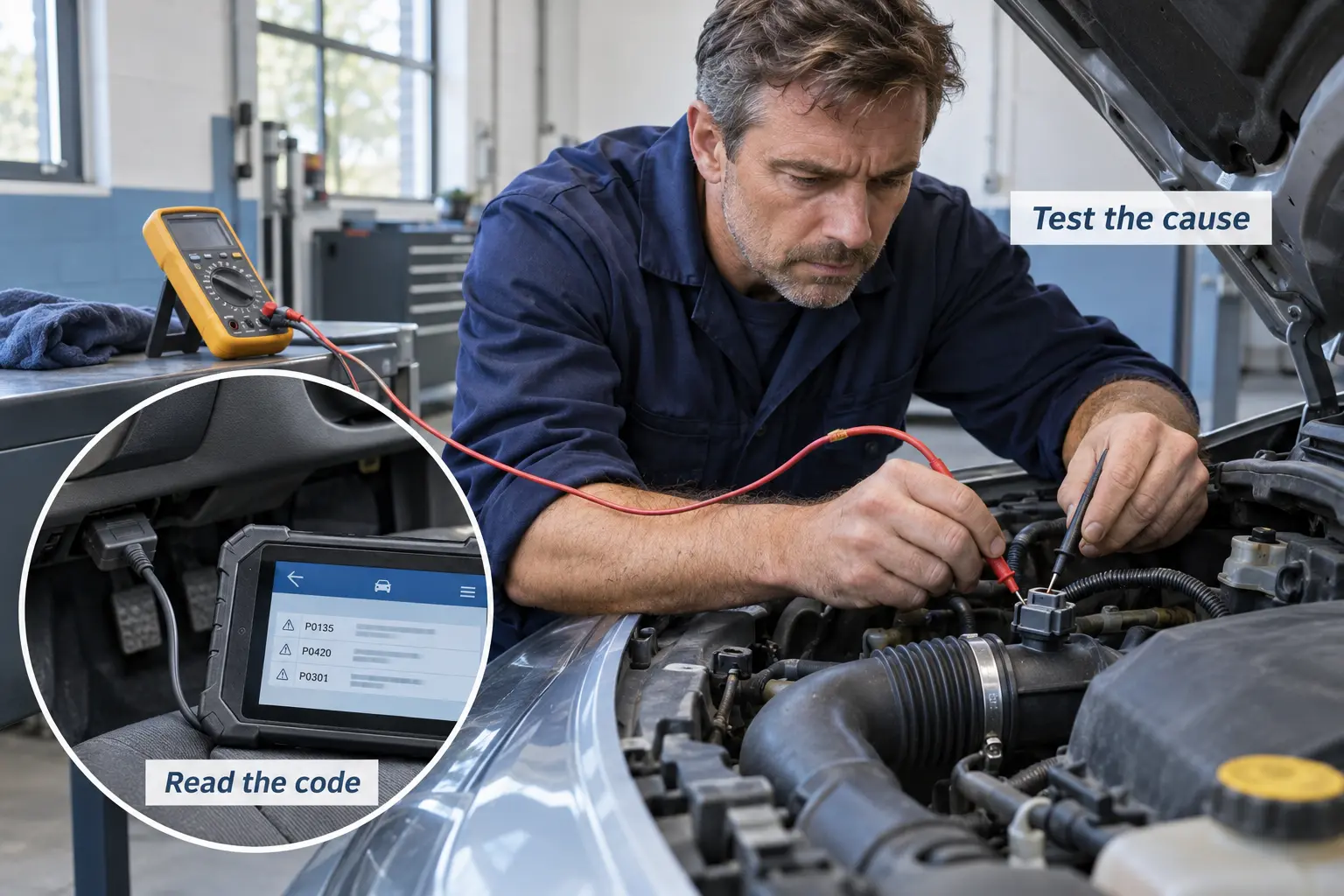
Professional car diagnostics involves interpreting the information available from the vehicle. Depending on the system and equipment, that may include stored codes, live readings and information about the conditions present when a fault was recorded.
The technician then compares those findings with the symptoms and carries out relevant tests.
A chatbot can explain a code description. It cannot establish from that description alone whether the cause is a failed component, damaged wiring or another problem affecting the system.
What Can a Technician Check on the Actual Vehicle?
A technician can inspect, measure and test the things an online conversation can only discuss.
That might mean checking brake wear, measuring electrical values, tracing a leak, inspecting tyre condition or checking a steering joint for excessive movement. Findings can then be compared with diagnostic readings and the driver’s account.
A knocking noise illustrates the difference. Several steering or suspension components could be responsible, so a technician needs to locate the noise and inspect the relevant parts. Our guide to track rod ends and how to recognise wear explains one possible source but similar symptoms can arise elsewhere.
Technology supports this process. The deciding factor is whether the evidence supports the suspected cause.
Can AI Help You Understand a Garage Quote?
Yes. A quotation can be easier to assess once you understand what the component does and why the work has been recommended.
AI can help explain terminology and suggest questions such as:
- What evidence supports this diagnosis?
- Is the work scheduled maintenance or a repair?
- How urgent is it, and why?
- What parts and labour are included?
It cannot verify an inspection from the quotation alone. Online price comparisons also need context: vehicle specification, parts quality and the amount of labour involved can change the cost.
Keep routine car servicing separate from fault investigation too. A scheduled service and a diagnostic appointment have different purposes. Ask the garage to clarify anything you do not understand.
When Should You Stop Searching and Get the Car Checked?
Changes in braking or steering, overheating, significant power loss, substantial fluid loss and severe new noises need an appropriate assessment. Continuing an online conversation should not delay action.
The response depends on the symptom and the vehicle’s instructions. A serious oil-pressure or overheating warning may require stopping safely, switching off the engine and seeking assistance. Check the handbook for the specific warning rather than relying on its colour alone.
Getting the car checked does not always mean driving it to a garage. If its behaviour suggests it may be unsafe, stop somewhere safe and arrange assistance.
A chatbot’s reassurance cannot establish that the vehicle is safe to continue driving.
Using AI Before Your Next Garage Visit
Use AI to understand unfamiliar language and prepare a clear account of the problem. Note when it started, when it occurs, any warning messages and any recent work.
Bring those observations to the garage alongside any suggestions you have found online. They help the technician investigate without treating an untested explanation as the answer.
For drivers across the South and South West of England, your nearest Elite Garages branch can discuss the symptoms and help arrange the appropriate assessment. Book car diagnostics when a warning or recurring fault needs investigation.
FAQS
Click the + to read any answer or visit our most FAQ page to review the most frequently asked questions across all our Elite Locations.
If you click on a ‘Category’ or ‘Tag’ link, the page will ‘refresh’ and reload the page showing the top of the page first, you’ll then just need to scroll down to the FAQ section to see the results for the Category or Tag you selected.
Category:
Car Diagnostics
Arrange an assessment for persistent warnings, recurring symptoms or unexplained changes in how the car behaves. Serious symptoms may require stopping safely and seeking assistance before any journey to a garage.
Category:
Car Diagnostics
Yes. It can explain terminology and help prepare questions. It cannot confirm the garage’s findings or judge the full scope of the work from a brief description alone.
Category:
Car Diagnostics
Usually, it identifies a detected condition or affected system. Further checks may be needed to distinguish a component fault from wiring, connection or other related problems.
Category:
Car Diagnostics
It may help identify the symbol, but image recognition can be wrong. Check the vehicle handbook. Recognising a warning does not establish its cause or whether continued driving is safe.
Category:
Car Diagnostics
It can suggest possible causes and explain symptoms. Confirming the fault requires evidence from the vehicle, which may include diagnostic readings, physical inspection and further testing.
Category:
Car Diagnostics
Typically, a comprehensive diagnostic test can last anywhere from one hour to 90 minutes. In some cases, additional issues may arise or certain vehicle components may need to be removed prior to conducting the test, which can extend the duration to approximately two to three hours. At the same time, if a problem is detected early on, the diagnostics test may be considerably shorter.
Category:
Car Diagnostics
A diagnostic check of your car typically costs between £30* and £100*, depending on the model and make of the vehicle. A car diagnostic test can provide an indication as to why your dashboard lights may be activating.
* Please note: Pricing is an average. Please contact your nearest branch for more information.
Category:
Car Diagnostics
A full car diagnostic test can tell you whether any parts or components within your engine are faulty, along with other issues that might be affecting its performance. It can also provide an indication as to why your dashboard lights may be activating.
Category:
Car Diagnostics
Once the full car diagnostic test is completed, our technicians will review their findings with you and let you know if there are any repairs that need to be carried out. If the diagnostics test finds no issues, then we will provide a full report of our findings and advise you on how to keep your car running at its best.


