



What Happens If You Drive With a Nail in Your Tyre?
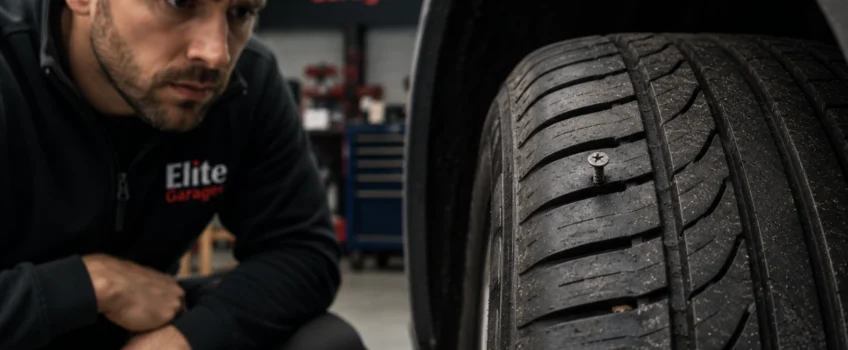
Finding a screw or nail in your tyre is enough to make any driver stop in their tracks.
Your first instinct might be to pull it out and see how bad the damage is. Don’t. Although it might seem like the quickest way to inspect the tyre, removing the nail can allow air to escape much more rapidly and make the situation worse.
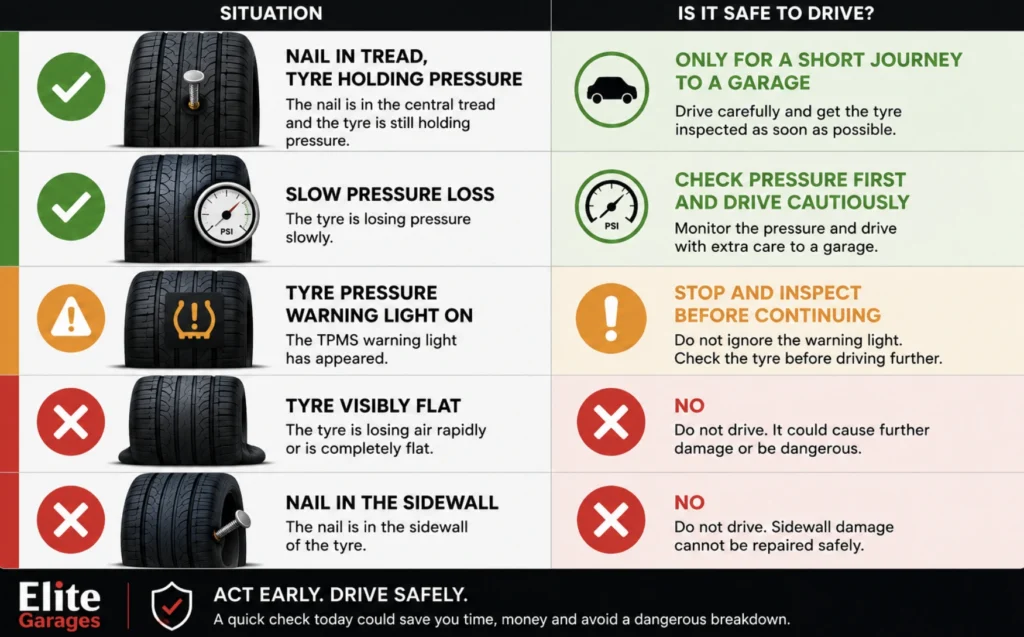
If the tyre is still holding its pressure, you may be able to drive a short distance to a garage for inspection. However, if it’s losing air quickly, the nail is in the sidewall, or your tyre pressure warning light has come on, you shouldn’t continue driving.
If you’re unsure whether your tyre has been damaged, it’s always worth having it inspected professionally. You can also explore more advice on tyre safety and maintenance in our Tyre Advice section.
Should You Pull the Nail Out?
In almost every situation, the answer is no.
Leaving the nail in place helps prevent air from escaping more quickly and gives a technician a much better chance of assessing the damage accurately. Pulling it out yourself could turn a slow puncture into a completely flat tyre within minutes.
It can also make it harder to identify exactly where the puncture occurred, particularly if there are multiple small pieces of debris embedded in the tread.
If you discover a nail before setting off, check the tyre’s condition and, if possible, measure the tyre pressure. If the tyre is clearly deflated or the pressure is dropping quickly, it’s safest not to drive the vehicle until it has been inspected or recovered.
Why Doesn’t Every Nail Cause an Immediate Flat Tyre?
Many drivers expect a tyre to go flat the moment a nail, screw or anything sharp pierces the rubber, but that’s often not what happens.
Modern tyres are made from several layers of reinforced rubber and steel, making them surprisingly resilient. If a nail enters the tread, it can effectively plug the hole it has created, allowing only a very slow escape of air. That’s why some punctures develop gradually over several days rather than within minutes.
The position of the nail also plays a significant role. A small puncture in the centre of the tread is generally less serious than damage closer to the shoulder or sidewall, where the tyre flexes much more as you drive.
Even if the tyre still appears properly inflated, it’s important not to assume everything is fine. Driving on a tyre that’s slowly losing pressure can affect handling, increase tyre wear and, in some cases, turn what could have been a straightforward repair into a replacement.
Road conditions are often to blame. Nails, screws and other sharp debris frequently end up on roads following building work or heavy traffic, while poorly maintained road surfaces can expose tyres to even greater risks. If you’ve recently hit a pothole as well as discovering a puncture, it’s worth remembering that impacts can damage more than just the tyre itself.
Can You Drive With a Nail in Your Tyre?
This is the question most drivers want answered, and the honest response is that it depends.
If the tyre is still holding its pressure and the nail is embedded in the centre of the tread, you may be able to drive a short distance to a garage for inspection. However, this should only ever be a temporary journey at reduced speed. Avoid long trips, high-speed roads and unnecessary mileage until the tyre has been checked.
If the tyre pressure warning light has appeared, the tyre looks visibly deflated, or you can hear air escaping, you should avoid driving altogether. Continuing on a significantly under-inflated tyre can damage its internal structure, even if the puncture itself would otherwise have been repairable.
When Is a Tyre Puncture Repair Possible?
Finding a screw or nail in your tyre doesn’t automatically mean you’ll need a replacement. In many cases, a professional tyre puncture repair is a safe and cost-effective solution, but only if the damage meets strict safety criteria.
Generally, a puncture can be repaired if:
- the damage is within the central tread area of the tyre.
- it’s a relatively small hole.
- the tyre hasn’t been driven while significantly under-inflated.
- there is no damage to the sidewall or shoulder of the tyre.
- the tyre’s internal structure hasn’t been compromised.
Not every puncture is visible from the outside, which is why technicians inspect both the inside and outside of the tyre before deciding whether a repair is safe. A tyre that appears to have only a small puncture may have suffered internal damage if it has been driven for too long with low air pressure.
During a professional tyre puncture repair, the tyre is removed from the wheel so it can be inspected inside and out. If it meets the required safety standards, an approved repair is fitted before the tyre is refitted, inflated and checked to ensure it’s safe to return to the road.
If the puncture is too close to the sidewall, the damage is too big, or the tyre’s structure has been weakened, replacing the tyre is the safest option. Repairs should never be carried out simply to save money if they could compromise your safety.
What Happens If You Ignore a Screw or Nail in Your Tyre?
It can be tempting to put off dealing with a nail in your tyre, especially if the car still feels perfectly normal to drive. However, a slow puncture rarely fixes itself, and continuing to drive can make the problem much worse.
As the tyre loses pressure, even gradually, it begins to flex more than it was designed to. That generates excess heat inside the tyre, which can weaken its internal structure. In some cases, a puncture that could have been repaired initially may no longer be safe to repair after being driven on while under-inflated.
You’ll also notice other effects. Reduced tyre pressure can affect steering response, increase braking distances, cause uneven tyre wear and even reduce fuel efficiency.
If your car suddenly feels different after picking up a puncture, it’s worth reading our guide on why cars can feel different after tyre changes and pressure changes.
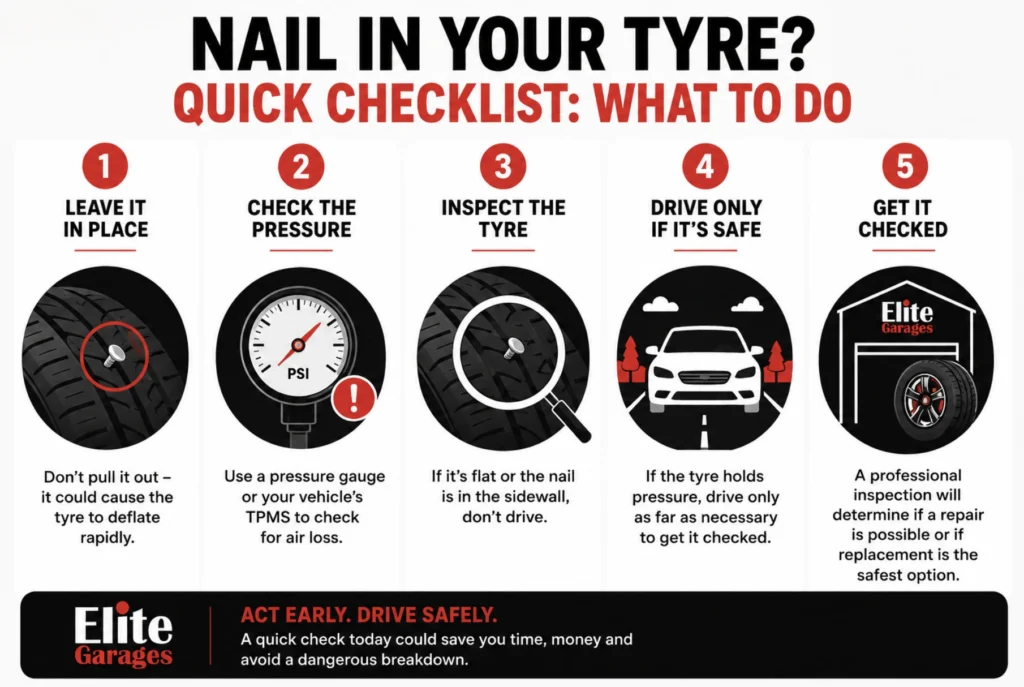
Quick Checklist: What Should You Do If You Find a Nail in Your Tyre?
If you discover a nail or screw in your tyre, staying calm and avoiding unnecessary driving gives you the best chance of a straightforward repair.
A few simple steps can make all the difference:
- Leave the nail where it is. Pulling it out could cause the tyre to lose air much more quickly.
- Check the tyre pressure if it’s safe to do so. A tyre pressure gauge or your vehicle’s TPMS can help identify whether the tyre is losing air.
- Inspect the tyre visually. If it’s obviously flat or the nail is in the sidewall, don’t continue driving.
- Drive only if it’s safe. If the tyre is holding pressure, travel only as far as necessary to have it inspected.
- Have the tyre professionally assessed. A qualified technician can determine whether a tyre puncture repair is possible or whether replacement is the safest option.
Why Acting Quickly Could Save You Money
Many drivers assume that finding a nail automatically means buying a new tyre, but that’s often not the case.
A professionally carried out tyre puncture repair is usually much less expensive than replacing an otherwise healthy tyre. The important thing is having the puncture inspected before continued driving causes additional internal damage.
Acting quickly also helps preserve the tyre’s lifespan, reduces unnecessary costs and keeps your vehicle performing safely.
If you’re interested in getting the most from your tyres, our guide on how long tyres last and why some wear out twice as fast explains the factors that affect tyre life, from driving style to road conditions.
Tyre Puncture Repairs at Elite Garages
Whether you’ve found a nail in your tyre, noticed a slow puncture or your tyre pressure warning light has appeared, our technicians can inspect the tyre and advise on the safest course of action.
Every tyre is assessed individually because no two punctures are exactly the same. We’ll examine the location of the damage, check the tyre’s internal condition and determine whether a professional tyre puncture repair can be carried out safely. If it can, we’ll repair it using approved repair methods. If it can’t, we’ll explain why and help you choose a suitable replacement.
With a wide range of tyres available from leading manufacturers, we can often replace damaged tyres quickly if a repair isn’t possible. For more information about choosing the right replacement tyre, take a look at our guide to tyre brands.
If you’ve had a puncture repaired before, you might also be wondering whether the same tyre can be repaired again. We covered that in a previous article: Can a Flat Car Tyre Be Repaired More Than Once?
Keeping a Small Puncture From Becoming a Bigger Problem
Finding a nail in your tyre doesn’t automatically mean the tyre needs replacing, but it is something you should take seriously. The sooner it’s inspected, the more likely it is that a safe tyre puncture repair will still be possible.
Above all, avoid pulling the nail or screw out yourself and don’t assume everything is fine simply because the tyre still looks inflated. A quick inspection today could save you from a more expensive repair, an unexpected breakdown or a dangerous tyre failure further down the road.
If you’d like to learn more about how punctures are assessed and repaired, TyreSafe’s guide to punctures and puncture repairs provides additional independent advice for UK drivers.
FAQS:
Click the + to read any answer or visit our most FAQ page to review the most frequently asked questions across all our Elite Locations.
If you click on a ‘Category’ or ‘Tag’ link, the page will ‘refresh’ and reload the page showing the top of the page first, you’ll then just need to scroll down to the FAQ section to see the results for the Category or Tag you selected.
Category:
Tyre Puncture Repair
It depends on the condition of the tyre. If it’s still holding its pressure and the puncture is in the central tread area, you may be able to drive a short distance to a garage for inspection. However, if the tyre is losing air, the damage is in the sidewall, or the tyre pressure warning light has come on, you shouldn’t continue driving until the tyre has been professionally assessed.
Category:
Tyre Puncture Repair
Yes. A nail can create a slow puncture that allows air to escape gradually rather than causing an immediate flat tyre. That’s why it’s important to check your tyre pressure regularly and have any embedded object inspected, even if the tyre still appears fully inflated.
Category:
Tyre Puncture Repair
No. Most emergency tyre repair kits and sealants are designed to help you reach a garage safely rather than provide a permanent repair. After using a repair kit, the tyre should be professionally inspected to determine whether it can be safely repaired or needs replacing.
Category:
Tyre Puncture Repair
In most cases, a nail will only puncture the tyre. However, if you’ve driven over road debris or struck a pothole at the same time, it’s possible for the wheel or rim to suffer damage as well. A professional inspection can identify any hidden issues before they affect your vehicle’s handling or safety.


