



How Hot Weather Exposes Hidden Faults
A healthy car should not overheat simply because the weather is hot. If your car is overheating in hot weather, the higher outside temperature has probably exposed a weakness in the cooling system rather than caused the problem on its own.
That distinction matters. A heatwave places additional strain on the radiator, cooling fans, thermostat, water pump and coolant, particularly in slow-moving traffic. However, those components are designed to regulate the engine temperature throughout normal driving conditions.
If the temperature gauge starts climbing, a red warning light appears or steam begins escaping from beneath the bonnet, do not dismiss it as a temporary reaction to the weather. An overheating engine can suffer serious damage surprisingly quickly.
Why Doesn’t Every Car Overheat During a Heatwave?
Your engine generates considerable heat regardless of the temperature outside. The cooling system controls it by circulating coolant through the engine, transferring that heat to the radiator and releasing it into the surrounding air.
Hot weather makes this process more demanding because there is less difference between the engine temperature and the temperature of the outside air. The cooling system may also be working harder if the air conditioning is running, the car is carrying extra weight or you are sitting in prolonged traffic.
Even so, a properly maintained vehicle should be able to manage the additional demand. Overheating usually means that coolant is not circulating correctly, heat is not escaping efficiently or one of the components responsible for controlling temperature is beginning to fail.
The current UK heatwave makes these faults more likely to reveal themselves, especially across England and the South East, where prolonged periods of unusually high temperatures have placed added strain on vehicles and infrastructure.
Common Causes of a Car Overheating in Hot Weather
Several faults can cause an engine to run too hot. Some develop gradually, while others appear with little warning.
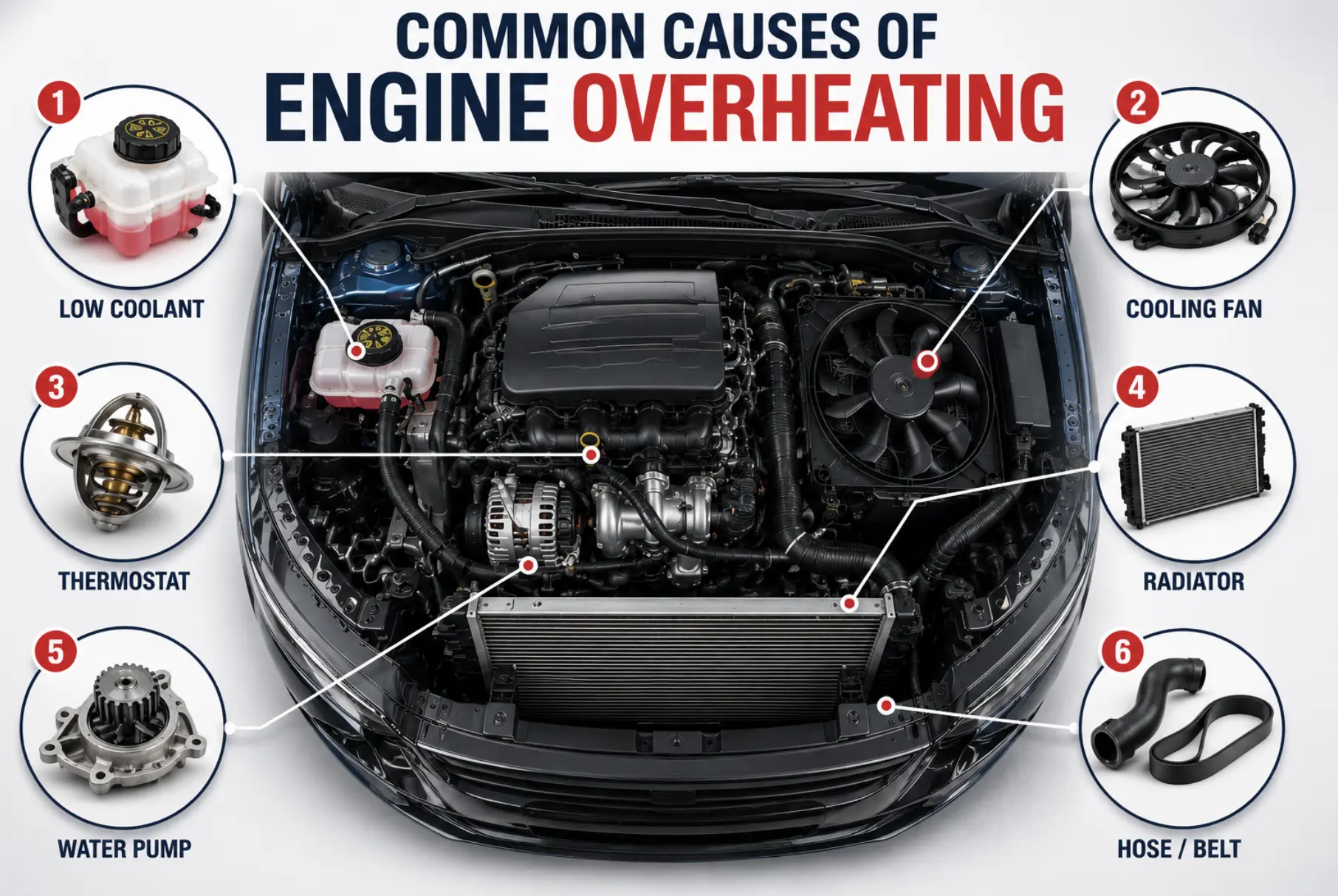
Low Coolant or a Coolant Leak
Coolant absorbs heat from the engine and carries it towards the radiator. If the level is too low, there may not be enough fluid circulating to keep the engine within its safe operating temperature.
A low coolant level can be caused by a leaking hose, damaged radiator, failing water pump, loose connection or a problem with the expansion tank. You may notice a coloured puddle beneath the car, a sweet smell after driving or the coolant level repeatedly dropping after it has been topped up.
Only check the coolant reservoir when the engine is completely cold. Never remove the radiator or expansion tank cap while the cooling system is hot, as pressurised coolant can escape and cause serious burns.
Regular car servicing includes checks of the coolant level, its condition and visible cooling-system components, helping identify small leaks before they develop into an overheating problem.
A Faulty Cooling Fan
The radiator receives plenty of natural airflow when the car is moving at a reasonable speed. When you slow down or stop, the electric cooling fan becomes much more important.
If the fan motor, temperature sensor, relay or wiring develops a fault, the radiator may struggle to release enough heat while the vehicle is stationary. This is one of the main reasons a car can appear perfectly normal on an open road but begin overheating in traffic.
You may hear the cooling fan running after parking on a hot day, which is often normal. The concern is when the engine temperature rises but the fan does not activate at all.
A Thermostat That Is Stuck or Failing
The thermostat controls when coolant is allowed to circulate through the radiator. It remains closed while the engine warms up, then opens once the correct operating temperature is reached.
If it becomes stuck closed, hot coolant cannot flow properly towards the radiator. The temperature gauge may rise quickly, even if the coolant level appears normal.
A thermostat can also fail intermittently, making the problem difficult to predict. The car may behave normally on one journey and overheat during the next.
Radiator Problems
The radiator needs clear airflow and unrestricted internal passages to release heat effectively. Dirt, insects and road debris can obstruct the cooling fins, while corrosion or internal deposits may restrict the flow of coolant.
Damage can also create a slow leak that only becomes obvious once the system is working harder in hot weather. Dark stains, dried coolant residue or damp areas around the radiator should be investigated rather than ignored.
Water Pump Failure
The water pump circulates coolant through the engine and radiator. If the impeller becomes damaged, the bearings wear or the drive mechanism fails, circulation can reduce or stop.
Possible warning signs include coolant leaks, unusual noises from the engine bay and repeated overheating. A failing pump can deteriorate rapidly, so continued driving is risky.
A Damaged Hose or Drive Belt
Cooling-system hoses carry hot coolant under pressure. Over time, rubber can become brittle, cracked or swollen, particularly around joints and clamps.
Some vehicles also rely on an auxiliary belt to drive the water pump. If the belt slips or breaks, coolant circulation may be affected. The battery warning light can also appear if the same belt drives the alternator.
Why Does My Car Overheat in Traffic but Not While Driving?
A car that overheats in traffic but cools down once it starts moving often has an airflow problem.
At higher speeds, air passes naturally through the front grille and radiator. When the car stops, the cooling fan must create that airflow instead. If the fan is not operating correctly, the temperature can rise while you are sitting in a queue and then drop again once the vehicle is moving.
Low coolant, a partially blocked radiator or a weak water pump can produce similar symptoms because the cooling system has less spare capacity when airflow is limited.
Although the temperature may fall once you move off, that does not mean the fault has corrected itself. The underlying issue still needs investigating before it becomes more serious.
Is It Safe to Drive an Overheating Car?
No. If the temperature gauge enters the red zone, an overheating warning appears or steam is visible, you should stop driving as soon as you can do so safely.
Continuing even for a short distance can turn a cooling-system repair into major engine damage. Find a safe place to stop, switch off the engine and allow it to cool fully. Do not open the coolant cap while the system is hot.
If the warning disappears after the engine cools, that does not necessarily mean the car is safe to continue driving. Unless you can confidently identify and resolve a minor issue, recovery is usually safer than risking another rise in temperature.
On motorways and other high-speed roads, follow the Highway Code guidance by trying to reach a place of relative safety, using your hazard warning lights where necessary and keeping yourself and passengers away from moving traffic.
What Happens If You Ignore an Overheating Engine?
Excessive heat can damage seals, gaskets and metal engine components. One of the best-known consequences is head-gasket failure, which can allow coolant and engine oil to mix or cause coolant to enter the combustion chambers.
The cylinder head itself can warp under extreme heat. In severe cases, pistons and other internal components may expand or seize, leaving the engine beyond economical repair.
Even if the engine continues running, repeated overheating can shorten its lifespan and create faults that appear days or weeks later. That is why the cause should be diagnosed rather than simply topping up the coolant and hoping the problem does not return.
Quick Checklist: What to Do If Your Car Starts Overheating
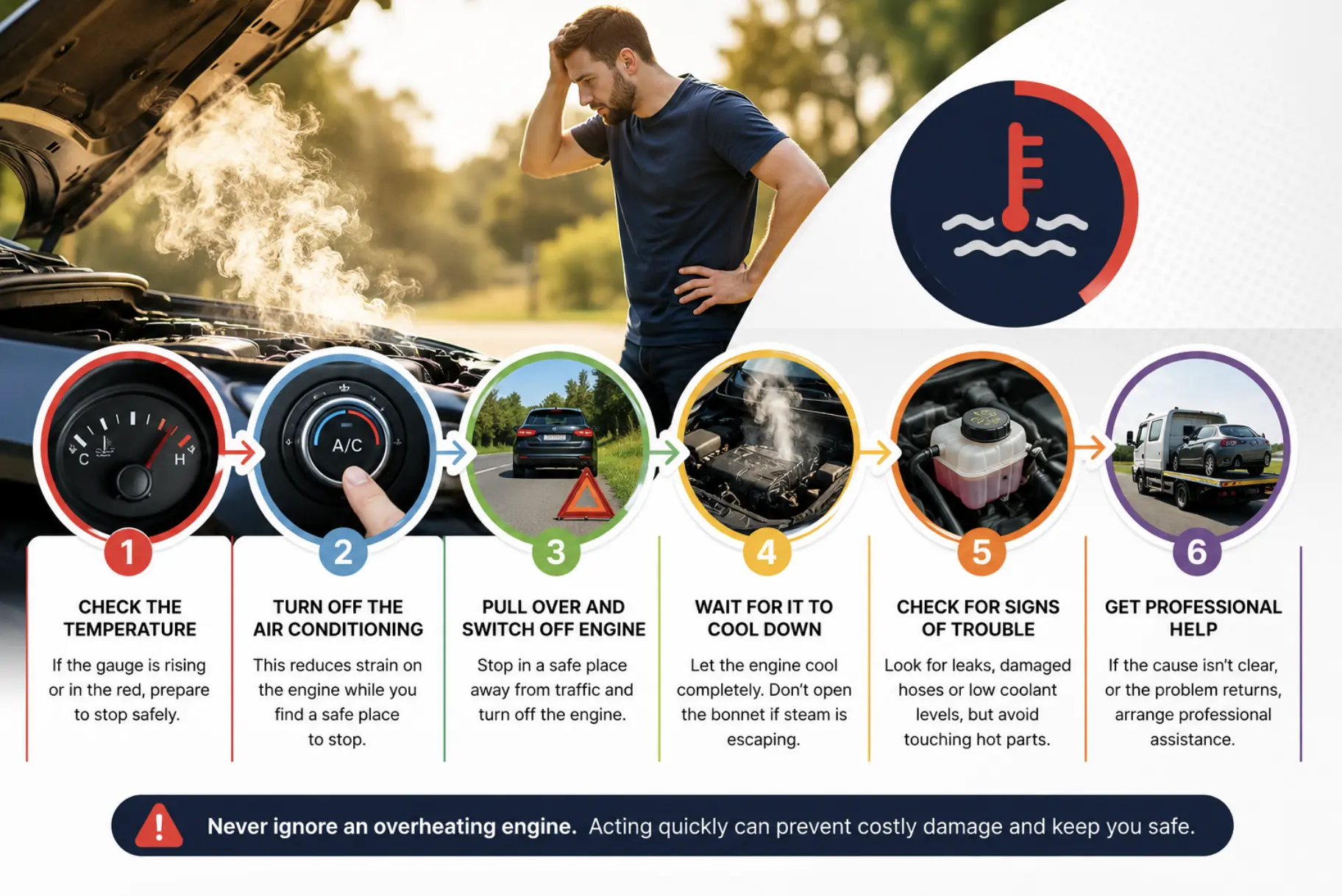
- Watch the temperature gauge. If it continues rising or enters the red zone, prepare to stop safely.
- Turn off the air conditioning. This can reduce some of the load on the engine, but it is only a temporary measure while you find somewhere safe to stop.
- Pull over and switch off the engine. Choose a safe location away from moving traffic wherever possible.
- Wait for the engine to cool completely. Do not open the bonnet immediately if steam is escaping, and never remove a hot coolant cap.
- Check for obvious signs of trouble once it is safe. Look for leaks, damaged hoses or an empty coolant reservoir, but avoid touching hot components.
- Arrange professional assistance. If the cause is unclear, the coolant has escaped or the engine overheats again, do not continue the journey.
Can You Prevent a Car Overheating in Hot Weather?
You cannot control the outside temperature, but you can reduce the likelihood of a breakdown by keeping the cooling system properly maintained.
Check the coolant level when the engine is cold and use the type specified by the vehicle manufacturer. Coolant is not simply water with colour added. It contains additives that help protect the cooling system against corrosion, freezing and excessive heat.
Pay attention to warning lights, unusual smells, visible leaks and changes in the temperature gauge. It is also worth having the vehicle checked before a long summer journey, especially if the coolant has not been replaced for some time or the car has previously lost fluid.
Elite Garages’ free safety check includes the coolant level and condition, fan belt, engine oil, battery condition and a visual inspection of the radiator and heater hoses.
Air Con Checks at Elite Garages
If your car is overheating in hot weather, repeatedly losing coolant or displaying an engine temperature warning, the problem should be investigated before you continue using it normally.
Our technicians can check the visible air con system components, coolant level and condition, hoses and related warning signs. Where further investigation is needed, diagnostic equipment can help identify faults recorded by the vehicle’s onboard systems.
Modern cars monitor functions including engine temperature and produce fault codes when certain systems stop working correctly. However, a warning light alone rarely identifies the exact failed component, which is why physical checks and diagnostic testing may both be required.
Don’t Blame the Weather Without Checking the Car
Hot weather can make an existing cooling-system weakness much harder to ignore, but it should not cause a healthy car to overheat.
If the temperature gauge starts climbing, treat it as a warning rather than an inconvenience. Stopping early and having the cause investigated could prevent a relatively manageable fault from becoming a major engine repair.
With Elite Garages branches across the South and South East, drivers can arrange a free safety check, professional diagnostics or routine servicing before the next long journey.
Category:
Car Maintenance
Air conditioning places extra load on the engine and cooling system, but it should not cause a properly functioning car to overheat. If the temperature rises whenever the air conditioning is used, the system may already be struggling with a cooling fan, radiator or coolant-flow problem.
Category:
Car Maintenance
Only in an emergency and only once the engine has cooled completely. The correct manufacturer-approved coolant mixture should be used wherever possible. Adding plain water may help temporarily, but it does not provide the same corrosion, boiling and freezing protection.
Category:
Car Maintenance
Cold air from the heater while the engine temperature is rising can indicate that hot coolant is not circulating through the heater matrix properly. This may be caused by low coolant, trapped air or a circulation problem.
Category:
Car Maintenance
Yes. Engine oil helps reduce friction and carries some heat away from moving components. A dangerously low oil level can increase friction and temperature, although overheating is more commonly linked to the cooling system.


