



The Truth About Tyre Life In The UK
Some drivers replace their tyres after 12,000 miles, while others get more than 40,000 miles from a similar set.
That’s a huge difference when tyres are one of the most important safety components on any vehicle.
The question is: what actually determines how long tyres last?
The answer isn’t simply tyre quality. Driving style, wheel alignment, tyre pressures, vehicle weight and even the roads you use every day can all have a significant impact on tyre life.
How Long Do Tyres Last On Average?
Most tyres last somewhere between 20,000 and 30,000 miles, but there is no fixed lifespan.
Some premium touring tyres fitted to motorway-driven vehicles may comfortably exceed this, while tyres used mainly for urban driving or fitted to heavier vehicles may wear much faster.
Mileage is only part of the story.
A tyre can reach the legal tread limit after relatively low mileage if it is subjected to poor wheel alignment, incorrect tyre pressures or aggressive driving habits.
Age also matters. Even tyres with plenty of tread remaining can deteriorate over time, which is why many manufacturers recommend regular inspections.
Why Some Tyres Last Twice As Long As Others
Two drivers can buy the same tyres and experience completely different results.
Several factors influence tyre life:
- Driving style
- Vehicle weight
- Road surfaces
- Tyre pressures
- Wheel alignment
- Suspension condition
- Tyre quality
A driver who spends most of their time on motorways is likely to achieve significantly higher mileage than someone who regularly drives in stop-start traffic.
Frequent heavy braking, harsh acceleration and fast cornering all increase tyre wear.
The type of vehicle also plays a role. Larger SUVs and electric vehicles often place greater demands on tyres due to their weight and torque.
How Driving Style Affects Tyre Life
One of the biggest influences on tyre life is the person behind the wheel. Smooth acceleration, gentle braking and anticipating traffic conditions can all help tyres last longer.
By contrast, aggressive driving creates additional friction and heat, accelerating wear across the tread surface. Many drivers are surprised by how much their habits affect tyre longevity.
Small changes in driving style can make a noticeable difference over the life of a tyre.
Can Wheel Alignment Reduce Tyre Life?
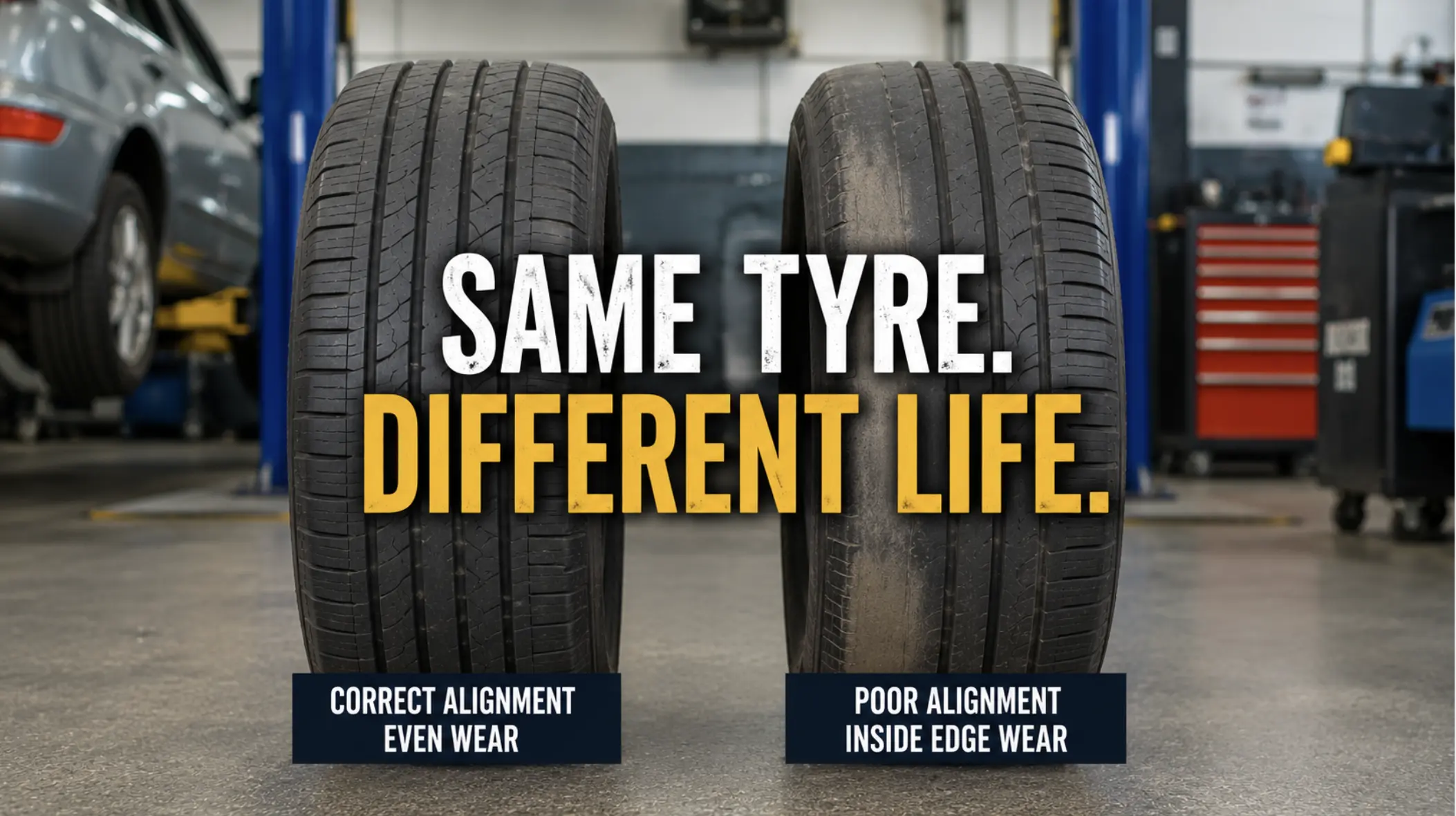
Absolutely! Incorrect wheel alignment is one of the most common causes of premature tyre wear.
When wheels are not aligned correctly, tyres can scrub against the road surface rather than rolling smoothly. This creates uneven wear patterns and can dramatically shorten tyre life.
In some cases, tyres that should last tens of thousands of miles may need replacing much sooner.
If you’ve recently fitted new tyres, you may also find our article on how a car feels different after fitting new tyres quite helpful.
Do Premium Tyres Last Longer?
Not always, but they often have other advantages.
Premium tyre manufacturers invest heavily in tread design, rubber compounds and tyre construction. This can improve wear characteristics as well as grip, comfort and fuel efficiency.
However, tyre life varies considerably between different tyre categories. For example, a high-performance tyre may offer exceptional grip but wear faster than a touring tyre designed for long-distance driving.
Choosing the right tyre depends on how and where you drive. You can explore a wide range of tyre manufacturers and options here.
Do Electric Cars Wear Through Tyres Faster?
In many cases, EV tyres do wear faster.
Electric vehicles are often heavier than equivalent petrol or diesel vehicles due to their battery packs. They also deliver instant torque, which can place additional stress on the tyres.
This doesn’t mean EV tyres wear out quickly by default, but tyre selection becomes increasingly important.
If you’re interested in learning more, we highly recommend reading this article explaining the differences between conventional and EV tyres.
What Else Affects Tyre Life?
Tyre pressures play a surprisingly important role.
- Underinflated tyres generate excess heat and wear more quickly
- Overinflated tyres can cause uneven wear through the centre of the tread.
Seasonal conditions can also have an impact.
Hot weather increases tyre temperatures and can affect tyre pressures, which is one reason why tyre checks are particularly important during the summer months.
You may also be interested in reading our guide to why your car uses more fuel in summer and what you can do about it.
How To Get More Miles From Your Tyres
While no tyre lasts forever, there are several ways to maximise tyre life:
- Check tyre pressures regularly
- Have wheel alignment checked when required
- Avoid harsh acceleration and braking
- Inspect tyres for uneven wear
- Address suspension issues promptly
- Choose tyres suitable for your vehicle and driving style
Tyres are one of the most important safety components on any vehicle, so extending their life should never come at the expense of performance or safety.
When Should You Replace Your Tyres?
In the UK, the legal minimum tread depth is 1.6mm across the central three-quarters of the tyre around its entire circumference. However, many safety organisations recommend replacing tyres before they reach this limit.
According to TyreSafe, tyre performance in wet conditions can deteriorate significantly as tread depth decreases. Regular tyre inspections can help identify wear before it becomes a safety concern.
Elite Garages offers free tyre safety checks to help drivers assess tyre condition and identify potential issues before they become costly problems:
What This Means For Drivers
There is no single answer to how long tyres last.
Some drivers may achieve 15,000 miles, while others may exceed 40,000 miles from a similar set of tyres. The difference often comes down to driving habits, vehicle setup and ongoing maintenance.
Regular tyre inspections, correct tyre pressures and proper wheel alignment can all help maximise tyre life while improving safety, comfort and fuel efficiency.
To find your nearest Elite Garages branch for tyre advice, inspections or replacement tyres, visit our locations page.
FAQS:
Click the + to read any answer or visit our most FAQ page to review the most frequently asked questions across all our Elite Locations.
If you click on a ‘Category’ or ‘Tag’ link, the page will ‘refresh’ and reload the page showing the top of the page first, you’ll then just need to scroll down to the FAQ section to see the results for the Category or Tag you selected.
Category:
Best Car Tyres
The correct tyre size for your vehicle can be found on the sidewall of your current tyres or in your vehicle’s owner’s manual. The tyre size is represented by a combination of numbers and letters, such as 205/55 R16, where ‘205’ is the tyre width in millimetres, ’55’ is the aspect ratio, ‘R’ indicates radial construction, and ’16’ is the wheel diameter in inches. It’s important to match this size when purchasing new tyres to ensure proper fit and performance.
Category:
Best Car Tyres
The load index, represented by a number in your tyre size (e.g., ’91’ in 205/55 R16 91V), indicates the maximum weight that each tyre can support when fully inflated. It is crucial to choose tyres with a load index that meets or exceeds the requirement for your vehicle. Using tyres with a lower load index than recommended can lead to tyre failure, especially under heavy loads, and may pose safety risks.
Category:
Best Car Tyres
The aspect ratio, represented by the second number in your tyre size (e.g., ’55’ in 205/55 R16), indicates the height of the tyre’s sidewall as a percentage of its width. This ratio affects the tyre’s handling, ride comfort, and overall performance. A lower aspect ratio generally means better handling and a sportier feel, while a higher aspect ratio can offer a smoother ride. Choosing the correct aspect ratio is essential for maintaining your vehicle’s handling characteristics and comfort.


