




What Causes Steering Wheel Shake When Driving on the Motorway?
Few things make a car feel more unsettling than a steering wheel shake when driving at motorway speeds.
Some vibrations are mild and easy to ignore at first. Others become strong enough that drivers instinctively grip the wheel tighter or start wondering whether it is still safe to continue driving.
In many cases, steering wheel shake that appears around 60–70mph is caused by something relatively straightforward, but it should never be ignored for too long.
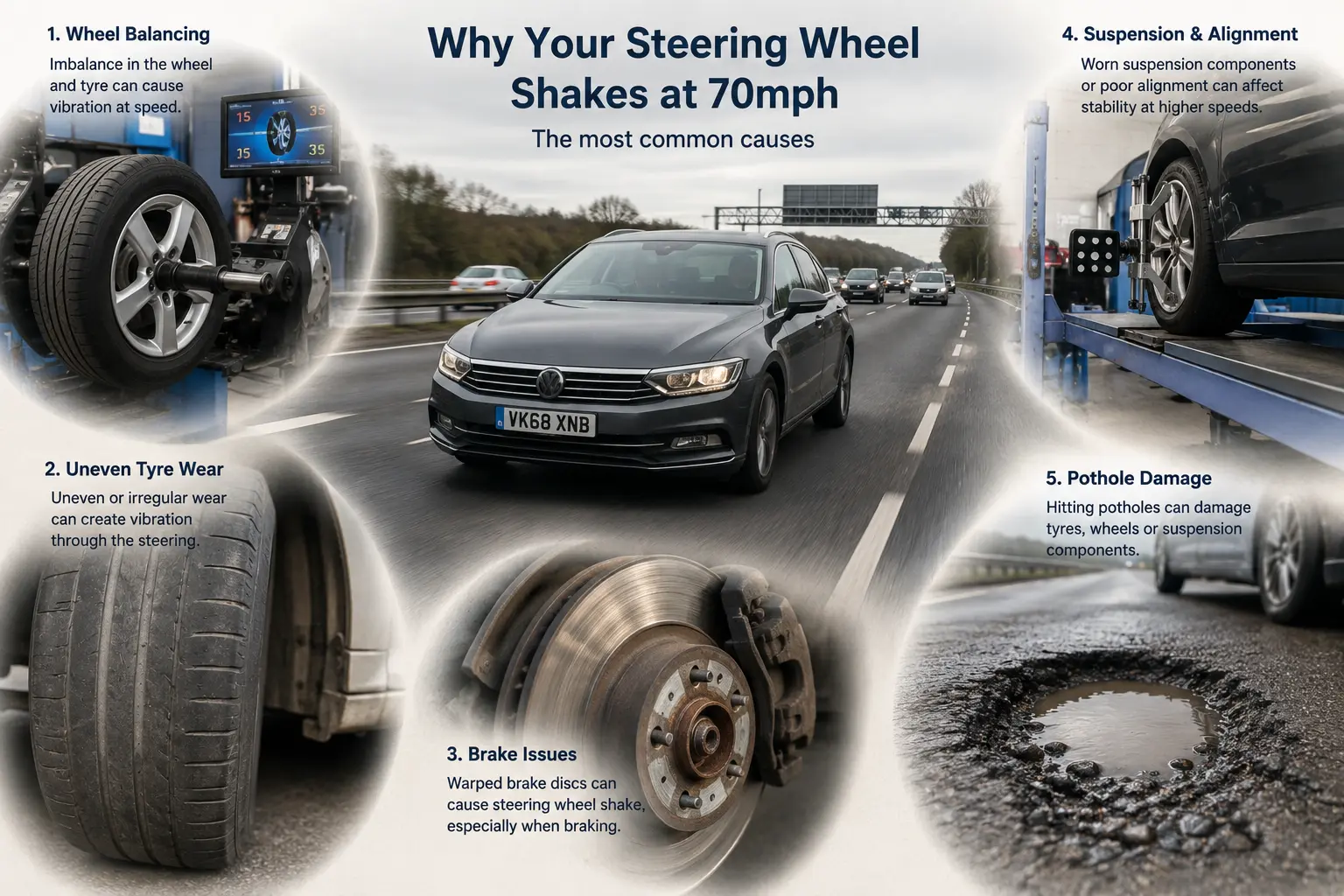
Tyres, wheel balancing, wheel alignment, suspension and even braking components can all contribute to steering wheel vibration, particularly at higher speeds where small issues become much more noticeable.
Understanding the possible causes can help drivers identify when the issue is minor, when it needs attention and why the problem often becomes most obvious at motorway speeds.
Is Steering Wheel Shake at 70mph Normal?
No. A steering wheel should feel smooth and stable at motorway speeds.
If vibration develops consistently around 60–70mph, it usually indicates that something affecting the wheels, tyres or steering system is no longer operating evenly.
In many cases, the problem is linked to wheel balancing or tyre issues, although suspension and braking components can also contribute depending on when the vibration occurs.
The good news is that steering wheel shake is often diagnosable relatively quickly once the correct areas are inspected.
Wheel Balancing Is One of the Most Common Causes
One of the most frequent causes of steering wheel shake at 70mph is incorrect wheel balancing.
Wheels and tyres are balanced using small weights designed to distribute rotational forces evenly as the wheel spins. If a weight falls off, or if the wheel was not balanced correctly after tyre fitting, vibration can develop at certain speeds.
Drivers often notice:
- Steering wheel vibration increasing around motorway speeds
- The vibration disappearing at lower speeds
- Shaking becoming worse on smoother roads
- Slight buzzing through the steering wheel
This happens because imbalance becomes more noticeable as wheel speed increases.
Even relatively small imbalances can create surprisingly noticeable vibration once travelling at higher speeds. Learn more about tyres and wheel services at Elite Garages.
Damaged or Unevenly Worn Tyres Can Cause Vibration
Tyres themselves are another common cause of steering wheel shake.
Problems can include:
- Uneven tyre wear
- Flat spots
- Internal tyre damage
- Bulges in the sidewall
- Incorrect tyre pressures
As tyres rotate at speed, any inconsistency in shape or wear can create vibration through the steering system.
This is particularly noticeable on the front wheels because the steering wheel is directly connected to them.
Potholes, kerb impacts and poor wheel alignment can all contribute to tyre-related vibration issues over time.
You can also read: Why Is My Car Pulling to One Side While Driving?
Steering Wheel Shake When Braking Often Points to Brake Issues
If the steering wheel shake becomes worse specifically while braking, the problem may not be the tyres at all.
Brake discs can gradually become uneven through heat cycles and wear. When this happens, the brake pads no longer apply pressure evenly across the disc surface, creating vibration during braking.
Drivers may notice:
- Pulsing through the steering wheel
- Brake pedal vibration
- Shaking mainly during braking
- Vibration becoming worse from higher speeds
This type of steering wheel shake should be inspected promptly because braking performance may eventually become affected. Learn more about brake inspections and repairs here.
Wheel Alignment and Suspension Problems Can Also Contribute
Steering wheel shake is not always caused by the wheels themselves.
Suspension and steering components gradually wear over time, particularly on UK roads where potholes and rough surfaces place additional stress on the vehicle.
Components that may contribute include:
- Worn suspension bushes
- Damaged shock absorbers
- Track rod ends
- Ball joints
- Poor wheel alignment
When these parts begin wearing unevenly, the vehicle may struggle to keep the wheels stable at higher speeds. Drivers sometimes describe the car as feeling unsettled, twitchy or less planted on the motorway. Find out more wheel alignment and wheel balancing services at Elite Garages.
Why Steering Wheel Shake Often Appears at 70mph
Many drivers wonder why the vibration only seems noticeable at certain speeds.
This happens because rotating components naturally create resonant frequencies. At lower speeds, the imbalance may be too minor to feel clearly. As speed increases, the vibration becomes amplified until it reaches a peak, often around motorway speeds.
In some cases, the vibration may even reduce slightly once travelling faster than the affected speed range.
This is why steering wheel shake commonly appears most noticeably between 60 and 70mph.
Can New Tyres Cause Steering Wheel Shake?
Not normally, although it can happen indirectly.
If steering wheel shake appears shortly after tyre replacement, possible causes include:
- Wheels not balanced correctly
- Existing alignment problems becoming more noticeable
- Tyre pressure issues
- Damaged alloy wheels identified during fitting
New tyres themselves should not create vibration when installed and balanced correctly.
Related reading: Why Does My Car Feel Different After Fitting New Tyres?
Is Steering Wheel Shake Dangerous?
It depends on the cause and severity.
Minor wheel balancing issues may simply feel irritating at first, but continued vibration can increase tyre wear and place additional stress on suspension and steering components over time.
More severe vibration could indicate:
- Damaged tyres
- Loose suspension components
- Brake issues
- Steering wear
If the steering wheel shake becomes progressively worse, affects braking or makes the vehicle feel unstable, the car should be inspected as soon as possible.
The RAC also recommends checking tyres regularly for damage, uneven wear and pressure issues, as tyre problems are one of the most common causes of vibration and handling concerns.
What Drivers Should Do if the Steering Wheel Shakes
If steering wheel shake develops consistently:
- Check tyre pressures first
- Inspect tyres for visible damage or uneven wear
- Avoid ignoring worsening vibration
- Pay attention to whether the shaking happens constantly or mainly while braking
- Get the wheels, tyres and suspension inspected professionally
Catching the issue early can often prevent more expensive wear developing elsewhere on the vehicle.
Why Steering Wheel Shake Should Not Be Ignored
A steering wheel should feel stable, predictable and smooth at all normal driving speeds.
While steering wheel shake at 70mph is often caused by something relatively simple such as wheel balancing, it can also indicate tyre damage, alignment problems or worn suspension components developing underneath.
The important thing is not to dismiss persistent vibration as “just one of those things”. In many cases, identifying the problem early leads to a quicker, simpler and less expensive fix.
FAQS
Click the + to read any answer or visit our most FAQ page to review the most frequently asked questions across all our Elite Locations.
If you click on a ‘Category’ or ‘Tag’ link, the page will ‘refresh’ and reload the page showing the top of the page first, you’ll then just need to scroll down to the FAQ section to see the results for the Category or Tag you selected.
Category:
Steering and Handling Issues
Poor wheel alignment can contribute to steering wheel vibration by causing uneven tyre wear and instability through the steering system. While wheel balancing is usually the primary cause of steering wheel shake at higher speeds, alignment problems can make the issue worse over time.
Category:
Steering and Handling Issues
It can be. Potholes can damage tyres, bend alloy wheels, affect wheel alignment or place stress on suspension components. If steering wheel vibration develops after hitting a pothole, the vehicle should be inspected to check for tyre, wheel or steering damage.
Category:
Steering and Handling Issues
Steering wheel shake at motorway speeds is commonly caused by wheel balancing issues, uneven tyre wear, damaged tyres or worn suspension components. The vibration often becomes most noticeable around 60–70mph because wheel rotation speeds amplify small imbalances that are less noticeable at lower speeds.


