




Understanding Track Rod Ends and Why They Matter for Your Steering
Track rod ends are a small but essential part of your steering system, and when they begin to wear, the effects can be felt almost immediately.
From vague steering and knocking noises to uneven tyre wear, worn track rod ends are one of the most common causes of poor vehicle control. In fact, many drivers don’t know what they are, why they matter and how to tell if something is wrong with your car.
In simple terms, track rod ends connect your steering rack to the wheels, allowing precise movement when you turn the steering wheel. If they become worn or loose, that connection is compromised, which can affect alignment, handling and overall driving safety.
Understanding how track rod ends work, the signs of wear, and when they should be replaced can help you avoid unnecessary tyre damage, failed MOT tests, and more serious steering issues.
What Are Track Rod Ends?
Track rod ends are steering components that link the steering rack to the front wheels, allowing controlled and accurate movement when you turn the steering wheel.
Each front wheel has one of these component, and they are designed with a ball joint that allows flexibility while maintaining a firm connection. This flexibility is what enables your wheels to move smoothly while still responding precisely to steering input.
Although small, they play a critical role in ensuring your car goes exactly where you point it.
What Do Track Rod Ends Actually Do?
These vital steering and suspension parts transfer movement from the steering rack directly to the wheels.
When you turn the steering wheel, the
- steering rack moves
- track rods push or pull
- track rod ends translate that motion into wheel movement
This allows for:
- accurate steering response
- smooth directional changes
- consistent control at different speeds
Without properly functioning track rod ends, steering becomes less precise and predictable.
Common Signs of Steering Wear You Shouldn’t Ignore
When track rod ends begin to wear, the symptoms are usually noticeable.
Typical signs include:
- knocking or clunking noise when turning
- loose or vague steering feel
- uneven tyre wear (especially on the inner or outer edges)
- steering wheel vibration
- the car drifting or pulling to one side
These symptoms often develop gradually, which is why they’re sometimes overlooked until they become more serious.
Why Do I Hear a Knocking Noise When Turning the Steering Wheel?
A knocking noise when turning the steering wheel is one of the most common signs of wear within the steering or suspension system, and it’s often linked to worn track rod ends.
As these components wear, small amounts of movement or “play” can develop within the joint. When you turn the wheel, especially at low speeds or while parking, this looseness can create a noticeable knocking or clunking sound.
While they are often the cause, they’re not the only possibility. Similar noises can also come from worn:
- ball joints
- suspension bushes
- anti-roll bar links
- steering rack components
Because several parts can produce similar symptoms, it’s important not to rely on guesswork. A proper inspection ensures the exact cause is identified and addressed correctly.

How Track Rod Ends Affect Wheel Alignment
Track rod ends play a direct role in maintaining proper wheel alignment, particularly the toe angle. If they become worn or develop play, it can cause the wheels to shift slightly out of alignment.
This leads to:
- uneven tyre wear
- reduced fuel efficiency
- steering instability
- increased strain on other suspension components
This is why issues are often identified during a wheel alignment check. In many cases, drivers only discover worn track rod ends after noticing unusual tyre wear or poor handling.
How Much Can Misalignment Affect Your Tyres?
Even small alignment issues can have a significant impact on tyre wear.
A misalignment of just a few millimetres can cause tyres to wear unevenly, particularly on the inner or outer edges. Over time, this can reduce tyre lifespan, affect handling, and increase fuel consumption.
This is why wheel alignment checks are strongly recommended whenever steering components such as track rod ends are replaced.
What Causes Track Rod Ends to Wear Out?
Although though these components are designed to be durable, they are constantly exposed to movement, pressure and road conditions.
Common causes of wear include:
- potholes and uneven road surfaces (common across UK roads)
- general mileage and long-term use
- exposure to water, dirt and road salt
- worn protective rubber boots allowing contaminants inside
Over time, the internal ball joint wears down, creating play in the steering system.
Is It Safe to Drive with Worn Track Rods?
Driving with worn track rod ends is not recommended.
As the component deteriorates, steering becomes less accurate and more unpredictable. In more advanced cases, excessive play can lead to a noticeable loss of control.
In extreme situations, a completely failed track rod end can result in a loss of steering connection, which is a serious safety risk. For this reason, garages are also check these components during MOT inspections. You can read more about common MOT-related faults here.
When Should Track Rod Ends Be Replaced?
There is no fixed replacement interval. Instead, they are replaced when wear or damage is identified.
They are typically checked during:
- routine servicing
- suspension inspections
- wheel alignment assessments
Regular servicing helps identify issues early. If wear is detected, replacement is usually straightforward and prevents further damage to tyres and suspension components.
Track Rod End Replacement and What to Expect
Track rod end replacement is a relatively quick process, but it is important that the job is completed correctly. After replacement, a wheel alignment check is essential to ensure the steering geometry is properly reset.
Without alignment, new parts can wear prematurely, and handling may still feel off. Learn more about wheel alignment and its importance here.
Is It Expensive to Repair or Replace Track Rod Ends?
In most cases, replacing track rod ends is usually a low to moderate cost repair, depending on the vehicle and whether alignment is required.
The cost typically depends on:
- the make and model of your vehicle
- whether one or both track rod ends need replacing
- whether a wheel alignment is required afterwards
A Quick Comparison of Other Steering Components
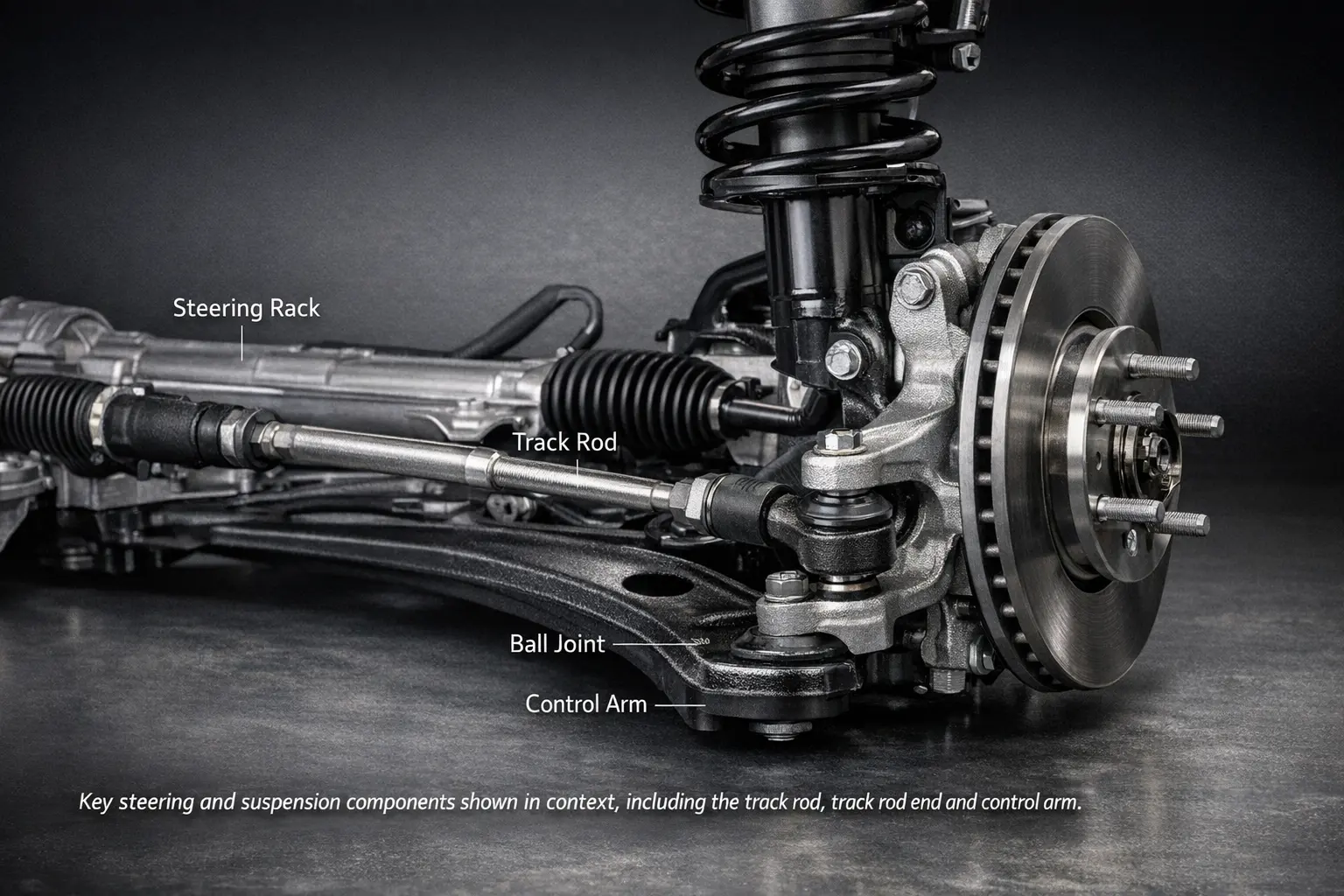
Track rod ends are often confused with other steering and suspension parts.
Here’s a simple distinction:
- Track rods connect the steering rack to the track rod ends
- Track rod ends connect the track rods to the wheels
- Ball joints allow suspension movement
- Control arms support wheel positioning
Understanding this difference helps explain why even a small component can have a significant impact on steering performance.
Why This Matters More Than Drivers Think
Problems in the steering and suspension system can affect vehicle control, handling and road safety, which is why these areas are inspected as part of the MOT. Uneven tyre wear is also another common vehicle issue in the UK, often linked to alignment and steering problems.
Worn track rod ends are a key contributor to this, as even slight misalignment can significantly shorten tyre lifespan and affect handling.
What This Means for Everyday Driving
Steering issues rarely appear all at once. More often, they develop gradually with subtle changes in how the car responds, a noise that wasn’t there before, or tyres wearing unevenly over time.
Components like track rods sit at a critical point between the steering system and the road. When they begin to wear, the effect is often small at first, then progressively more noticeable.
Recognising those early signs is usually the difference between a straightforward repair and a more involved issue later on.
Track rod ends may be small, but their role in your vehicle’s steering system is significant. If your car doesn’t feel quite right on the road, it’s always worth having it checked. Steering is not an area where small issues should be ignored.
FAQS:
Click the + to read any answer or visit our most FAQ page to review the most frequently asked questions across all our Elite Locations.
Category:
Track Rod End
Most track rod ends last for several years, but their lifespan depends on your driving style, road conditions, and exposure to moisture or salt. As a rule of thumb, have your steering and suspension checked every 10,000 miles or during your annual service. At Elite Garages, our technicians always inspect the track rod ends as part of every full car service near me package.
Category:
Track Rod End
You can, but it’s not safe, and not worth the risk. A damaged track rod end affects your car’s ability to steer accurately, especially during emergency stops or sharp turns. In extreme cases, the joint can separate completely, leading to loss of steering control. If your car feels unstable or you hear clunking from the front end, it’s best to book a wheel alignment near me and have the suspension checked.
Category:
Track Rod End
The cost to replace a track rod end varies depending on your car’s make and model, but most replacements are affordable and quick to complete (typically between £50 and £150 per side, including parts and labour). It’s one of the most cost-effective ways to improve your car’s steering safety and prevent expensive tyre or suspension repairs later on. Contact your nearest Elite Garages for more information.


