



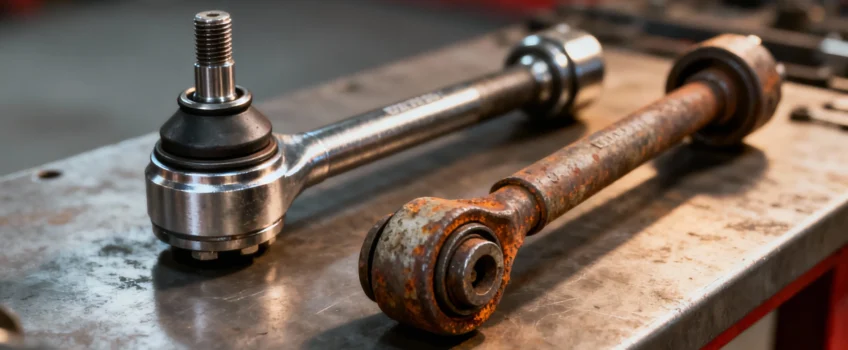
Is It Time to Replace My Track Rod End? Here’s How to Know
A track rod end may be small, but it plays a huge role in keeping your steering precise, your tyres wearing evenly, and your suspension system working as it should. It connects your steering rack to your wheels, ensuring that every turn of the steering wheel translates smoothly to the road. When a track rod end starts to fail, you’ll often notice changes in steering, tyre wear, or alignment long before it completely gives out.
In this article, part of the Elite Garages Car Parts Masterclass, we’ll break down what a track rod end is, how to recognise the symptoms of wear, and why timely replacement can save you from bigger repair bills down the road.
What Is a Track Rod End and How Does It Work?
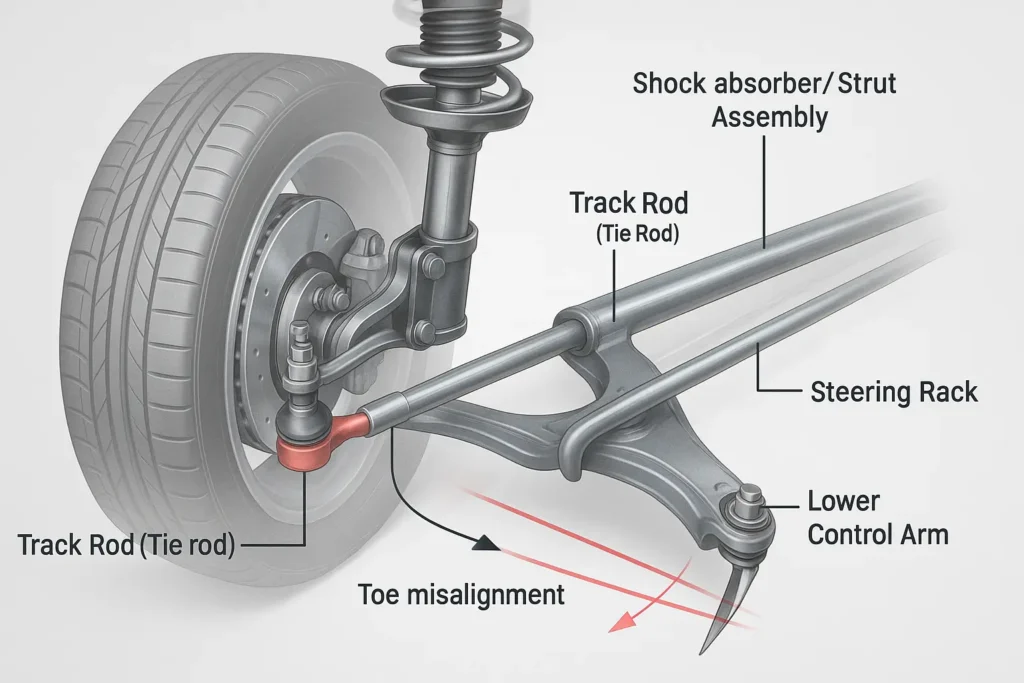
A track rod end is a vital part of your car’s steering system; a small joint that connects the steering rack to the wheel hub. It allows your front wheels to pivot and steer accurately while absorbing the bumps and vibrations from uneven roads.
You can think of it as the handshake between your steering wheel and your tyres. Each turn, bump, and correction passes through this component. Over time, this joint endures friction, moisture, and debris from the road, all of which can cause it to loosen or wear out.
When it starts to fail, you’ll often feel it through your steering before you see it. And that’s where many drivers first realise something’s wrong.
What Are the Symptoms of a Worn Track Rod End?
Spotting early signs of wear can prevent more serious steering or suspension problems later on. Here are the most common symptoms to look out for:
- Loose or vague steering: You might feel play or slack when turning the wheel.
- Uneven tyre wear: A failing track rod end affects alignment, causing one tyre to wear faster.
- Clunking or knocking noises: Particularly noticeable when turning or going over potholes.
- Vibration or wandering: The car may drift slightly when driving straight.
- MOT failure warning: Steering components are checked during every MOT near me test, so a worn part could cause a fail.
If you notice any of these signs, book a professional inspection or car service near me as soon as possible. Book a car service or an MOT near me today!
Is a Faulty Track Rod End Dangerous?
Yes, driving with a worn or broken track rod end can be dangerous. Since it’s a key link in your steering, any play or movement in the joint reduces control, especially at higher speeds or during emergency manoeuvres. If the joint fails completely, you could lose steering on that wheel, which is a serious safety risk.
That’s why Elite Garages technicians always check track rods during suspension, steering, and wheel alignment inspections. Catching the problem early keeps your vehicle safe and compliant.
Can a Track Rod End Cause Suspension Problems?
Absolutely. The track rod end is part of your car’s wider suspension system, working alongside control arms, tie rods, and ball joints to maintain proper wheel position. If the joint becomes loose or worn, it can throw off your alignment angles and place extra strain on the suspension.
Left unchecked, this can lead to:
- Premature tyre wear
- Unstable cornering
- Poor steering response
- Damage to other suspension components
If your steering feels unstable or your car pulls to one side, it’s time to get it checked. Book a suspension check at Elite Garages.
Do You Need Wheel Alignment After Replacing a Track Rod End?
Yes, we highly recommend a wheel alignment (preferably 4-wheel alignment) after replacing your track rod end. When a new joint is fitted, the position of your steering components changes slightly so even a small misalignment can cause uneven tyre wear or poor handling.
Why Alignment Matters
- Keeps your steering wheel centred
- Prevents premature tyre wear
- Improves fuel efficiency
- Reduces strain on suspension components
At Elite Garages, our branches use advanced alignment tools to ensure precision every time. If you’ve recently had a track rod end replaced, search for wheel alignment near me or book an alignment check online. Book your 4-wheel alignment at Elite Garages.
Two-Wheel vs Four-Wheel Alignment
When your track rod end is replaced, wheel alignment becomes essential, but not all alignments are the same. Many drivers hear the terms two-wheel alignment and four-wheel alignment without knowing what they actually mean.
Two-Wheel Alignment (Front-Wheel Alignment)
This process adjusts only the front wheels, ensuring they’re parallel to each other and perpendicular to the road. It’s suitable for vehicles with a fixed rear axle, like many older or smaller cars. After replacing a track rod end, a two-wheel alignment corrects the steering angle and ensures your car drives straight.
Four-Wheel Alignment (Full Alignment)
A 4-wheel alignment measures and adjusts all four wheels simultaneously, aligning the rear wheels with the vehicle’s centre line. This is ideal for modern cars with independent rear suspension, where the back wheels also influence steering and stability. It provides greater accuracy, improves tyre life, and helps your vehicle handle evenly on both sides.
At Elite Garages, our technicians use advanced alignment tools to check every angle (camber, caster, and toe) ensuring your car leaves perfectly balanced after any steering or suspension repair.
Tyres and Track Rod Ends: What’s the Connection?
Your tyres are the first to show signs of track rod end trouble. Because this part directly influences wheel angle and contact with the road, even a small amount of looseness can lead to:
- Feathered or uneven tyre wear
- Noisy driving and vibration
- Reduced braking performance
Many drivers replace new car tyres without addressing the root cause, i.e. poor wheel alignment due to a worn track rod end. It’s like fitting new shoes but walking with a limp; they’ll wear unevenly again.
At Elite Garages, we always recommend checking steering and alignment when fitting new tyres. Explore new tyres and brands on our website and read this handy guide on choosing the best tyres for your car.
Can a Bad Track Rod End Affect Your MOT Result?
Yes. During an MOT, testers inspect the steering and suspension for excessive play, corrosion, and general wear. A worn track rod end can lead to an MOT fail, even if the issue seems minor.
In fact, track rod ends are one of the most common reasons steering components need attention before a retest. Keeping your car regularly serviced prevents these issues from becoming MOT failures.
Good Driving Habits to Protect Your Suspension
Like most steering components, track rod ends last longer when you drive carefully and keep your car properly maintained. Here’s how to extend their lifespan:
- Avoid hitting kerbs or deep potholes
- Slow down over speed bumps
- Maintain correct tyre pressures
- Get regular car services near me to check steering and suspension
- Replace both track rod ends at the same time (for even handling)
Small changes in driving habits can make a big difference in avoiding expensive repairs.
Choosing Quality Track Rod Ends
Not all replacement parts are created equal. Cheap components may wear faster or fit poorly, leading to alignment problems. At Elite Garages, we use high-quality OEM or equivalent parts, ensuring safety, reliability, and longer lifespan. Our technicians torque each part to manufacturer specifications and test-drive every vehicle before return.
Keep Your Car Driving Straight and Safe with Elite Garages
Your track rod end might be small, but its job couldn’t be more important. Regular checks, especially after pothole hits or uneven tyre wear, can save you time and money whilst keeping your steering sharp. If you’ve noticed odd noises, uneven tyres, or steering issues, book a free inspection with your nearest branch today. Our expert technicians will inspect your suspension system and report any possible issues with your track rod end and other parts.
FAQS:
Click the + to read any answer or visit our most FAQ page to review the most frequently asked questions across all our Elite Locations.
If you click on a ‘Category’ or ‘Tag’ link, the page will ‘refresh’ and reload the page showing the top of the page first, you’ll then just need to scroll down to the FAQ section to see the results for the Category or Tag you selected.
Category:
Track Rod End
Most track rod ends last for several years, but their lifespan depends on your driving style, road conditions, and exposure to moisture or salt. As a rule of thumb, have your steering and suspension checked every 10,000 miles or during your annual service. At Elite Garages, our technicians always inspect the track rod ends as part of every full car service near me package.
Category:
Track Rod End
You can, but it’s not safe, and not worth the risk. A damaged track rod end affects your car’s ability to steer accurately, especially during emergency stops or sharp turns. In extreme cases, the joint can separate completely, leading to loss of steering control. If your car feels unstable or you hear clunking from the front end, it’s best to book a wheel alignment near me and have the suspension checked.
Category:
Track Rod End
The cost to replace a track rod end varies depending on your car’s make and model, but most replacements are affordable and quick to complete (typically between £50 and £150 per side, including parts and labour). It’s one of the most cost-effective ways to improve your car’s steering safety and prevent expensive tyre or suspension repairs later on. Contact your nearest Elite Garages for more information.


