


Tesla’s New Roadster Makes Headlines Again
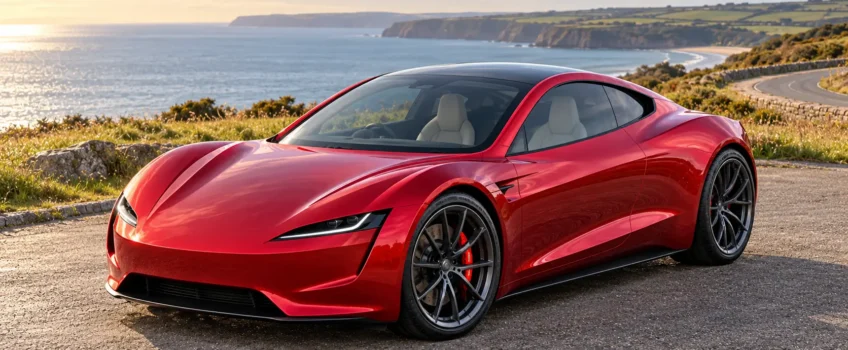
The new Tesla Roadster has returned with a demonstration few car launches could match. At its 15 October 2026 unveiling in Texas, Tesla showed a redesigned sports car performing airborne manoeuvres and presented a claimed 0–60 mph run of less than a second. Production is now targeted for 2028.
It is an extraordinary prospect, although there is a considerable distance between a controlled demonstration and a car delivered to customers. Final prices, UK delivery dates and the precise specification remain important unanswered questions, at least for now.
For most UK motorists, the new Tesla Roadster will be something to watch rather than something to put on the driveway. Yet it raises a useful question for anyone who already drives an electric car: as the technology becomes more sophisticated, what does looking after it entail?
Some familiar workshop jobs disappear when the engine goes. Plenty of others remain, alongside electrical systems that require the right knowledge and equipment. Elite Garages offers expert EV servicing and maintenance, helping electric car owners look after the essential components and systems that keep their vehicles safe, reliable and performing as they should.
New Tesla Roadster: Specs, Price and UK Availability
The latest announcement needs to be read separately from the original Roadster proposal shown in 2017. Older prices and range promises still appear online, but they should not be treated as the specification for the redesigned car.
Here is the current picture, as of 21 October 2026:
- Acceleration: Tesla presented a claimed 0-60 mph run of 0.81 seconds. This was a demonstration result, not an independently verified production-car test.
- Top speed: Tesla claims over 230 mph. Production performance remains unverified.
- Range: Approximately 300 miles claimed, rather than a confirmed UK WLTP rating.
- Configurations: Performance, Thrust and Rocket, with different equipment and capabilities.
- Specialist technology: Fan-assisted suction and optional cold-gas thrusters. The most extreme features do not apply to every version.
- Production: Targeted for 2028, without a guaranteed customer delivery date.
- Price: No confirmed final UK or US selling price. Reservation payments are not the purchase price.
- UK availability: No confirmed UK delivery date. Tesla currently specifies left-hand drive only, with availability dependent on regional legal requirements.
These details describe a vehicle under development, rather than independently verified production specifications. Anyone considering a Tesla Roadster UK reservation should check Tesla’s official Roadster page carefully: it warns that the performance specifications displayed relate to the optional Thrust upgrade.
For anyone following Tesla Roadster 2028 news, that year should therefore be understood as a target. Tesla’s US reservation agreement explicitly says it cannot guarantee when, or whether, delivery will happen.
Why the Roadster Is More Than Just Another Electric Car
Getting a car moving that quickly involves more than fitting powerful motors. The tyres must transfer force to the road, the car must remain controllable and the powertrain must cope with the demands placed on it.
Tesla’s announced suction system uses fans to help hold the Roadster against the surface. Optional cold-gas thrusters provide additional force, with the most extreme Rocket configuration intended for airborne manoeuvres. Tesla says that configuration is not approved for public road use.
There is a less theatrical engineering challenge, too: heat. Batteries, motors and power electronics need suitable temperature control. Delivering a large burst of power and managing repeated use are different demands; the finished car’s behaviour remains to be established.
These ambitions put familiar EV systems under exceptional pressure. Everyday electric cars already depend on coordinated mechanical, electrical and software systems, even when their hardest task is a wet commute rather than a performance demonstration.
Do Electric Cars Still Need Regular Servicing?
Yes, although “regular” should follow the manufacturer’s guidance for the particular vehicle. Electric car servicing is different from petrol or diesel servicing and a fixed annual package is not automatically required for every EV.
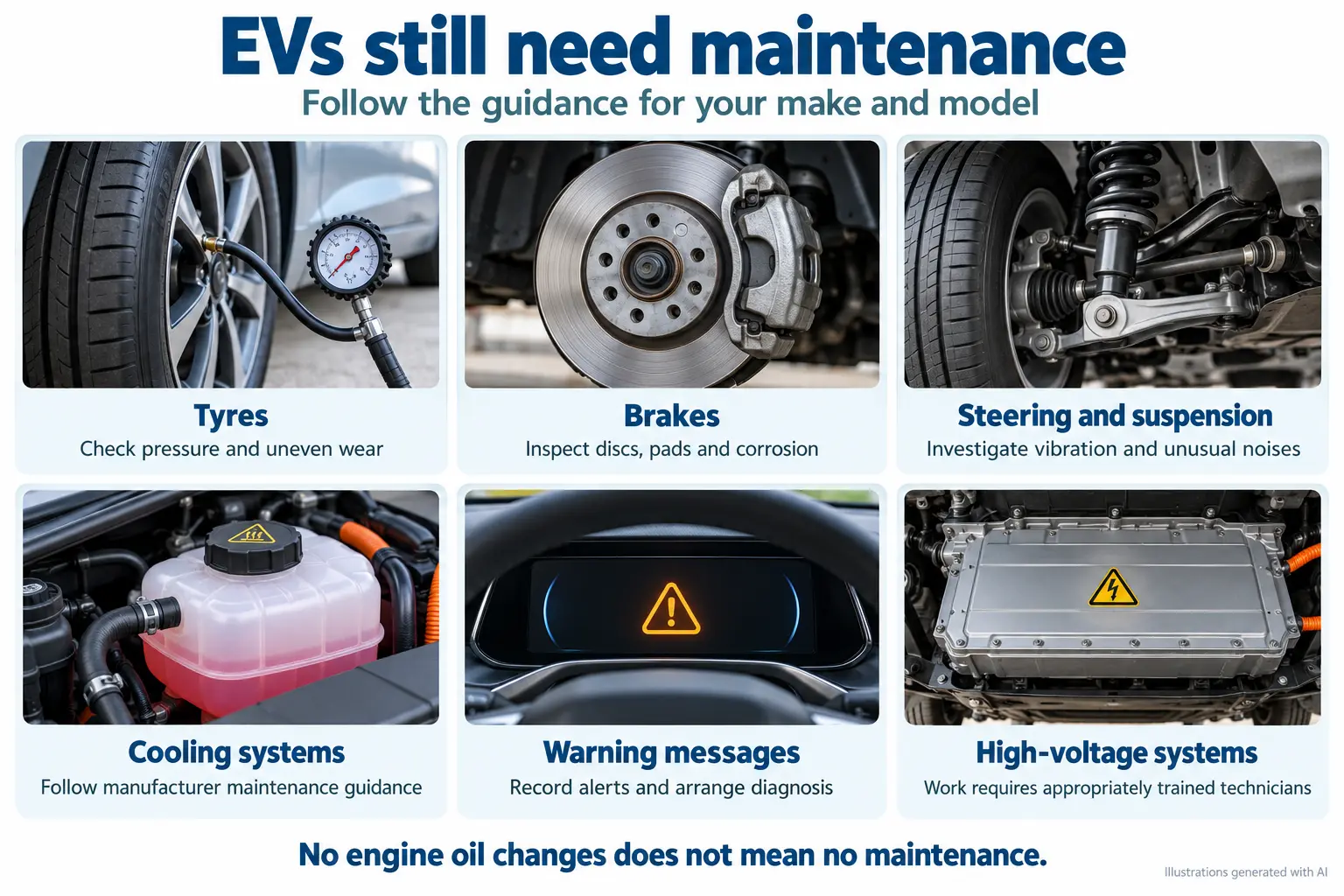
A fully electric car has no engine oil to change, spark plugs to replace or combustion-engine timing belt to renew. However, it still needs tyres that grip, brakes that work properly and steering and suspension components in good condition. Lights, wipers and other safety equipment also need attention.
Cooling systems matter where fitted, too. Their requirements vary: some need scheduled attention, while others are inspected or maintained according to condition or manufacturer instructions. Owners should check their handbook rather than assume every EV needs the same coolant maintenance.
Tesla, for example, says its vehicles don’t need an annual maintenance service, while still publishing recommendations for individual maintenance tasks. Owners should consult the current guidance for their model.
A workshop also needs diagnostic equipment suitable for the vehicle. A fault code can help identify where investigation should begin; it does not, by itself, prove which component needs replacing.
High-voltage work requires appropriate training, procedures and equipment. Routine inspections, safely isolating a vehicle and repairing components inside a traction battery are different jobs. Before arranging electric vehicle repairs, explain the fault and confirm that the workshop can undertake the particular work required.
What EV Owners Should Know About Maintenance
The most useful EV maintenance habits are often straightforward.
Watch the tyres
Check pressures against the vehicle’s recommendations and look for uneven wear. Vehicle weight, strong acceleration, alignment and driving habits can all affect tyre life. An electric badge does not mean every driver will experience the same wear rate.
If you drive a Tesla, our guide to Tesla tyres takes a closer look at tyre choice and maintenance.
Keep an eye on the brakes
Regenerative braking recovers energy while slowing the car, reducing use of the friction brakes. Pads may last longer, but lightly used discs can still corrode. Persistent scraping, vibration or a change in braking feel deserves inspection. Tesla specifically recommends brake cleaning and lubrication in areas where roads are salted.
Take cooling warnings seriously
Follow the handbook if a temperature or coolant warning appears. Do not open the traction battery or treat its cooling system as a routine DIY top-up job. Tesla’s Model 3 guidance, for example, says owners should not remove the battery coolant cap or add fluid.
Record faults rather than guessing
Note the warning message and when it appears, including whether the car was charging or driving. Follow any instruction to stop safely. A software update may address some issues; persistent warnings or malfunctioning hardware need proper investigation.
Follow your own schedule
Check the handbook and any vehicle maintenance reminders. Keep invoices and records of completed work, including condition-based inspections.
Professional Electric Vehicle Servicing at Elite
Elite Garages offers electric vehicle servicing, with the Tesla Model 3 among the vehicles listed on its service page. Its published checks include fault-code scanning, brakes, tyres, suspension and relevant cooling-system checks, alongside visual inspections of high-voltage components.
Elite also states that its EV technicians have IMI Level 3 accreditation. Its Tesla servicing page lists Tesla-compatible diagnostics and work involving brakes, suspension, wheel alignment and climate systems.
For an owner, the useful starting point is to provide the model, year and any warning messages when booking. That lets the branch confirm the appropriate service or investigation and explain its scope. A visual battery inspection, for example, should not be confused with an internal battery repair or a measured battery-capacity assessment.
Extraordinary EVs, Everyday Maintenance
The new Tesla Roadster offers an entertaining glimpse of how far electric performance might go. What reaches production, when UK buyers can receive it and which features they can legally use still need to become clearer.
Owners of today’s EVs have more immediate concerns: tyre condition, dependable brakes, warning messages and keeping up with their vehicle’s maintenance requirements. Those jobs matter just as much when there is no engine under the bonnet. You do not need a sub-one-second sports car to benefit from understanding what your electric car needs.
FAQS
Click the + to read any answer or visit our most FAQ page to review the most frequently asked questions across all our Elite Locations.
If you click on a ‘Category’ or ‘Tag’ link, the page will ‘refresh’ and reload the page showing the top of the page first, you’ll then just need to scroll down to the FAQ section to see the results for the Category or Tag you selected.
Category:
EV service tips
Not all garages are equipped for electric car servicing. Technicians should hold appropriate high-voltage qualifications and use correct safety procedures. Routine items such as tyres and suspension are widely serviceable, but high-voltage battery repairs may be manufacturer-restricted.


