




Does Your Car Feel Different After a Long Journey?
After several hours on the motorway, a fully loaded drive home or a slow journey through holiday traffic, you may notice that your car feels different.
Maybe the steering wheel vibrates at a particular speed. The brakes might feel unfamiliar, a new noise may appear over bumps or the air conditioning may seem weaker than it did at the start of the trip.
A long journey does not automatically damage a well-maintained car. However, sustained speeds, additional weight, warm weather, congestion and extra mileage can make existing wear more noticeable. A pothole or kerb strike during the journey could also affect how the vehicle behaves afterwards.
The important question is whether the change disappears once the car has cooled, been unloaded and returned to familiar roads or whether it continues during subsequent journeys.
Why Can a Long Journey Reveal an Existing Problem?
Cars are designed to cover long distances, and steady motorway driving may place fewer demands on some components than repeated short trips. A holiday journey, however, often combines several different conditions.
The car may be carrying more passengers and luggage than usual. Its tyres are operating under a heavier load, the air conditioning may run continuously and the brakes may be used repeatedly in queues or on unfamiliar hilly roads. Several hundred additional miles can also make gradual wear easier to detect.
This does not mean the journey caused every change you notice. A worn or damaged component may simply become more apparent after prolonged use. Some differences can also be temporary, such as altered handling while the car is heavily loaded or increased tyre noise on an unfamiliar road surface.
Compare how the car behaves once normal driving conditions resume.
The Steering Wheel Vibrates at Certain Speeds
A new vibration can be difficult to judge during one journey. Coarse road surfaces and strong winds can change what you feel through the car.
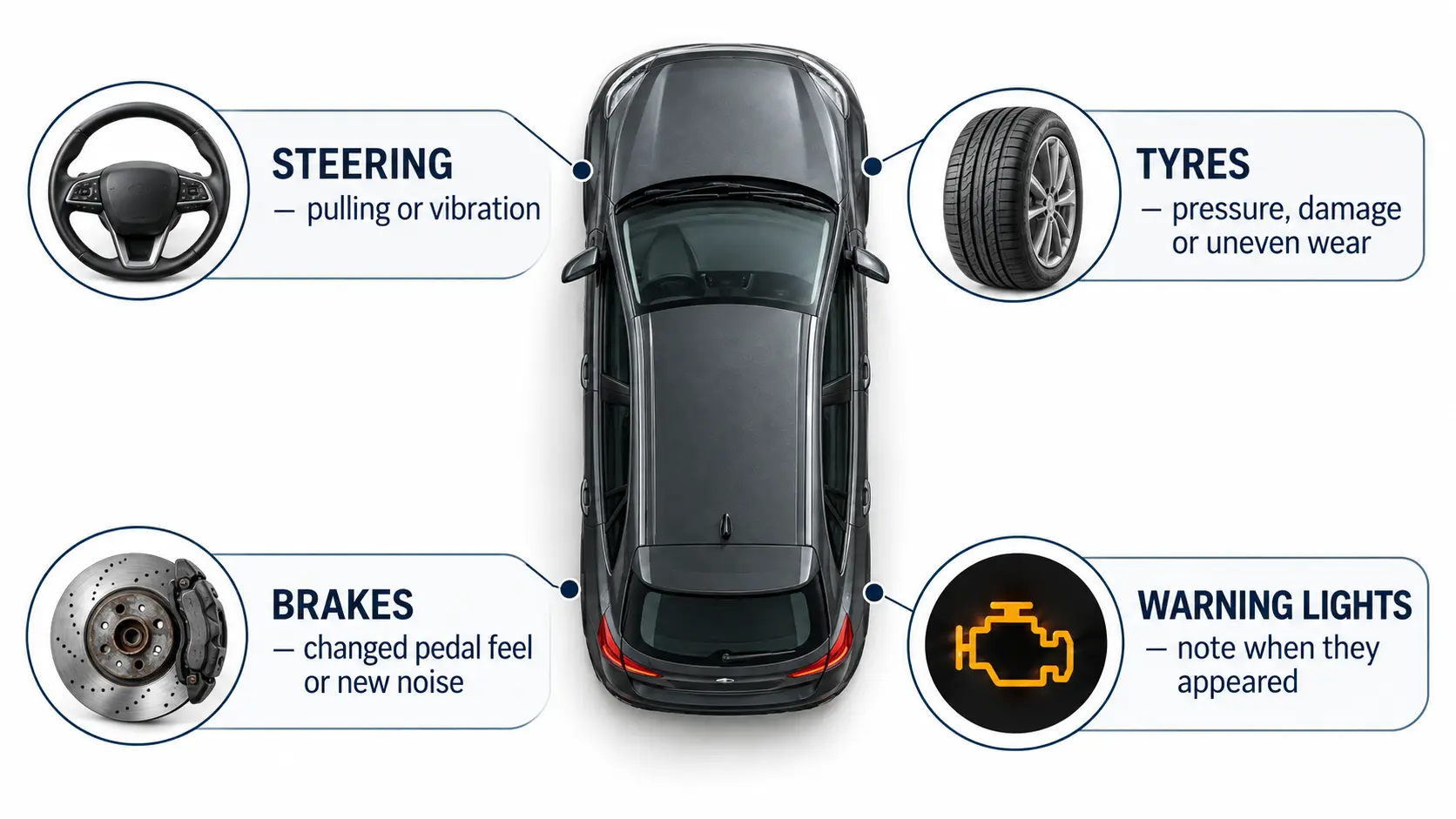
If the vibration repeatedly appears at a similar speed on different roads, it deserves closer attention. Possible areas to investigate include tyre condition, wheel balance, wheel damage, steering and suspension components.
Where you feel the vibration may provide useful information without confirming the cause. A vibration through the steering wheel can feel different from one experienced mainly through the seat or floor. Note where it occurs, the speed at which it begins and whether it becomes stronger during braking or acceleration.
A tyre problem, missing wheel-balancing weight or pothole impact may be relevant, but balancing alone will not resolve every vibration. Several related components may need to be examined.
If the vibration becomes severe or makes the vehicle feel unstable, stop driving when it is safe and seek professional assistance.
The Car Pulls or the Steering Wheel No Longer Sits Straight
A fully laden vehicle may feel different from one carrying only the driver. Road camber, crosswinds and uneven surfaces can also make a car appear to pull temporarily.
Once the luggage has been removed and the car is back on familiar roads, its steering should feel as it normally does. If the steering wheel consistently sits at an angle or the vehicle repeatedly drifts to one side, begin by checking the tyre pressures.
Use the pressures specified by the vehicle manufacturer for the car’s current load. If you increased them for a fully laden journey, check whether the manufacturer advises returning them to the normal-load settings afterwards.
If the pressures are correct and the change remains, uneven tyre wear, wheel damage, alignment or steering and suspension condition may need to be considered. This is particularly relevant if you struck a pothole or kerb during the trip.
A professional wheel alignment check can establish whether the wheels are set to the appropriate specification. The tyres and related components may also need to be inspected rather than assuming alignment is the only possible cause.
The Brakes Feel Different After the Journey
A clear motorway may require relatively little braking. A journey involving long queues, stop-start traffic or steep descents can be more demanding.
Afterwards, you may notice that the pedal feels softer, firmer or less consistent. The car might require more pressure to slow down, pull to one side or produce a new squeal, scrape, grind or judder.
One brief noise does not always indicate a fault. Moisture and light surface corrosion can sometimes cause temporary sounds after the vehicle has been parked. What matters is whether the noise continues or appears alongside a change in braking response.
Do not wait for the next scheduled service if braking effectiveness has noticeably changed. An ongoing concern should be assessed through an appropriate brake inspection.
If the pedal feels abnormal, a warning light appears or you are not confident that the car can stop safely, do not continue driving. Arrange professional assistance instead.
Check the Tyres Once They Are Cold
Tyres deserve particular attention after a long journey because their operating pressure is affected by temperature and load.
Pressure rises naturally as a tyre warms through use. A reading taken immediately after several hours of driving should therefore not be compared directly with a recommended cold pressure. Allow the tyres to cool and follow the vehicle manufacturer’s guidance.
National Highways advises drivers to ensure that tyre pressures are suitable for the load and to inspect the whole tyre, including its sidewalls, for cuts and wear. Its GOV.UK guidance for longer journeys also notes that recommended pressures vary between vehicles and may change according to the load being carried.
Look for:
- Cuts, cracks, bulges or other visible damage
- Uneven wear across the tread
- An object embedded in the tyre
- One tyre appearing lower than the others
- Repeated pressure loss after inflation
- New humming, droning or vibration
Do not release air from a hot tyre simply because its reading is higher than the recommended cold pressure. Check it again once it has cooled.
If you find damage or are uncertain about the tyre condition, an Elite Garages tyre safety check can provide a clearer assessment. A bulge, serious cut or rapid pressure loss should not be treated as something to monitor until a convenient appointment.
Extra Mileage May Make Uneven Wear More Visible
Uneven tyre wear is unlikely to develop from nowhere during one ordinary trip. However, several hundred additional miles can make an existing pattern easier to see.
Wear concentrated on an inner or outer shoulder may be associated with pressure, alignment or suspension condition. The pattern alone does not provide a complete diagnosis.
Compare all four tyres and look beyond the most visible outer edges where it is safe to do so. If the vehicle also pulls, vibrates or has an off-centre steering wheel, mention those symptoms when arranging an inspection.
The fact that the tyres completed the journey does not necessarily mean their condition can be ignored until the next MOT or service.
New Knocks or a Change in Ride Quality
Holiday journeys can involve unfamiliar roads, damaged surfaces, speed humps and awkward car-park kerbs. Additional weight may also make bumps feel more pronounced.
After unloading the car, listen for noises that were not present before the trip. These could include a clunk over speed humps, knocking from one corner or creaking while turning. You may also notice excessive bouncing, a harsher ride or less settled handling through bends.
Tyres, wheels, steering and suspension components may all need to be considered. Sound can travel through a vehicle, so the position from which you hear a knock does not always identify its source.
A mild noise heard once on a particularly poor surface may be monitored. A persistent noise, reduced stability or a change following a significant impact should be checked sooner.
The Air Conditioning Seems Less Effective
Several hours of use in warm weather can reveal that the air conditioning is no longer performing as expected.
First consider the conditions. A cabin full of passengers and luggage, strong sunlight and doors being opened regularly can make cooling more difficult. Performance may return to normal once the car is less heavily occupied and the outside temperature falls.
If the system repeatedly takes longer to cool the cabin under comparable conditions, there may be an issue involving refrigerant level, airflow, the cabin filter or another component. Unusual smells, noises, intermittent cooling or weak airflow are also worth reporting.
Poor cooling does not automatically mean the system simply needs a regas. An inspection should establish why its performance has changed before work is recommended.
A Warning Light Appeared During or After the Trip
The meaning and urgency of a warning light depend on the symbol, colour, vehicle and circumstances. Consult the owner’s handbook for the manufacturer’s instructions.
Do not assume that a warning has been resolved simply because it disappears after restarting the engine. Make a note of when it appeared, whether the car’s performance changed and whether the light returned.
Red warnings and indications of overheating, low oil pressure, braking problems or unsafe operation may require you to stop as soon as it is safe. Other warnings may permit limited driving, but the handbook’s guidance should take precedence.
The information you record can help a technician decide whether diagnostic investigation or a mechanical inspection is the appropriate next step.
Which Changes Can Reasonably Be Monitored?
A small difference may be monitored briefly when it has a plausible temporary cause and does not affect safe control of the vehicle.
For example, the car may feel less responsive while heavily loaded, tyre noise may change on an unfamiliar surface or the air conditioning may struggle temporarily in intense heat. See whether normal behaviour returns after the car has cooled, been unloaded and driven on familiar roads.
Arrange an inspection sooner if the change:
- Persists across several journeys
- Becomes more noticeable
- Began after a pothole, kerb strike or other impact
- Involves repeated tyre-pressure loss or visible damage
- Affects braking, steering, handling or stability
- Appears with a warning light, unusual smell or loss of power
Stop driving and seek assistance if the vehicle cannot be steered or stopped safely, develops severe vibration, produces smoke or a burning smell, or has a visibly damaged tyre.
Explain What Happened During the Journey
You do not need to diagnose the problem before taking the car to a garage. A clear account of the journey and the change you noticed is more useful than guessing which component is responsible.
Note when the symptom first appeared, whether the car was heavily loaded, the speed or conditions in which it occurs and whether you feel it through the wheel, pedals, seat or entire vehicle. Mention any pothole impact, warning light or unusual smell.
Depending on the symptoms, Elite Garages can help identify whether the appropriate next step is a tyre or brake inspection, wheel alignment, a steering and suspension assessment, an air-conditioning check, diagnostics or routine servicing.
A long journey may not have caused the problem. It may simply have made an existing change harder to overlook.
FAQS
Click the + to read any answer or visit our most FAQ page to review the most frequently asked questions across all our Elite Locations.
If you click on a ‘Category’ or ‘Tag’ link, the page will ‘refresh’ and reload the page showing the top of the page first, you’ll then just need to scroll down to the FAQ section to see the results for the Category or Tag you selected.
Category:
Car Safety Checks
Electric vehicles do not have exhaust systems, but tyres, brakes, suspension and electronic safety systems still require regular inspection.
Category:
Car Safety Checks
Yes. A quick inspection of tyres, fluid levels, lights and warning indicators before motorway driving can prevent breakdowns and reduce safety risks.
Category:
Car Safety Checks
Some warning lights indicate minor issues, while others relate to critical safety systems such as brakes or airbags. A red warning light should always be treated as urgent. If the vehicle feels different as well as displaying a warning, it is safer to stop driving and have it inspected.
Category:
Car Safety Checks
Tyre condition, uneven tread wear, suspension wear, and small handling changes are frequently overlooked. These problems often develop gradually, which makes them easy to ignore until they become more serious.
Category:
Car Safety Checks
It depends on the reason for the failure.
If your vehicle has been marked with a “dangerous” defect, you should not drive it until the fault has been repaired. Driving a car with a dangerous defect can put you and other road users at risk, and you could be fined if stopped.
If the failure is classed as a major defect, and your previous MOT certificate is still valid, you may be able to drive the vehicle to a pre-booked repair appointment. However, the car must remain roadworthy. If the defect affects safety, like brakes, tyres or steering, it is strongly advised not to continue driving.
Always check the classification on your MOT certificate and seek advice if you are unsure. When in doubt, err on the side of caution and arrange repairs before using the vehicle again.


