




Why Have My Tyres Started Making More Road Noise?
Most drivers notice when a tyre goes flat. A gradual change in tyre noise is much easier to overlook.
Perhaps the usual motorway hum has become noticeably louder. You might hear a rhythmic droning that rises with speed, or one corner of the car suddenly seems noisier than the others.
Tyres naturally create some road noise, and different tyres can sound quite different. But when the noise changes, particularly without an obvious reason, it can be worth paying attention.
Why Do Tyres Make Road Noise?
As a tyre rolls, its tread blocks repeatedly make contact with the road surface. Air is also compressed and released through the tread grooves.
The amount of noise you hear depends on several things, including:
- Tread pattern and tyre design
- Road surface
- Vehicle speed
- Tyre pressure
- Tyre wear
- Wheel alignment
- Vehicle sound insulation
A coarse motorway surface can make perfectly healthy tyres sound much louder than fresh asphalt, so an occasional increase in noise does not automatically indicate a problem.
A noise that persists across different roads is more interesting.
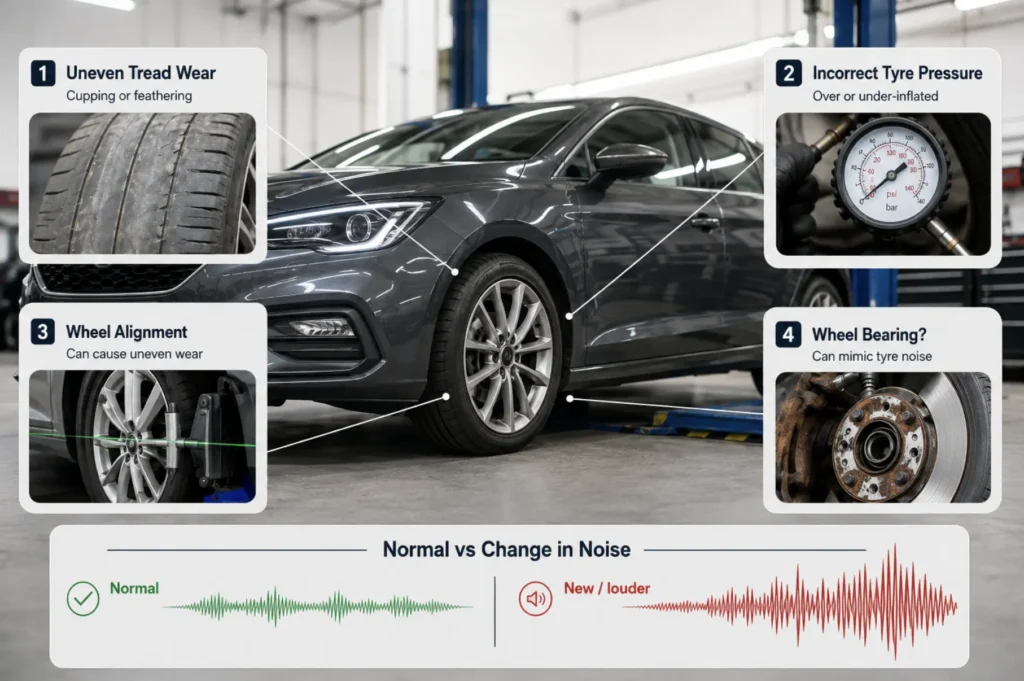
Uneven Tyre Wear Can Make a Car Much Noisier
One of the more common causes of increasing tyre noise is uneven tread wear. If your tyres seem to be wearing more quickly than expected, our guide to how long tyres last and why some wear out faster looks at some of the reasons behind premature wear.
If sections of the tread are wearing faster than others, the tyre no longer meets the road evenly. This can create a humming, droning or repetitive sound that becomes more noticeable as speed increases.
Uneven wear can be associated with issues such as:
- Incorrect tyre pressures
- Wheel alignment
- Worn suspension components
- Wheel balancing problems
- Regularly hitting potholes or kerbs
Run your hand carefully across the tread of a cold, stationary tyre and you may sometimes feel that one edge or section is more uneven than another.
Visible or unusual wear is worth investigating rather than simply accepting the extra noise.
Could Wheel Alignment Cause Tyre Noise?
Indirectly, yes. Incorrect wheel alignment can cause the tyres to scrub against the road rather than rolling as evenly as they should. Over time, that can create uneven tread wear, which may then increase road noise.
Other signs that alignment may need checking include:
- The car pulling to one side
- An off-centre steering wheel
- Uneven wear across the tyre
- Steering that feels different after hitting a pothole
If pulling is the symptom you have noticed first, there are several possible causes beyond alignment. We cover those in more detail in why your car may be pulling to one side.
Can Incorrect Tyre Pressure Make Tyres Louder?
It can. A tyre running significantly above or below the correct pressure changes the shape of the contact patch between the tyre and road.
That can affect road noise as well as handling, tyre wear and fuel efficiency. Tyre pressures should be checked when the tyres are cold and adjusted according to the vehicle manufacturer’s figures, normally found in the handbook, inside the driver’s door area or around the fuel filler flap.
Do not simply use the pressure printed on the sidewall of the tyre as your normal operating pressure.
Why Do New Tyres Sometimes Sound Different?
If the noise changed immediately after fitting new tyres, that does not necessarily mean anything is wrong.
Different tyre models use different tread patterns, compounds and construction methods. Some prioritise low road noise and comfort, while others place greater emphasis on performance, wet grip, durability or efficiency.
This is also why comparing more than price and tyre size can be worthwhile. Elite stocks tyres from a wide range of tyre brands, covering everything from everyday value options to premium performance tyres.
A more aggressive tread pattern may naturally sound different from the tyres it replaced. Tyre manufacturers now provide noise information other performance information. The GOV.UK tyre labelling guidance explains that external rolling noise is measured in decibels, which can be useful when comparing suitable replacement tyres.
For many everyday drivers, refinement is worth considering alongside price, wet-weather performance and fuel efficiency when choosing a new set of tyres.
Why Tyre Noise Is More Noticeable in Electric Cars
Tyre noise can be particularly noticeable in electric vehicles.
Without the background sound of a conventional petrol or diesel engine, noises from the tyres, suspension and road surface become easier to hear inside the cabin.
This is one reason tyres developed for electric vehicles often pay particular attention to rolling resistance and noise as well as load capacity and grip.
It does not mean every noise from EV tyres indicates a fault. It simply means there is less engine noise masking what has always been happening underneath the car.
Is It Definitely the Tyres?
Not always. A humming or droning sound that increases with road speed can sometimes come from somewhere else entirely.
A worn wheel bearing, for example, can produce a noise that drivers easily mistake for tyre roar. Suspension components and other rotating parts can also generate similar symptoms.
That is why simply replacing a tyre because “it sounds noisy” is not always the right answer. If the cause is unclear, having the vehicle inspected can distinguish normal tyre noise from something that needs attention.
When Should You Get Noisy Tyres Checked?
A slight difference between one road surface and another is normal.
Consider having the tyres or vehicle checked if:
- The noise has appeared suddenly
- It is becoming progressively louder
- One wheel seems noticeably noisier
- You can see uneven tread wear
- The steering has started pulling or vibrating
- The noise appeared after hitting a pothole
- You are also experiencing changes in handling
Any tyre with a visible bulge, cut, exposed cord or obvious structural damage should be checked promptly.
Don’t Ignore a Change in the Sound of Your Car
Some tyre noise is simply part of driving. What matters more is a change from what is normal for your car.
A new hum may turn out to be nothing more than a different road surface or the characteristics of a recently fitted tyre. But it can also be an early clue to uneven wear, incorrect pressures, alignment problems or something elsewhere around the wheel.
If your tyres suddenly sound different, checking them sooner is usually much easier than waiting for the symptoms to become more obvious.
Your local Elite Garages branch can inspect your tyres, check their condition and advise whether the noise is tyre-related or whether something else may need investigating.
FAQS
Click the + to read any answer or visit our most FAQ page to review the most frequently asked questions across all our Elite Locations.
If you click on a ‘Category’ or ‘Tag’ link, the page will ‘refresh’ and reload the page showing the top of the page first, you’ll then just need to scroll down to the FAQ section to see the results for the Category or Tag you selected.
Category:
New Tyres
Most new tyres begin settling within the first 100 to 200 miles of normal driving. During this period, steering feel and grip may gradually become more consistent.
Category:
New Tyres
New tyres do not change wheel alignment, but they can make existing alignment problems more noticeable because they provide more grip and a more consistent contact patch.
Category:
New Tyres
New tyres typically have deeper tread and more flexible rubber than worn tyres. This can make steering feel more responsive and easier to turn.
Category:
New Tyres
No. A slight change in steering feel is normal, but vibration could indicate a wheel balancing issue, tyre defect or underlying suspension problem and should be checked.
Category:
New Tyres
Yes. However, it is sensible to drive smoothly during the initial bedding-in period and avoid harsh braking or aggressive cornering where possible.
Category:
New Tyres
Car pull can happen when existing wheel alignment issues become more noticeable after tyre replacement. If the pulling persists, a wheel alignment inspection is recommended.


