



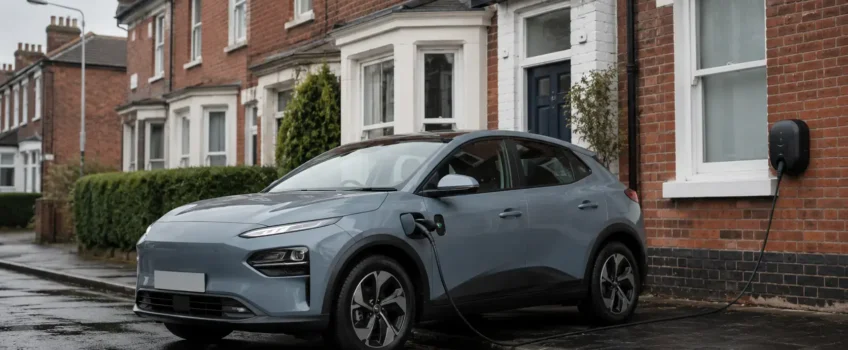
Are Electric Cars Finally Becoming the New Normal?
Electric cars have changed considerably in a relatively short time. Not long ago, conversations about them usually returned to the same objections: limited range, high prices, too few charging points and little choice beyond a handful of familiar models.
Some of those concerns remain valid for certain drivers. However, the market for electric cars in the UK looks very different in 2026. There are more models, longer claimed ranges and much greater competition between manufacturers.
That does not make an electric car the right choice for everyone. It does mean that many of the arguments formed around early EVs deserve another look.
Electric Cars in the UK Aren’t a Niche Choice Anymore
Battery-electric vehicles, or BEVs, accounted for 25.31% of new UK car registrations between January and July 2026. That compares with 21.54% during the same period in 2025, according to the Society of Motor Manufacturers and Traders.
Choice has grown just as noticeably. An EV is no longer automatically a small city car or an expensive luxury model. Electric hatchbacks, family SUVs, saloons, performance cars and vans are all available, covering a much broader spread of budgets and requirements than they once did.
Drivers can now consider cars from established manufacturers such as Volkswagen, Hyundai, Kia and BMW alongside Tesla and newer names such as BYD. The figures do not mean that every motorist is ready to switch, but they show that electric cars have become an established part of the UK market rather than an unusual alternative.
It is also important to distinguish fully electric cars from hybrids. A battery-electric vehicle runs entirely on electricity, while a plug-in hybrid combines a rechargeable battery and electric motor with a combustion engine. They can suit different drivers and should not be treated as interchangeable.
Tesla Doesn’t Have the EV Market to Itself Anymore
Tesla did a great deal to make the modern electric car feel desirable rather than worthy but compromised. Its combination of usable range, strong performance and a dedicated charging network helped bring EVs into everyday motoring conversations. The difference now is that Tesla is competing in a much busier market.
Traditional carmakers have expanded their electric ranges, while newer manufacturers have brought additional competition. BYD has become a major global presence, and names that were unfamiliar to many British motorists only a few years ago are becoming increasingly visible.
JAECOO’s rapid UK growth illustrates how quickly a new brand can gain recognition, although it needs careful context in an article about electric cars. Much of that success has involved the JAECOO 7, including its plug-in hybrid version, rather than purely battery-electric sales.
The important story is not that one manufacturer is winning while another is failing. It is that motorists now have more choice, and every manufacturer has to compete on range, price, practicality, charging performance and the overall ownership experience.
Is Range Anxiety Still a Problem for Electric Cars?
Range anxiety has not disappeared, but it has become less relevant to many everyday journeys. Older electric cars often offered a relatively short usable range, especially in cold weather or at motorway speeds. Many current models quote official ranges of 200 to 300 miles or more, giving drivers considerably more flexibility than the early generations of mainstream EVs.
An official range figure is not a promise of what a car will achieve in every situation. Cold weather, high speeds, hills, cabin heating, heavy loads and towing can all increase energy consumption. Just as a petrol car does not return identical fuel economy on every journey, an EV’s real range changes with the conditions and driving style.
For someone commuting 20 miles each way and charging at home, range may barely enter the daily calculation. A driver who regularly crosses the country, tows a caravan or depends entirely on public chargers will need to plan more carefully.
Charging access can matter as much as battery capacity. If a car can be recharged overnight on a driveway, EV ownership may feel straightforward. For someone living in a flat or terraced house without convenient access to a charger, it can be a very different proposition.
What Do Drivers Actually Like About Owning an EV?
Electric motors deliver their power smoothly and immediately. Even modest EVs can feel responsive when pulling away or joining faster traffic because there is no conventional gearbox working through a series of ratios.
The lack of engine noise also makes town driving more relaxed, while regenerative braking can reduce how often the driver needs to move between the accelerator and brake pedal. It takes some adjustment, but many owners soon find it natural.
Home charging is another major advantage for people with suitable off-street parking. Plugging the car in overnight can be more convenient than making a separate journey to a filling station.
There are compromises. Public charging can vary in price, speed and availability, while insurance and purchase costs depend heavily on the model. Longer journeys may require more planning, particularly when chargers are busy or out of service. An EV should therefore be judged against the journeys it will actually make, not against either the best or worst ownership story found online.
Electric Cars Still Need Regular Maintenance
Electric Cars Still Need Regular Maintenance. An electric car does not have engine oil, spark plugs or a conventional exhaust system, but that does not make it maintenance-free.
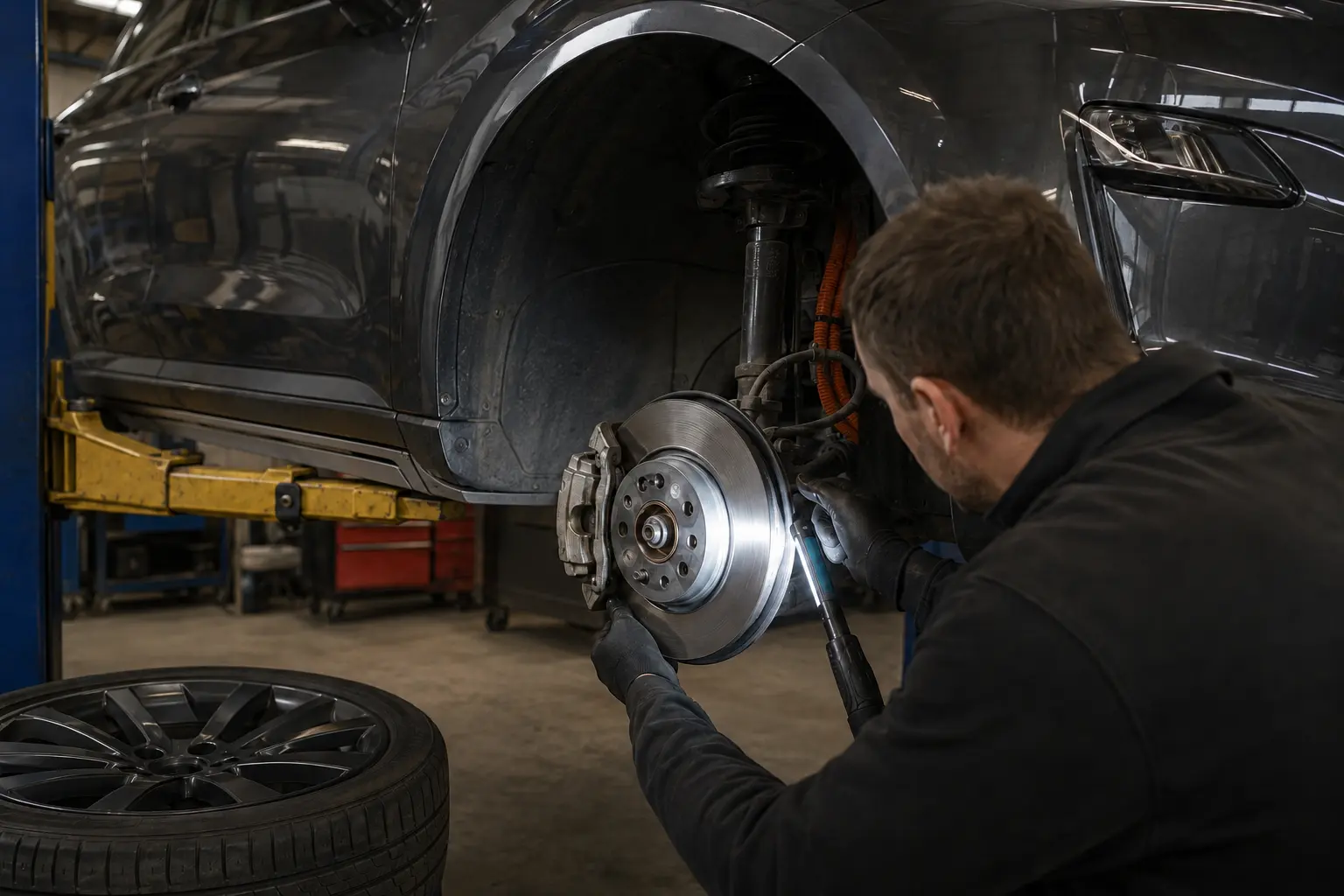
It still has tyres, brakes, steering and suspension. It also has air conditioning, cooling systems, electronics and a conventional 12-volt battery alongside its much larger traction battery. The two batteries perform different jobs: the traction battery propels the car, while the 12-volt system powers and activates many of its everyday electrical functions.
These systems require appropriate checks at the intervals specified by the vehicle manufacturer. High-voltage components also demand suitable training, equipment and safe working procedures. Electric-car maintenance is different from petrol or diesel servicing, but the underlying principle remains the same: regular attention can identify wear or developing faults before they become more serious.
If your electric car is due for maintenance, find out more about EV servicing at Elite Garages.
Why the Right EV Tyres Matter
Tyres have an especially demanding job on an electric car. EVs are often relatively heavy because of their battery packs, and the immediate torque from an electric motor can place additional demand on the driven tyres.
That does not mean every EV automatically wears through tyres quickly. Tyre life depends on the vehicle, tyre construction, wheel alignment, road conditions, pressure and how the car is driven. Frequent hard acceleration will naturally have an effect.
Rolling resistance matters too, because the energy required to move the tyre can influence efficiency and driving range. Tyre and road noise may also be more noticeable inside an EV when there is no combustion engine masking it. The correct size, load rating and speed rating must always be used. Some tyres are developed around EV characteristics, but drivers should follow the vehicle manufacturer’s specification rather than relying on an “EV” label alone or choosing solely on price.
Regular pressure and tread checks remain essential. Incorrect pressure can affect grip, wear and efficiency, whatever powers the car. When replacement becomes necessary, motorists can find and reserve suitable tyres online, using the vehicle details to narrow down the available options.
What Does Regenerative Braking Mean for EV Brakes?
Regenerative braking allows the electric motor to help slow the car. As it does so, it recovers some of the vehicle’s energy and sends it back to the battery. Because the motor handles part of the slowing, the conventional brake discs and pads may be used less frequently. This can reduce wear in some circumstances, but limited use can create different problems.
Brake discs remain exposed to rain, dirt and road salt. If the friction brakes are used lightly for long periods, corrosion can develop on the disc surfaces or components may begin to stick. Pads, discs, brake fluid and associated parts therefore still require inspection.
Regenerative braking assists the conventional braking system. It does not replace it.
Are Electric Cars Cheaper to Maintain?
They can have fewer routine servicing requirements, but there is no single answer for every car or owner. Removing the combustion engine also removes oil changes, spark plugs and conventional exhaust repairs. There are fewer engine-related moving parts and service items to consider.
However, an EV still incurs costs for tyres, brakes, suspension, steering, air conditioning, cooling systems and electrical components. Large wheels, specialist tyre specifications or complex electronic faults may also influence the cost of ownership.
Vehicle age, mileage, warranty cover and driving style all matter. It is more accurate to say that EV maintenance is different rather than automatically cheap.
Are Electric Cars in the UK Now the Obvious Choice?
For a driver with reliable home charging and predictable daily mileage, an electric car can make a great deal of sense. Most charging can take place while the vehicle is parked, and a modern battery may comfortably cover several days of ordinary local driving.
For someone without off-street parking, or who regularly makes long journeys through poorly served areas, the decision requires more thought. Towing and carrying heavy loads can also reduce range.
Petrol, diesel, hybrid and electric vehicles suit different patterns of use. The major change is that EVs can no longer reasonably be dismissed as impractical experiments. They are now a substantial part of the UK car market, with enough variety for motorists to assess them on their individual merits.
Owning an EV Still Means Looking After a Car
Electric cars may have changed what sits beneath the bonnet, but they have not changed the punishment a car receives from everyday driving. Tyres still wear, brakes still need inspection and suspension still has to cope with potholes, speed humps and uneven British roads.
Following the manufacturer’s maintenance schedule and dealing with wear promptly can help preserve safety, reliability and efficiency. If your EV is due for attention, book an EV service with Elite Garages.
FAQS
Click the + to read any answer or visit our most FAQ page to review the most frequently asked questions across all our Elite Locations.
If you click on a ‘Category’ or ‘Tag’ link, the page will ‘refresh’ and reload the page showing the top of the page first, you’ll then just need to scroll down to the FAQ section to see the results for the Category or Tag you selected.
Category:
EV service tips
Most electric cars require an MOT once they reach the normal qualifying age, just like petrol or diesel cars. There is no tailpipe-emissions test, but safety-related items such as tyres, brakes, steering, suspension and lights are still examined. Limited exemptions apply to certain vehicle categories, so owners should check the current GOV.UK MOT guidance.


