



How Long Should Brake Pads and Brake Discs Last on UK Roads?
Brakes are one of the hardest-working safety systems on your car, yet most drivers don’t think about them until they hear an unexpected squeal or notice the vehicle taking longer to stop.
So, how long do brake pads last? The honest answer is that there’s no single mileage figure. Driving style, road conditions, vehicle weight and even where you drive can all affect how quickly your brakes wear. The same applies to brake discs, which often last much longer than the pads but aren’t designed to last forever.
Knowing the warning signs of worn brake pads and brake discs can help you avoid unnecessary damage, reduce repair costs and, most importantly, keep your vehicle safe.
How Long Do Brake Pads Last?
Brake pads are designed to wear gradually as they create friction against the brake discs to slow your vehicle. On average, brake pads typically last between 20,000 and 40,000 miles, although some may wear out sooner while others last considerably longer.
Several factors influence their lifespan, including:
- Driving mainly in town or on motorways
- Frequent stop-start traffic
- Vehicle weight
- Driving style
- The quality of the brake pads fitted
For example, drivers who regularly commute through busy urban areas are likely to replace their brake pads more frequently than someone who spends most of their time cruising on motorways.
Electric and hybrid vehicles can sometimes experience longer brake pad life because regenerative braking reduces the amount of work the conventional braking system has to do. However, that doesn’t mean the brakes should be ignored, as corrosion and lack of use can create their own problems.
How Long Do Brake Discs Last?
Brake discs generally last longer than brake pads because they wear at a slower rate.
While there’s no fixed replacement interval, many vehicles require new brake discs after 40,000 to 80,000 miles, although this varies significantly depending on the vehicle, driving conditions and maintenance history.
Every brake disc has a manufacturer-specified minimum thickness. As the discs wear, technicians measure their thickness during servicing or brake inspections to determine whether they remain within safe operating limits.
Replacing worn brake pads without checking the condition of the discs can sometimes reduce braking performance and shorten the life of the new pads.
What Causes Brake Pads and Brake Discs to Wear Out Faster?
Brake wear isn’t simply a matter of mileage. Several everyday driving conditions can significantly reduce the lifespan of both brake pads and brake discs.
Common factors include:
- Frequent stop-start driving
- Heavy braking
- Driving in hilly areas
- Carrying heavy loads
- Towing caravans or trailers
- Poor-quality replacement parts
- Corrosion caused by long periods of inactivity
Modern vehicles also tend to be heavier than older models due to additional safety equipment, larger wheels, hybrid batteries and electric drivetrains. That extra weight means the braking system often has to work harder.
Regular brake inspections help identify uneven wear, corrosion and other issues before they develop into more expensive repairs.
Signs Your Brake Pads Need Replacing
Brake pads don’t usually fail without warning. Your car will often give you several signs that they’re approaching the end of their service life.
Common symptoms include:
- Squealing or squeaking when braking
- Grinding noises
- Reduced braking performance
- Longer stopping distances
- A brake warning light
- Brake pads measuring close to their minimum thickness during inspection
Some brake pads include built-in wear indicators that produce a high-pitched squeal when replacement is due, while many modern vehicles also use electronic wear sensors to alert the driver.
Ignoring these warning signs can allow the friction material to wear away completely, causing metal-to-metal contact that may damage the brake discs and significantly increase repair costs.
Signs Your Brake Discs May Need Replacing
Brake discs often wear more gradually than brake pads, making the symptoms slightly less obvious.
You may notice:
- Vibration through the steering wheel when braking
- Pulsing through the brake pedal
- Visible grooves or scoring on the disc surface
- A pronounced lip around the outer edge of the disc
- Reduced braking performance
In some cases, brake discs may still appear serviceable but have worn below the manufacturer’s minimum thickness. This is why visual inspections alone aren’t always enough; accurate measurement is essential to determine whether replacement is required.
Should Brake Pads and Brake Discs Be Replaced Together?
Not always.
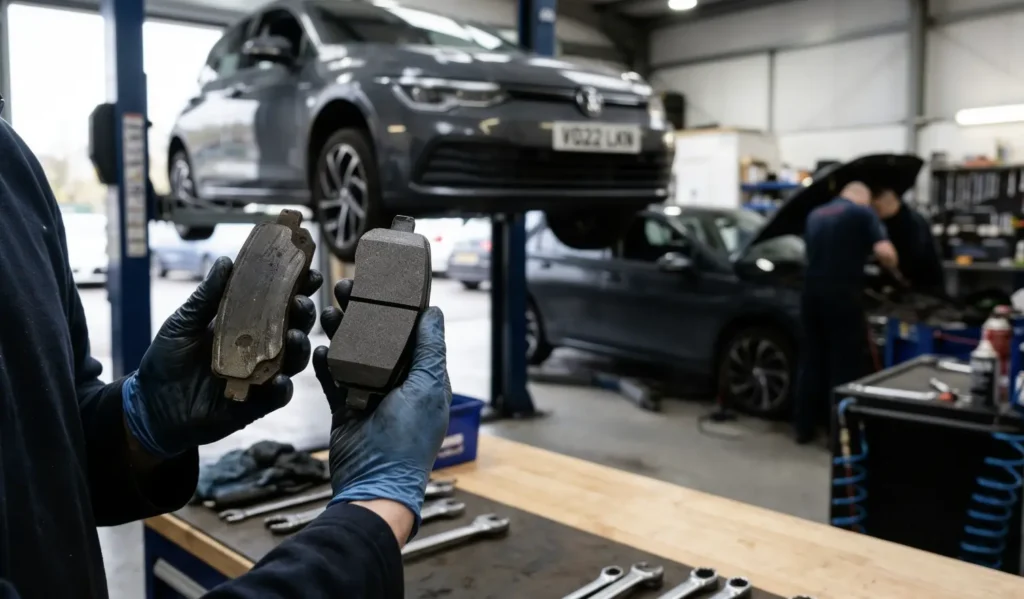
Brake pads wear much faster than brake discs, so it’s common to replace the pads without changing the discs. However, if the brake discs are heavily worn, damaged, warped or below the manufacturer’s minimum thickness, replacing both at the same time is usually the safest and most cost-effective option.
A professional brake inspection will determine whether the discs are still suitable for continued use or whether replacing both components will provide better braking performance and longer service life.
Can You Drive With Worn Brake Pads?
Technically, you may still be able to drive with worn brake pads, but it’s not something you should ignore.
As the friction material wears away, braking performance gradually deteriorates. Left unchecked, the metal backing plate can begin contacting the brake disc, causing significant damage and increasing both stopping distances and repair costs.
If your brakes begin making unusual noises, feel different or trigger a warning light, it’s best to have them inspected as soon as possible.
How Brake Inspections Can Save You Money
Many brake problems are identified long before replacement becomes urgent.
Routine inspections allow technicians to measure brake pad thickness, check brake disc wear and spot issues such as uneven wear, corrosion or sticking brake components before they become more expensive repairs.
Replacing brake pads before they damage the discs is often considerably cheaper than replacing both. That’s why it’s worth including your brakes as part of your regular vehicle maintenance rather than waiting for obvious symptoms to appear.
Brake Problems Aren’t Always What They Seem
Not every vibration or unusual noise is caused by worn brakes.
For example, wheel alignment issues, damaged suspension components or even pothole damage can produce symptoms that feel similar when driving.
If you’ve recently noticed your car feels different after hitting a pothole, you may also find this guide helpful. Likewise, if you’re experiencing unusual steering or handling after replacing your tyres, this article explains some of the possible causes
What This Means For Drivers
Brake pads and brake discs are wear-and-tear items, but they shouldn’t be left until they become a safety concern.
Knowing how long brake pads and brake discs typically last, recognising the early warning signs of wear and arranging regular inspections can help you avoid unnecessary repairs while keeping your vehicle safe on the road.
Whether you’ve noticed unusual noises, vibrations when braking or simply want reassurance that everything is in good condition, having your braking system professionally inspected is a sensible step.
FAQS
Click the + to read any answer or visit our most FAQ page to review the most frequently asked questions across all our Elite Locations.
If you click on a ‘Category’ or ‘Tag’ link, the page will ‘refresh’ and reload the page showing the top of the page first, you’ll then just need to scroll down to the FAQ section to see the results for the Category or Tag you selected.
Category:
Brake pads
Brake squeal isn’t always a sign that the pads need replacing. Moisture, surface corrosion, brake dust, glazing or the type of brake pad fitted can all cause noise. If the squealing persists, it’s worth having your braking system inspected to rule out any underlying issues.
Category:
Brake pads
In most vehicles, yes. The front brakes typically handle a greater share of the braking force, which means the front brake pads usually wear out sooner than the rear ones. However, this can vary depending on the vehicle and driving conditions.
Category:
Brake pads
Yes. Uneven brake pad wear can be caused by sticking brake calipers, seized guide pins, worn suspension components or incorrect installation. A brake inspection can identify the underlying cause before it leads to more extensive repairs.
Category:
Brake pads
It’s often a good idea to replace all four brake pads at once but it’s not necessary as they are designed to wear evenly across all the wheels. The decision depends on the specific circumstances of your vehicle and driving habits but it’s always best to consult with a professional vehicle technician to determine the best course of action. Book a brake replacement service!
Category:
Brake pads
Most cars have a warning light on the dashboard which will appear if your brake pads are starting to wear down. You may also hear squealing or grinding noises when you press down on the brake pedal, which indicates that it is time for a change. If you notice any of these signs, we recommend getting your brakes checked as soon as possible. Book a free brake inspection now!


