



How to Prevent Exhaust Damage: A Guide to Exhaust Care and Emissions
Most drivers only think about how they can prevent exhaust damage when something goes wrong; usually after a loud rattling noise, a sudden increase in engine volume, or a failed MOT. But a healthy exhaust system does far more than quieten your car. It protects the environment, reduces harmful emissions, and plays a crucial role in safety and fuel efficiency.
When exhaust issues start, they rarely get better by themselves. A small hole grows into a major blowout; a rusty bracket becomes a loose pipe; and a minor emissions issue becomes an MOT failure. The good news is that most exhaust issues are preventable. With the right knowledge and regular checks, you can prevent exhaust damage, improve fuel economy, and protect essential components like the catalytic converter and DPF.
This guide explores everything you need to know, from daily habits to technical insights, all designed to help you extend the life of your exhaust system.
What Does Your Car’s Exhaust System Actually Do?
To understand how to prevent exhaust damage, it helps to know what the system is responsible for. While many drivers assume it’s just a “pipe that makes things quieter,” the exhaust actually:
Channels toxic gases safely away from the cabin
- Reduces harmful emissions
- Suppresses excessive engine noise
- Helps the engine breathe efficiently
- Supports overall fuel economy
- Works with sensors to ensure correct air-fuel mixture
A modern exhaust isn’t a single tube but rather a complex network of pipes, chambers and emission-control components working together under extreme heat, moisture and vibration.
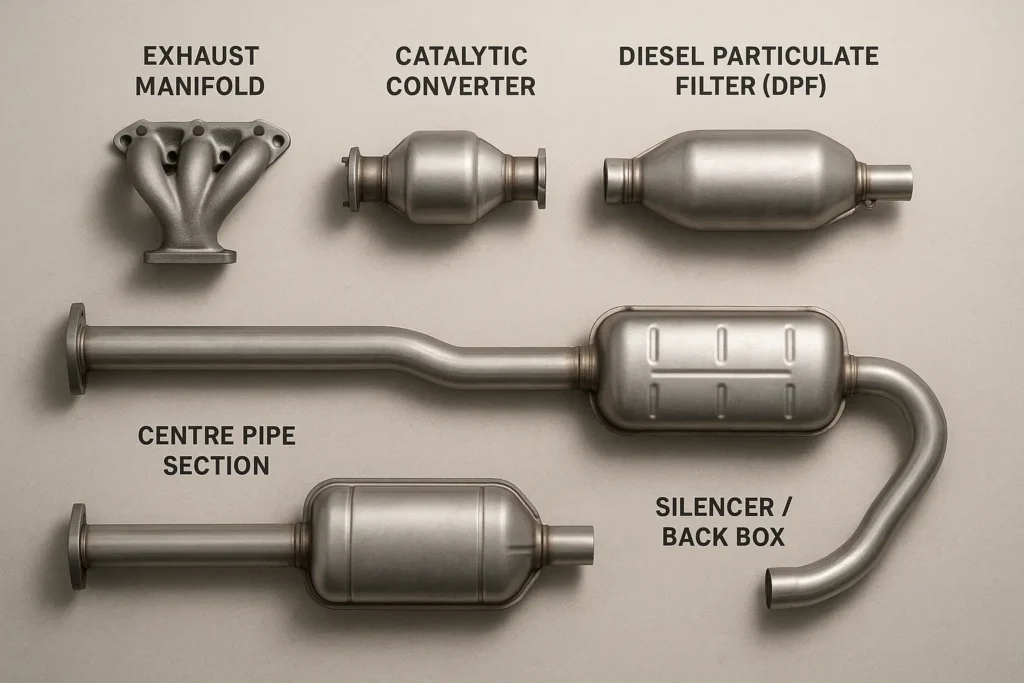
A typical exhaust system includes
- Exhaust Manifold: Collects hot gases from the engine cylinders.
- Catalytic Converter: Converts toxic gases (CO, NOx, hydrocarbons) into less harmful emissions. Theft of catalytic converters has increased due to valuable metals like platinum and palladium.
- Diesel Particulate Filter (DPF): Exclusive to diesel cars. Traps soot particles and burns them off during regeneration.
- Centre Pipe: Transfers gases from the catalytic converter to the rear of the car.
- Silencer / Back Box: Reduces noise using chambers, baffles and acoustic engineering.
- Exhaust pipe / Tailpipe: The visible end of the exhaust system where gases exit.
Every single exhaust component can fail for different reasons, like corrosion, impact damage, overheating, contaminated fuel, or even simple age. Preventing damage begins with understanding those risks.
How to Prevent Exhaust Damage: Practical, Proven Tips
Like many other car parts, it’s often easier to prevent exhaust damage than repairing it. Here are the most effective steps every driver should take to ensure a healthier exhaust system and emissions:
1. Avoid Frequent Short Trips
Short journeys prevent the exhaust from reaching a high enough temperature to evaporate condensation. Moisture settles inside the pipe, accelerating rust and internal corrosion.
If you regularly take short trips:
- Your exhaust will corrode faster
- The DPF may struggle to regenerate
- The catalytic converter may not reach operating temperature
Occasional longer drives help evaporate moisture and keep emissions components healthy.
2. Protect the Exhaust From Physical Damage
Many exhaust failures are caused by simple impact damage:
- Speed bumps
- Kerbs
- Deep potholes
- Uneven driveways
- Road debris
Cars with a lowered suspension are especially vulnerable. A single impact can:
- Crack welds
- Knock hangers loose
- Damage the catalytic converter
- Break the flexi-pipe
- Cause rattles or leaks
Regardless of your car or suspension type, make sure you always take ramps slowly and avoid deep puddles to help reduce risk even more.
3. Watch for Leaks From Other Components
Oil, coolant, and gearbox leaks can drip onto hot exhaust parts, causing corrosion or thermal shock. Addressing engine leaks early helps prevent exhaust damage as well.
4. Fix Engine Misfires Quickly
A misfiring engine allows unburnt fuel to ignite inside the exhaust, overheating and damaging:
- Catalytic converters
- Oxygen sensors
- DPFs
- Silencers
Cat failure can cost £400–£2,000 depending on the vehicle. A simple coil pack or spark plug replacement can prevent expensive repairs.
5. Keep Exhaust Mounts, Hangers and Heat Shields Secure
These small components do big jobs:
- Supporting the exhaust system
- Keeping pipes aligned
- Preventing vibration damage
- Shielding nearby components from heat
Broken mounts lead to:
- Clunks
- Sagging exhaust pipes
- Stress fractures
- Complete exhaust detachment
Most are inexpensive to replace and can be checked during routine servicing.
6. Address Rust Before It Spreads
UK roads see mixtures of moisture, grit, salt and temperature changes which are all ideal conditions for corrosion. Early rust can often be managed or repaired cheaply. Advanced rust leads to holes, blowouts and full system replacements.
Look for the following signs:
- Flaking metal
- Orange/brown scaling
- Rust around welds
- Bubbling around seams
Elite Garages can detect early rust during free safety checks or routine servicing.
7. Don’t Ignore Strange Noises
Noise changes are often the earliest signs of exhaust trouble:
- Hissing: small leaks
- Rattling: loose brackets or heat shields
- Booming/drone: silencer failing internally
- Ticking: manifold leak
- Harsh roaring: major pipe or back box failure
The sooner you address the noise, the less damage spreads.
Understanding the Silencer: The Most Misunderstood Exhaust Component
The silencer, or back box, often suffers the most damage because it’s exposed underneath the vehicle, collects condensation internally, faces constant vibration and rusts faster than the rest of the exhaust partts. It works by funneling exhaust gases through chambers and perforated pipes designed to reflect and cancel sound waves. When something internal breaks, drivers hear:
- A hollow, booming sound
- Unusually loud acceleration
- Metallic rattling
- Harsh drone inside the cabin
While many drivers assume a loud exhaust just “needs tightening,” a failing silencer can affect emissions, backpressure, and fuel economy. Knowing how it works helps you understand how to prevent exhaust damage before it becomes costly.
Types of Exhaust Systems (and How They Affect Durability)
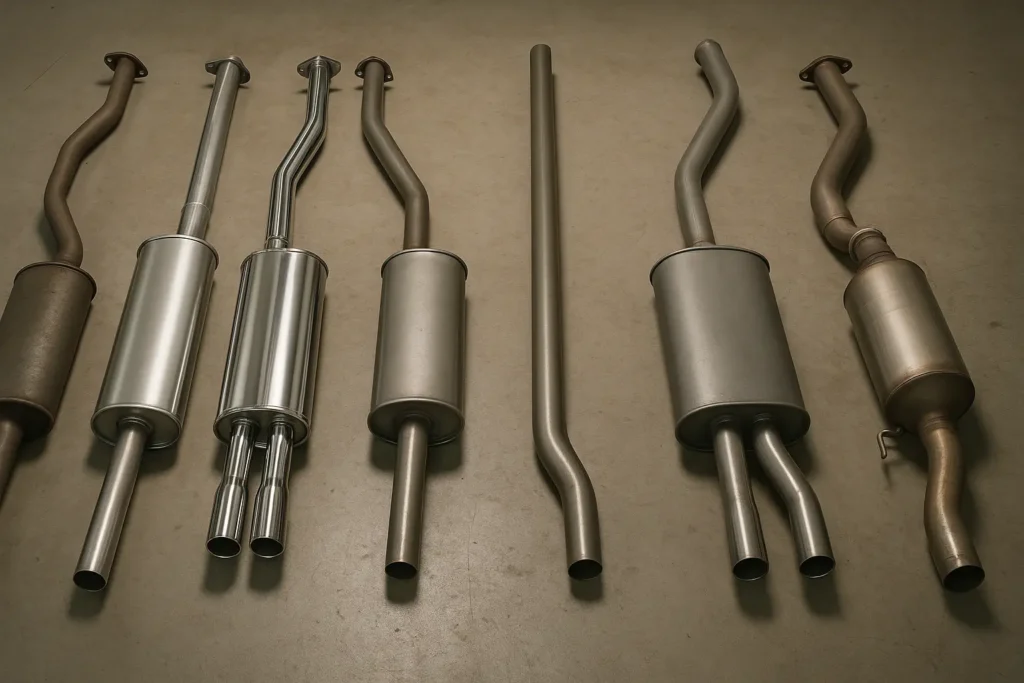
To expand the educational value of the blog, here’s a simplified breakdown of exhaust styles:
- Mild Steel Exhausts: Common and affordable but prone to rust.
- Stainless Steel Exhausts: More durable, rust-resistant, and long-lasting—popular with performance drivers.
- Performance Exhausts: Enhance sound and airflow; must still meet MOT noise and emissions regulations.
- Single vs Twin Exhaust Systems: Twin systems help with airflow in certain engines, but do not automatically increase performance in everyday cars.
- Diesel Exhausts: Include DPFs, which require specific driving habits to avoid clogging.
- Hybrid and EV Note: Hybrids still have full exhaust systems; EVs have none.
Common Causes of Exhaust Damage (Beyond Corrosion)
Rust is only one piece of the puzzle. Other major causes of exhaust damage include:
- Thermal Shock: Cold water splashing onto a hot exhaust (puddles, floods) can crack components.
- Poor Fuel Quality: Creates excess soot and contaminants.
- Loose Engine Mounts: Cause the exhaust to flex excessively.
- DPF Blockage: Leads to pressure issues, overheating, and emissions faults.
- Driving habits: Aggressive acceleration and engine braking can stress the system.
Understanding the cause helps to prevent exhaust damage and a repeat failure.
How Exhaust Condition Affects Emissions and MOT Results
Exhaust damage isn’t just noisy, it can directly cause MOT failures, and here’s how:
- CO and HC emissions
- Lambda (air-fuel ratio) readings
- DPF efficiency
- Cat conversion rates
- Noise limits
- Structural integrity under the vehicle
Common MOT failures related to exhausts:
- Leaks
- Excessive noise
- Insecure brackets
- Missing heat shields
- Damaged catalytic converter
- Blocked DPF (“soot loading”)
- High emissions readings
Maintaining your exhaust is one of the easiest ways to avoid an MOT retest.
What Elite Garages Checks During an Exhaust Inspection
As part of your routine service or an exhaust-specific visit, Elite’s technicians will inspect:
- Exhaust manifold condition
- Flexi-pipes
- Catalytic converter integrity
- DPF condition and regeneration history
- Rust, holes, blowouts
- Brackets, mounts and hangers
- Heat shields
- Back box and silencer chambers
- Tailpipe condition
- Oxygen sensor readings
- Emissions output
You’ll never be surprised with unexpected repair work as Elite always gets approval before proceeding and can show you any old parts removed. Find out more about which car problems cost the most in this comprehensive guide.
When Should You Book an Exhaust Check?
You should book an inspection in the following scenarios:
- Car sounds louder than usual
- Notice fumes or unusual smells
- Notice a drop in fuel economy
- Hear rattling under the car
- You drive mostly short journeys
- You see rust or holes on the visible section of the exhaust
- Your MOT is due soon
A quick check at Elite can confirm whether the issue is minor, or something requiring immediate attention. Book a Free Exhaust Check today!
Final Thoughts on How You Can Prevent Exhaust Damage
Preventing exhaust damage isn’t complicated but it is essential. From emissions control to fuel economy and avoiding MOT failure, your exhaust system plays a vital role in your car’s overall health. By understanding how it works, recognising early signs of trouble, and adopting simple exhaust damage prevention habits, you can extend the life of your exhaust system and avoid costly repairs.
When you need expert advice or a thorough inspection, Elite Garages’ technicians across all our locations are ready to help.
FAQS: Prevent Exhaust Damage
Click the + to read any answer or visit our most FAQ page to review the most frequently asked questions across all our Elite Locations.
If you click on a ‘Category’ or ‘Tag’ link, the page will ‘refresh’ and reload the page showing the top of the page first, you’ll then just need to scroll down to the FAQ section to see the results for the Category or Tag you selected.
Category:
Exhaust Damage
Unfortunately you can’t prevent exhaust rust entirely. No exhaust lasts forever, but regular servicing, longer drives, avoiding impacts, and keeping mounts secure will dramatically extend its life.
Category:
Exhaust Damage
Not necessarily. Exhaust leaks can let carbon monoxide enter the cabin and may damage emissions components. Driving with a damaged exhaust can have all sorts of negative effect, including your overall performance and your MOT test.
Category:
Exhaust Damage
Once a year during your service is ideal, but book sooner if you notice noise changes, strange smells, drop in fuel economy or rust starting.


