



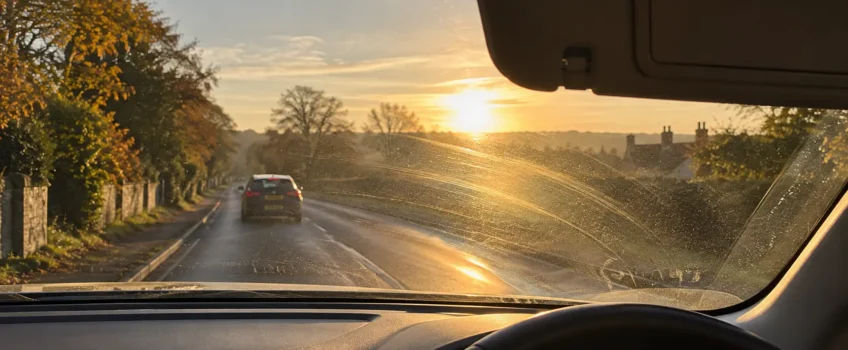
Why Autumn Sunshine Can Be a Nightmare Behind the Wheel
The windscreen looks perfectly clear as you leave home. You turn out of a shaded road into the sunshine and suddenly every smear appears: fingerprints near the dashboard, curved wiper marks and a greasy haze across the glass.
A moment ago you could see comfortably. Now you’re lowering the visor and trying to make out the traffic ahead through a screen that looks as though it needs another wash.
It’s a familiar frustration when driving in low sun. A bright, dry autumn morning can feel like ideal driving weather, yet visibility can change as soon as the road points towards the light. The sunshine hasn’t made your windscreen dirty. It has revealed what was already there. Understanding that difference helps you deal with the problem before your next journey.
Why Low Autumn Sun Is So Awkward
During autumn, the sun follows a lower path across the sky than it does in summer. Morning and late afternoon journeys are particularly likely to put it close to your line of sight.
Instead of shining down from above, sunlight can come straight through the windscreen towards your eyes. The visor helps but it cannot always block a sun sitting just above the road without also blocking part of your view.
The effect changes with your surroundings. Buildings and trees may shield you for several minutes then a bend or an open stretch brings the glare back. A familiar junction can look quite different when the sun sits behind the traffic lights.
That is what makes autumn driving in sunshine surprisingly tiring. You may move repeatedly between shade and bright light adjusting your view while still watching the road.
Why a Clear Windscreen Suddenly Looks Dirty
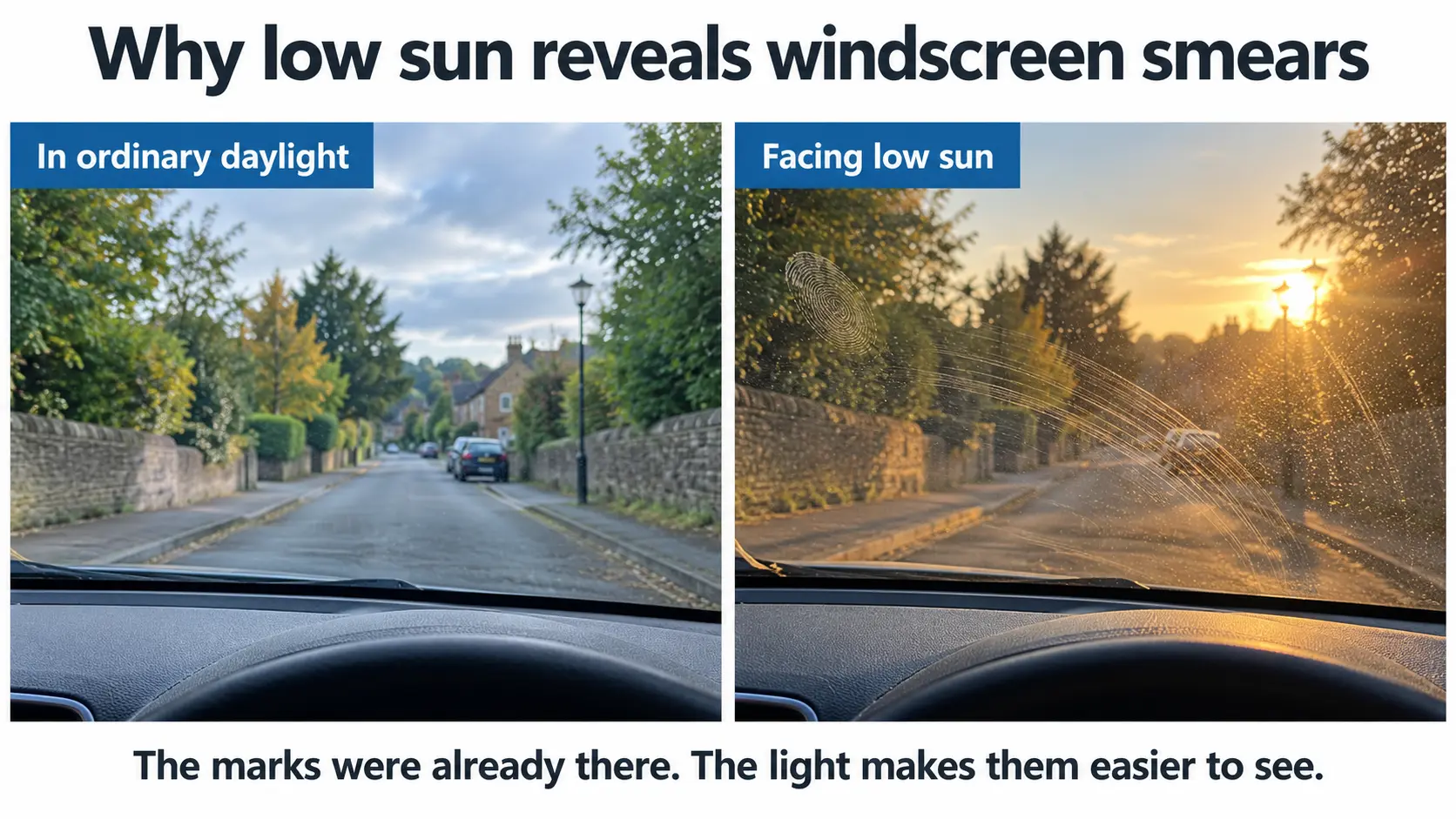
A windscreen can look clean without actually being clean. In ordinary daylight, a thin film or a few dried marks may barely register. Direct sunlight makes those imperfections stand out, creating a bright haze over the view beyond.
Inside the car, greasy film can build up gradually across the glass. Fingerprints add local smears, particularly where someone has wiped away condensation with a hand. A quick wipe may clear moisture while leaving another mark behind.
Outside, dirt and road film collect between washes. Dried washer marks can remain after the liquid has evaporated, while wipers may leave curved streaks across their swept area.
Fine scratches are a different issue. They cannot be washed away and bright sunlight can make them much more noticeable.
The AA’s windscreen cleaning advice explains that haze inside the glass and scratches outside can worsen dazzle. If marks remain after thorough cleaning, have the glass assessed rather than repeatedly trying stronger cleaning products.
Clean Both Sides, Not Just the Obvious Dirt
When windscreen glare becomes a nuisance, the natural response is to use the washers. That may help with dirt outside but it will do nothing for fingerprints or greasy film inside.
Clean both surfaces while parked. Use a glass cleaner suitable for automotive glass and clean microfibre cloths, following the product instructions. Work across the whole screen, including the lower corners, then use a separate dry cloth to remove remaining streaks.
A cloth already used on the dashboard may carry polish or other residue, so keep one specifically for the glass. The aim is to remove the film rather than move it around.
Take a moment to check your work from the driver’s seat. Marks that are easy to miss from outside may sit directly in your view of the road. Avoid reaching across to polish a smear while driving. If it is affecting your visibility, find somewhere safe to stop and deal with it properly.
Worn Wipers Can Leave Their Own Glare Behind
You don’t need a downpour to discover that your wipers are struggling. A squirt of washer fluid on a sunny road can expose the problem just as clearly.
Instead of leaving clean glass, worn or dirty blades may spread the liquid into streaks. Those marks become particularly distracting when you are driving into the sun.
Look for persistent streaking, juddering across the screen, missed areas or visibly split rubber. These are reasons to inspect the blades rather than simply use more washer fluid.
Dirt on the blade or glass can also affect the wipe so start by checking cleanliness. If the rubber is damaged, or the blades still fail to clear the screen properly after cleaning, replacement may be needed.
A wiper that moves across the windscreen is not necessarily doing its job well. What matters is the view it leaves behind.
How to Reduce Glare While Driving
There is no single adjustment that removes all sun glare while driving. The useful approach combines a clearer windscreen with a little more space and a calmer pace. If the glare starts to limit your view, ease off smoothly. Increase the gap to the vehicle ahead so you have more time to notice slowing traffic and respond.
Lower the sun visor where it helps, keeping your view of the road clear. Avoid staring directly towards the sun, keep your attention on the road and the detail you need to follow it safely.
Have suitable sunglasses within easy reach before setting off. Choose lenses intended for daytime driving and remove them when the light becomes too dim. Very dark lenses are not automatically a better choice.
Sunglasses can make bright conditions more comfortable but they cannot compensate for a dirty windscreen or make it sensible to continue at a speed that exceeds your visibility.
If you cannot see enough to continue safely, slow down and stop somewhere safe. Don’t keep going in the hope that the next bend will solve the problem.
Think About the Driver Facing You
When the sun is behind you, your own view may be excellent. An oncoming driver could be looking straight into it.
That matters when you are approaching a narrow section, passing parked cars or waiting to turn across traffic. The other driver may not see your car or indicator as clearly as you can see theirs.
Allow time for their response rather than assuming they have noticed you. Appropriate dipped headlights can help make your vehicle more visible, although they cannot remove the other driver’s glare.
It is an easy detail to overlook on a pleasant drive: clear visibility from your seat does not mean everyone around you has the same view.
Five Small Checks That Support a Clearer Journey
You don’t need a lengthy seasonal checklist to tackle low-sun visibility. Keep the attention on a few everyday items:
- Windscreen: Clean inside and out, and have persistent scratches or damage assessed.
- Wipers: Check for streaking, juddering, missed areas and split rubber. If they are no longer clearing the glass properly, read our guide on when to replace your windscreen wipers.
- Washer Fluid: Check the level and use suitable screenwash according to its instructions.
- Lights: Check that lights and indicators work and their lenses are clean.
- Tyres: Check condition and pressures, although tyres cannot reduce glare, they still matter when you need to slow down.
If you would like help checking those everyday vehicle items, Elite Garages offers a Free Vehicle Safety Check. It includes tyre condition and inflation, lights and indicators, windscreen wipers and blades, and the washer fluid level.
Give Yourself a Clearer View Before the Next Sunny Drive
A sunny forecast tells you little about how clearly you will see through the windscreen. Cleaning both sides of the glass and dealing with poor wiping can make the next bright journey less frustrating.
Once you are moving, let your visibility set the pace. A little more space and a smooth reduction in speed are useful adjustments when the sunshine catches you out.
A few minutes spent checking the glass and wipers before setting off can make a noticeable difference when the road turns towards the sun. If you’re unsure whether your wipers need replacing or would like advice on the checks above, find your nearest branch through Elite Garages Locations.
FAQS
Click the + to read any answer or visit our most FAQ page to review the most frequently asked questions across all our Elite Locations.
If you click on a ‘Category’ or ‘Tag’ link, the page will ‘refresh’ and reload the page showing the top of the page first, you’ll then just need to scroll down to the FAQ section to see the results for the Category or Tag you selected.
Category:
Driving Visibility
Yes. Worn blades can leave streaks and smears that become more noticeable in bright sunlight. Check the glass and blades for dirt, and replace damaged or ineffective blades.
Category:
Driving Visibility
Direct sunlight highlights film, fingerprints, dried washer marks and streaks that are less obvious in ordinary daylight. The dirt was already there, the light makes it easier to see.
Category:
Driving Visibility
Keep the windscreen clean, use the visor and suitable sunglasses, reduce speed smoothly and leave more space ahead. Stop somewhere safe if you cannot see adequately.
Category:
Driving Visibility
The sun sits lower in the sky, particularly during morning and late afternoon journeys. It is more likely to shine directly through the windscreen towards your eyes.


